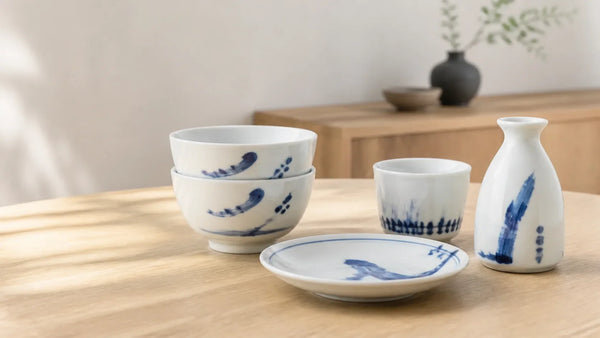
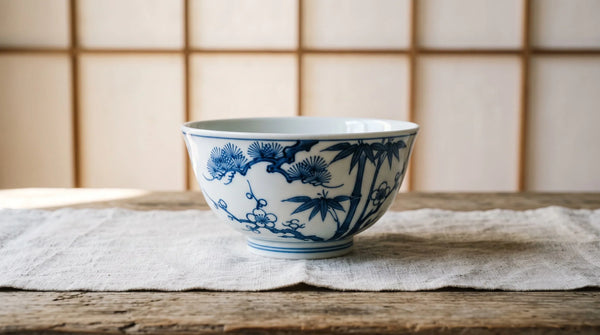
On undecorated white porcelain, a curve, a carved line or a change in glaze thickness can be enough to hold the eye. Hakuji (白磁) leaves the white body visible beneath a clear glaze. Its surfaces range from cool white to warmer tones, with form and finish carrying much of the visual interest.
Cover image: Vase, 1780, Hirado ware, The Metropolitan Museum of Art, Public Domain. It is a documented carved white-porcelain example, not an undecorated ZenKiln product.
What hakuji actually is
Hakuji means white porcelain. A high-fired porcelain body is finished with a transparent or near-transparent glaze without painted decoration. Thin areas may transmit light, though body composition and wall thickness affect the result. The same white appearance can also occur in other ceramic bodies, so colour alone does not identify porcelain.
Arita and the beginnings of Japanese porcelain
Arita became an early centre of commercially successful porcelain production in the seventeenth century. The familiar account links Korean potter Yi Sam-pyeong, also known as Kanagae Sanbei, with porcelain stone at Izumiyama. This traditional founding story should be distinguished from archaeological evidence about the earliest kilns and raw materials. Arita’s achievement belongs within the wider development of porcelain in Hizen, northern Kyushu.
Early Hizen production included white and blue-and-white porcelain. Arita wares travelled through Imari port, with overseas trade passing through Nagasaki. White porcelain also became the body for several decorating techniques, each with its own sequence of application and firing.
The Arita History and Folklore Museum also records early production in nearby Hasami, Takeo, Taku and Imari, placing Arita within a wider regional industry.
Variations within white
Body composition, glaze and firing conditions affect the white you see. Cool, greyish and warm tones can all be intentional. On carved relief, glaze collects differently in the recesses and on raised edges.
Nigoshide is the milky-white body associated with the Kakiemon tradition, providing a warm ground for enamel decoration. It names a particular material tradition, rather than every white porcelain object painted in a Kakiemon-like manner.
White porcelain and painted decoration
The cobalt blue of sometsuke is applied before glazing and glaze firing. The red enamel of aka-e goes onto an already fired glaze. Gold decoration in kinrande involves a further decorating process. These can share a white porcelain body while differing from undecorated hakuji.

Reading a hakuji surface
Look at the piece in daylight and indoor light. Follow the rim, silhouette and foot, then any carved or moulded detail. Translucency can help you observe a thin area, but it is not a quality grade. The unglazed foot may show the body’s colour more directly than the glazed surface.
From the ZenKiln catalogue
The following pieces use white porcelain with different decoration. They illustrate the material’s range, rather than serving as examples of entirely undecorated hakuji.
- Arita & Hasami Takarazukushi Tea Set — kyusu and two cups; compare the white ground and painted motifs.
- Arita Colorful Floral Wind Chime — painted flowers leave white porcelain visible between them.
- Bunzan Kiln Yellow Peony Mug — relief and floral colour on porcelain.
- Arita Sometsuke Shōchikubai Platter — cobalt-blue decoration against white.
For the full range, browse the Arita & Hasami Ware collection, or see everything fired in porcelain in the Porcelain collection.
FAQ
How do I care for white porcelain so it stays white?
Follow the maker’s washing instructions and avoid abrasive rubbing. Relief and unglazed areas can retain residue, so clean gently and dry well. For tea or coffee stains, use a treatment approved for the piece. Our Japanese porcelain care guide explains how decoration and surface condition affect the choice.
Sources: Arita History and Folklore Museum for regional production, and Kakiemon’s official history for that tradition, linked above.