Start with a pot that strains loose leaves, cups to match the amount you brew and a way to check the water temperature. A repeatable recipe is more useful than a large tea set. Once you know the leaf quantity, water and steeping time, you can adjust the flavour to your taste.
Equipment to start with
Choose the number of cups and the pot’s usable capacity for the people drinking. While learning, a thermometer helps you repeat the same water temperature.
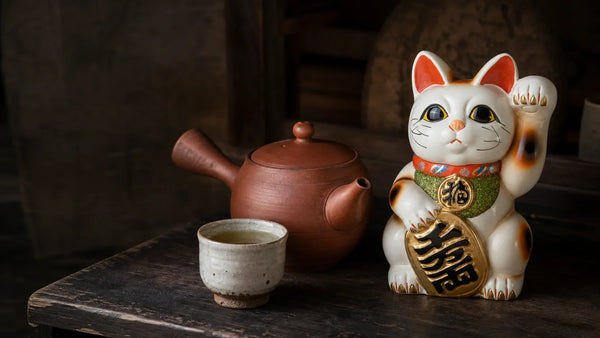
- A teapot with a suitable strainer. A side-handled kyusu is one option. The kyusu teapot care guide explains its filters and cleaning.
- Cups. Handleless yunomi are familiar everyday teacups; use one per person rather than buying a pair unless you need it.
- A kettle and a cooling vessel. A second cup can help cool boiled water before it goes into the pot. Check the temperature for the recipe you are following.
1. The teapot: why a kyusu
A yokode kyusu has a side handle at an angle to the spout. Other kyusu have rear or overhead handles. Choose a comfortable grip, a strainer suitable for the leaf, and a usable capacity that matches your cups and usual number of drinkers.
The hand-painted Arita porcelain kyusu below is one option to compare for capacity, grip and cleaning access:
For a matching pot and two cups, the set below brings those pieces together. Compare it with the individual pots in Teapots & Tea Sets.
Look inside the pot before choosing
In our lid-off photograph of the Takarazukushi kyusu, the round opening, lid seat and position of the side handle are easy to compare. The photograph does not clearly reveal the strainer behind the spout. That is the extra view to request when choosing for fine leaves. A teapot’s front view can tell you plenty about the decoration while leaving its most useful brewing detail out of sight.

2. The cups: yunomi for every day
Choose a cup with a comfortable rim and capacity. When sharing tea, alternate small pours between cups to even out the strength. See Cups & Mugs for different forms.
Brewing a first pot of sencha
Water temperature changes the balance of sweetness, umami and bitterness. Start with the tea packet’s instructions. The recipe below is one published example:
- Boil, then cool to about 80°C. Pouring into a cup or cooling vessel helps; use a thermometer for a repeatable result.
- Measure the leaf and water. Ippodo’s standard sencha brew uses 10 g of leaf and 210 ml of water for a concentrated tea.
- Steep for 60 seconds, then pour. That timing belongs to this recipe. Other sencha, including deeply steamed leaf, may need less time; adjust one variable at a time.
- Share the pour. Add a little to each cup in turn, then repeat until the pot is empty.
- Use the leaves again. Sencha often gives two or three infusions. Follow the tea supplier’s directions for subsequent brews, which may use hotter water and a shorter steep.
Cooler water tends to emphasise sweetness and umami; hotter water can make the tea brisker. Gyokuro is a distinct shaded tea often brewed cooler, not a higher grade of sencha.
For summer, use the tea maker’s cold-brew recipe with clean equipment and refrigeration. Our guide to Japanese summer cooling and ryō o toru explores seasonal vessels and serving ideas.
Choosing material: porcelain or stoneware
Smoothly glazed porcelain and stoneware can both be practical choices. Check the interior, strainer and cleaning access; thickness and form affect weight and heat retention too. Our Japanese stoneware vs porcelain guide explains the bodies, and Japan’s pottery regions introduces their regional context.
Going further: matcha and the tea ceremony
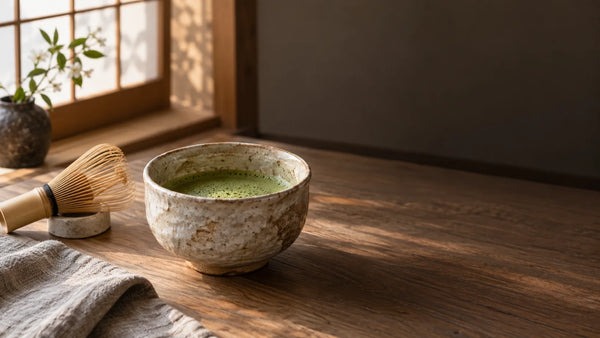
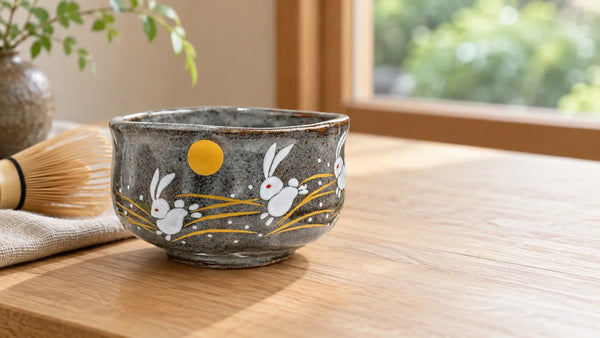
Matcha is powdered tea whisked in water, so it needs a bowl with room for a bamboo whisk. You can enjoy it at home without formal tea practice; for the history of chanoyu, read the Metropolitan Museum of Art’s introduction. Compare suitable bowls in Matcha Bowls.
FAQ
What temperature should sencha be brewed at?
Around 70–80°C is a common starting range, but use your tea supplier’s recipe. The Ippodo example above uses 80°C. A thermometer helps while you learn how much the water cools in your own vessels.
Can I use the same set for sencha and matcha?
You can drink either tea from a suitable cup, but preparation differs. Steep and strain sencha in a pot; whisk matcha in a bowl with enough space for the whisk. A kyusu filter will not prepare matcha from powder.
Recipe source: Ippodo’s standard sencha brew, linked above. Use it as a starting example and follow the instructions for the tea you buy.