Can You Microwave Japanese Pottery? Microwave & Dishwasher Rules by Material
6 min readCan you microwave Japanese pottery? Only when the particular piece is suitable for that use. Its body, glaze, decoration, condition and manufacturer’s rating all matter. A drinking cup, cooking pot and decorative figure have different intended uses even when they share a material.
Check microwave, dishwasher, oven and stovetop use separately. Permission for one does not imply permission for another.
The one rule that settles most questions: read the care card
Start with the maker’s care card, markings or documentation for the exact model. Follow any restrictions, including those for decoration, lids and accessories. If appliance use is not confirmed, do not test it by heating the piece; ask the maker or seller.

If the card is missing, look for documentation tied to the model. Appearance alone cannot supply a heat rating or establish food-contact suitability.
Porcelain (磁器, jiki): usually the most forgiving
Many porcelain dishes are suitable for everyday washing and reheating, but a dense white body or underglaze-blue pattern is not itself an appliance rating. Check the specific product.
Two cautions still apply. First, decoration that sits on top of the glaze — hand-painted overglaze enamel (iroe), gold, or fine gilt rims — changes the rules (see below), even on a porcelain body. Second, sudden temperature swings are the enemy of any ceramic: don't move a piece from freezer to microwave, and let a hot bowl cool before plunging it into cold water. For the deeper version of this, see our guide to caring for Arita, Hasami, and Kutani porcelain.
Stoneware and earthenware: check the body and intended use
Stoneware can be highly vitrified; not all stoneware is porous or lower-fired. Earthenware can be more absorbent, but weight, a matte finish or an unglazed foot does not by itself establish appliance compatibility.
Absorbed moisture and sudden temperature changes can stress a ceramic body. That does not mean an ordinary porous bowl can go on a stove. Direct flame requires cookware specifically made and approved for it.
A donabe’s permitted heat sources depend on its construction. Ginpo’s Hanamishima product information, for example, lists microwave use for that pot alongside other supported heat sources. Do not transfer one model’s rating to every donabe. Our donabe seasoning and daily-care guide covers preparation and storage.

If microwave use is uncertain, transfer the food to a vessel confirmed suitable for reheating. Never default to putting an uncertain ceramic vessel on a stovetop.
Metallic decoration and coloured overglaze are different cases
Keep conventional gold-, silver- or platinum-decorated tableware out of the microwave unless the manufacturer explicitly rates that exact product for it. Decorative figures are not reheating vessels at all.
Metal decoration can arc in a microwave and damage the decoration, vessel or appliance. Do not use a short cycle or low-power setting as a compatibility test. Use a microwave-rated dish instead.
Coloured overglaze enamel, or iroe, is not automatically metallic. Microwave and dishwasher ratings vary by product. Koransha’s Akaemachi cup is one example of coloured overglaze ware explicitly listed as microwave-compatible. That permission is for the stated product, not every painted cup.

Glass, lacquer, and cast iron: three special cases

Edo Kiriko cut glass. Edo Kiriko received national Traditional Craft designation in 2002; it includes both clear and coloured glass. Ordinary cut glass should not be treated as heat-resistant. Kagami’s care guidance calls for avoiding sudden temperature changes and dishwasher use for its crystal. See our Edo Kiriko glass-care guide for more.
Lacquerware. Traditional lacquered wooden tableware generally needs gentle hand-washing and prompt drying. Do not put it in a microwave or dishwasher without explicit product permission; the substrate and coating both matter. See our urushi care guide.
Cast iron. Keep cast-iron objects out of a microwave. A water-boiling tetsubin needs its own approved heat source and care routine; an enamel-lined teapot or wind chime does not inherit those permissions. See the Nambu tekki tetsubin guide for kettles.
Quick reference by material
Use the product rating for each appliance. Plain porcelain is not automatic microwave permission; porous pottery is not automatic stovetop permission; iroe is not automatically metal. Transfer food to a confirmed suitable vessel when a rating is unknown. Hand-washing also needs to suit the finish and condition.
ZenKiln pieces to care for this way
Use the individual product page and maker’s documentation to check these examples. The links identify the objects; their names alone do not establish appliance permission:
- Arita-Hasami Faceted Sometsuke Bowl — check the listed body, decoration and care instructions for the bowl.
- Arita-yaki Bunzan Peony Mug — check the maker’s directions for its raised decoration and cleaning.
- Ginpo Hanamishima Donabe — use the heat-source ratings for the particular size and model, and dry fully before heating or storage.
- Edo Kiriko Kagome Cut-Glass Pair — consult the glass maker’s washing and temperature guidance.
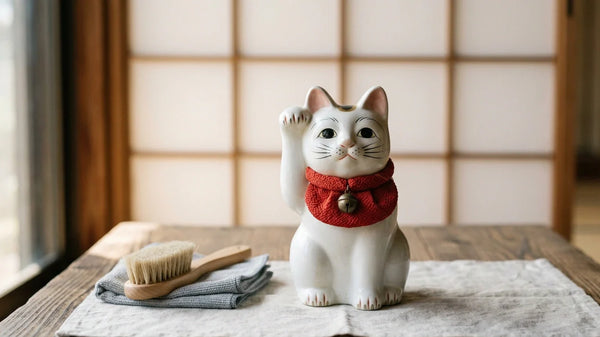
- Kutani Gold Calico Maneki-neko — a decorative figure, not a vessel for reheating food.
Browse the full Japanese drinkware collection for everyday cups and mugs, or the donabe & clay pots collection for stovetop cookware. New to a piece? Start with our first-use guide for new Japanese tableware.
Frequently asked questions
Is Japanese porcelain microwave safe?
Some is, when the maker rates the specific product for microwave use. A white body or underglaze pattern alone is not proof, and coloured overglaze enamel is not an automatic prohibition. Check decoration, repairs and the exact model’s rating.
Can you put a donabe in the microwave or dishwasher?
Check the exact model’s microwave and dishwasher ratings separately. Some donabe are microwave-compatible, including models in Ginpo’s Hanamishima range. This does not establish dishwasher permission or compatibility for every clay pot.
Why does gold-decorated pottery spark in the microwave?
Metallic decoration can arc in a microwave, damaging the surface or appliance. Keep conventional metallic-decorated ware out unless the maker explicitly permits that specific product, and reheat in a confirmed microwave-rated vessel when uncertain.
Is it safe to put hand-painted Kutani or Kyo-yaki in the dishwasher?
Check the particular piece. Decoration and firing methods differ, and hand-painted is not a single dishwasher rating. For delicate overglaze colour or gilding, gentle hand-washing is often the appropriate method; follow the maker’s directions.
Can Edo Kiriko cut glass go in the dishwasher?
Check the glass maker’s instructions. Kagami advises against dishwasher use for its crystal. Gentle hand-washing avoids knocks and abrupt temperature changes; ordinary cut glass should not be treated as heat-resistant glass.
How do I know if an older piece without a care card is safe?
Look for maker or model documentation and inspect its condition, including old repairs. Material and appearance alone do not establish appliance or food-contact safety. Do not heat an unknown piece as a test; keep uncertain pieces for display until assessed.
Editor’s note: This guide separates intended use from material. Use the instructions for the exact object, including any restrictions for decoration, repairs and accessories.