Seiji: The Jade-Green World of Japanese Celadon
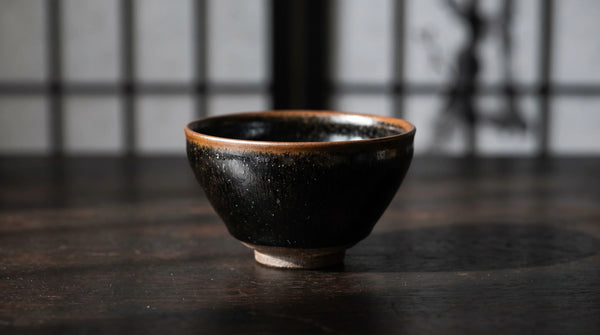
3 min readPale blue, grey-green, jade and olive all appear in celadon. In Japanese seiji (青磁), a translucent glaze can deepen in a carved line and look paler over a raised edge. Hizen and Nabeshima wares offer examples of how makers have used that range.
What "seiji" actually means
Seiji is the Japanese term corresponding to celadon: iron-bearing green or blue-green glazes and the wares carrying them. Reducing conditions during firing help produce the characteristic colours. Japanese examples are often porcelain, while celadon elsewhere can also have a stoneware body.
Glaze composition, body, thickness, temperature and kiln atmosphere work together. No single iron percentage or firing temperature describes every celadon recipe.

Chinese celadon and its reception in Japan
Chinese celadon includes several distinct kiln traditions. Longquan in Zhejiang is especially well known for green-glazed wares: The Met’s fifteenth-century Longquan plate has carved lotus decoration beneath a celadon glaze. Its catalogue identifies the body as stoneware, a useful reminder that celadon does not always mean porcelain.
Chinese celadon was imported and admired in Japan before domestic production developed. Compare surviving imported pieces with later Japanese wares to see differences in form and glaze, rather than assuming an unchanged recipe passed between them.

Celadon in early Japanese porcelain
Japanese celadon production developed in Hizen alongside other porcelain wares. The Met’s catalogue of a Hasami celadon dish places several Hizen kilns’ early celadon output in the 1630s and 1640s. The dish itself is dated to the 1640–1650s and shows the influence of Chinese Longquan forms.
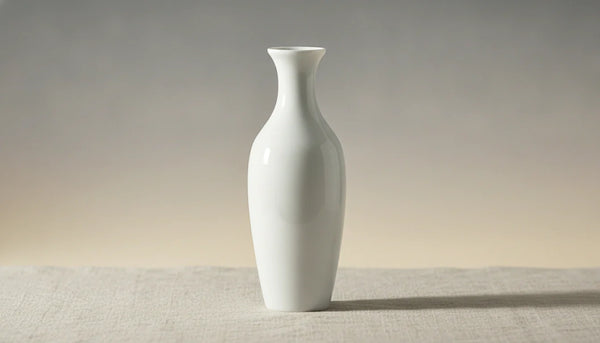
Seihakuji (青白磁), blue-white porcelain, offers a paler comparison. Its lightly tinted glaze can look nearly white on a raised area and more coloured in a recess. Compare it with hakuji white porcelain.
Nabeshima celadon at Ōkawachiyama
Ōkawachiyama, in present-day Imari, Saga Prefecture, is an important centre of the Nabeshima tradition. The Imari Nabeshima ware cooperative’s history dates the domain kiln’s move there to 1675 and describes production for presentation to the shogunal family, court, and feudal lords. It identifies Nabeshima celadon alongside blue-and-white and enamelled Nabeshima as major local styles.
After domain production ended in the early Meiji period, private workshops continued local skills. An individual maker’s account explains how a contemporary piece relates to that history.

Reading a celadon glaze: color, crackle, and form
Follow a carved line or raised motif and notice where the glaze gathers. Thickness and lighting can make one colour appear deeper in a hollow and lighter at an edge. Carving and moulding help shape that variation without painted decoration.
Some celadon glazes have an expected network of fine crackle, or crazing, in the glaze layer. This is different from a crack through the ceramic body. When buying, ask whether crackle is part of the intended finish. If a new line appears, a piece leaks, or the rim feels sharp, stop using it for food or drink until its condition has been checked.

Care and contemporary porcelain comparisons
Follow care instructions for the individual body and finish. Our porcelain care guide applies to pieces identified as porcelain, with additional attention to crackle or decoration. The following shop items offer contrasting surfaces; they are not celadon examples:
- Kutani Crane Vase — painted decoration on porcelain.
- Arita & Hasami Takarazukushi Tea Set — contemporary porcelain with a kyusu and two cups.
Browse Porcelain for the wider material range or Arita & Hasami Ware for regional examples. The collection names do not imply that every piece has a celadon glaze.
Related reading: Hakuji, Sometsuke and Aka-e.
Sources: the Met catalogue records and Imari Nabeshima ware cooperative’s history linked above. Use an individual object’s record for its body, glaze, maker and date.