Can You Microwave Japanese Pottery? Microwave & Dishwasher Rules by Material
4 min readBefore reheating food in Japanese pottery, check the exact piece’s microwave rating. The body, decoration, condition and intended use all matter. When permission is unclear, transfer the food to a confirmed microwave-safe dish.
Check microwave, dishwasher, oven and stovetop use separately. Permission for one does not imply permission for another.
Find the instructions for the exact piece
Use the maker’s care card, markings or model documentation, including restrictions for lids and accessories. If the card is missing, ask the maker or seller. Do not heat an uncertain piece as a test.

Porcelain: check decoration as well as the body
Many porcelain dishes are designed for everyday reheating and washing. A white body or underglaze-blue pattern, however, does not supply the rating for a particular cup or plate.
Overglaze enamel and metallic decoration need their own checks, described below. Avoid sudden temperature changes: do not move a piece directly from freezer to microwave or plunge a hot bowl into cold water. Our Arita, Hasami and Kutani porcelain guide covers care in more detail.
Stoneware and earthenware: check the body and intended use
Stoneware can be dense and well vitrified; earthenware can be more absorbent. Weight, matte glaze and an unglazed foot do not reliably establish either the body or an appliance rating.
A bowl and a cooking pot may both be pottery, but direct flame requires cookware designed for it. Absorbed moisture and sudden temperature changes can stress a ceramic body; putting an uncertain vessel on the stove is not a safer alternative to microwaving it.
A donabe’s permitted heat sources depend on its construction. Ginpo’s Hanamishima product information, for example, lists microwave use for that pot alongside other supported heat sources. Do not transfer one model’s rating to every donabe. Our donabe seasoning and daily-care guide covers preparation and storage.

Metallic decoration and coloured overglaze are different cases
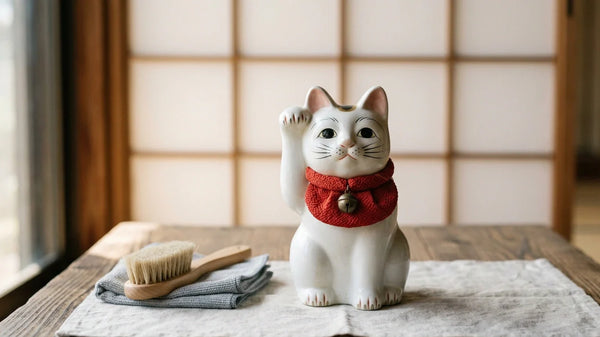
Keep conventional gold-, silver- and platinum-decorated tableware out of the microwave unless its maker expressly permits that product. Metal decoration can arc and damage the vessel or appliance, even during a short or low-power cycle. Decorative figures are not reheating vessels.
Coloured overglaze enamel (iroe) is a different case from metallic decoration. Ratings vary: Koransha’s Akaemachi cup is one painted product listed as microwave-compatible. Use that permission only for the specified piece.

Glass, lacquer, and cast iron: three special cases

Cut glass. Ordinary Edo Kiriko glass is not heat-resistant glass. Kagami advises avoiding sudden temperature changes and dishwasher use for its crystal. See the Edo Kiriko care guide.
Lacquerware. Traditional lacquered wooden tableware generally needs gentle hand-washing and prompt drying. Do not put it in a microwave or dishwasher without explicit product permission; the substrate and coating both matter. See our urushi care guide.
Cast iron. Keep cast-iron objects out of a microwave. A water-boiling tetsubin needs its own approved heat source and care routine; an enamel-lined teapot or wind chime does not inherit those permissions. See the Nambu tekki tetsubin guide for kettles.
Checking a ZenKiln product
Look for the care information on the product page. These examples need different checks:
- Arita–Hasami Sometsuke Bowl — body, decoration and appliance ratings.
- Bunzan Peony Mug — care for raised decoration.
- Ginpo Hanamishima Donabe — approved heat sources for its size and model; drying before heating and storage.
- Edo Kiriko Kagome Glass Pair — washing and temperature guidance.
- Kutani Gold Calico Cat — display and cleaning, not food or heating use.
Browse the full Japanese drinkware collection for everyday cups and mugs, or the donabe & clay pots collection for stovetop cookware. New to a piece? Start with our first-use guide for new Japanese tableware.
Frequently asked questions
Is it safe to put hand-painted Kutani or Kyo-yaki in the dishwasher?
Use the exact piece’s instructions. Hand-painting is a decorating method, not a dishwasher rating. Delicate overglaze colour and gilding often need gentle hand-washing.
How do I know if an older piece without a care card is safe?
Look for maker or model documentation and have its condition, including repairs, assessed. Appearance alone cannot establish food-contact or appliance suitability. Keep an uncertain piece for display rather than testing it with food or heat.