Yobitsugi: The Japanese Art of Patchwork Ceramic Repair
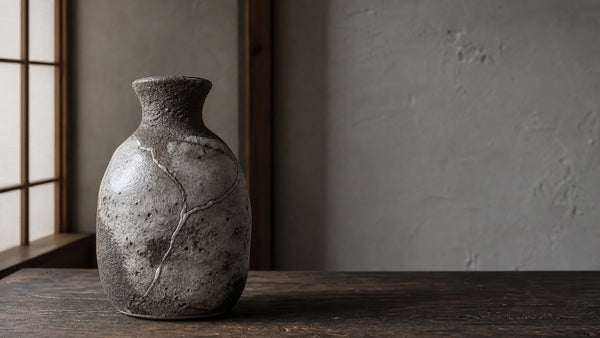
9 min readBreak a bowl and you have two choices: hide the damage or declare it. Yobitsugi (呼び継ぎ), the boldest member of Japan's lacquer-repair family, goes further than declaration. When a fragment of the original vessel is lost, the repairer borrows a shard from a different vessel entirely — a slice of cobalt-blue sometsuke set into a white rim, a band of stoneware closing a gap in porcelain. The result is a patchwork: one vessel, two histories, joined with urushi lacquer and usually finished in gold.
This guide covers what yobitsugi is, how it differs from kintsugi and gin-tsugi, where the taste for visible repair came from, how a repair is built layer by layer, and how to care for a repaired piece at home.
What Is Yobitsugi?
Yobitsugi (呼び継ぎ) is a Japanese ceramic repair technique in the kintsugi family in which a missing fragment is replaced with a shard from a different vessel, creating a deliberate patchwork effect. The borrowed piece is shaped to fit the break, bonded with urushi lacquer paste, and the seams are typically dusted with gold or silver. Where standard kintsugi reassembles a single vessel from its own fragments, yobitsugi joins pieces that never belonged together.

The name says as much. It combines yobu, to call or invite, with tsugi, joining: a repair that calls a stranger into the vessel. A good yobitsugi does not try to match the donor shard to the original. The contrast is the point. A plain white bowl gains a wedge of indigo arabesque; a dark stoneware cup takes on a pale porcelain shoulder. Tea practitioners have long read these pairings the way readers enjoy a well-chosen quotation: borrowed material, made to belong.
One Family of Repairs: Kintsugi, Gin-tsugi, Tomotsugi, Yobitsugi
Japanese lacquer repair is a family of related techniques, and the names sort neatly by what fills the break:
- Kintsugi (金継ぎ, gold joinery) — the vessel's own fragments are rejoined with urushi, and the seams are dusted with powdered gold. Our series opened with a full guide: Kintsugi: The Japanese Art of Gold-Repaired Pottery.
- Gin-tsugi (銀継ぎ) — the same repair finished in silver rather than gold, a cooler line that suits certain glazes. See our gin-tsugi guide.
- Tomotsugi (共継ぎ) — a missing fragment is replaced with a piece from a matching object, such as a shard from the second plate of a broken pair. The patch shares the original's glaze and pattern.
- Yobitsugi (呼び継ぎ) — the fragment comes from an unrelated vessel, and the mismatch is left in plain view.

Traditional Japanese ceramic repair bonds with urushi lacquer, not glue. Mugi urushi, a paste of raw urushi lacquer and wheat flour, joins the fragments; sabi urushi, urushi blended with fine clay, fills gaps and levels the seams. The mended vessel then rests in a furo, a humidity chamber held near 90 percent, for anywhere from two days to two weeks per stage, because urushi hardens by absorbing moisture rather than by drying out.
Where the Taste for Visible Repair Came From
Mended ceramics predate the gold seam. Across China and Europe, valuable pieces were saved by staple repair: small holes drilled on either side of a crack, with metal staples bent across to hold the halves together. Functional, sturdy, and very visible.

A well-known account places the turn toward aesthetic repair in late fifteenth-century Japan. The shogun Ashikaga Yoshimasa, the story goes, sent a damaged Chinese celadon tea bowl back to China and received it repaired with metal staples. The stapled bowl came to be called Bakōhan, "large locust clamp," for the insect-like look of its hardware — and rather than being dismissed as ugly, it was admired. Tea-room taste found meaning in the mend. One theory holds that Japanese craftsmen, prompted by such stapled repairs, began developing the more refined lacquer-and-gold method we now call kintsugi.
By the Momoyama period, tea culture prized irregular, storied vessels, and a repair became part of a bowl's biography rather than its shame. The enthusiasm ran hot enough that collectors were, according to period accounts, sometimes accused of deliberately breaking good pottery just to have it repaired in gold. Yobitsugi belongs to this world. It answers the hardest version of the problem — a fragment is gone forever — with the most confident solution: invite a replacement, and let everyone see it.
The philosophy is familiar from wabi-sabi, the acceptance of imperfection, and mottainai, the reluctance to waste what still has life in it. A yobitsugi vessel embodies both at once, plus something rarer: the idea that two broken things can complete each other.
How a Yobitsugi Repair Is Made
Finding the borrowed shard
The repairer keeps a stock of shards — broken plates, cups beyond saving — and hunts for a donor whose curvature and wall thickness sit close to the missing area. Glaze and pattern are chosen for contrast and balance rather than camouflage. The shard is ground and trimmed until it seats into the break cleanly.

Building the joint
Edges are cleaned and sometimes primed with raw urushi. Mugi urushi bonds the borrowed shard and any original fragments; excess is trimmed before it sets. Once the structure holds, sabi urushi fills the remaining gaps and steps, applied in thin layers and shaved level between coats.
Curing in the furo
Each layer cures in the furo's humid air, traditionally a wooden cabinet kept moist. Rushing this stage weakens the joint, so a full repair commonly stretches across weeks or months. Patience is a structural material here.

Finishing the seam
The leveled seam is coated with refined lacquer — often iron-red bengara urushi — and, while the final coat is still tacky, gold or silver powder is dusted on and later burnished. Some repairers leave the line as plain black or red lacquer instead. Note that some contemporary studios bond with modern adhesives such as epoxy and reserve genuine urushi for the surface finish; it changes the repair's food-contact status, which matters for care below.

Living With a Yobitsugi Piece: Care Rules
A repaired vessel is a laminate of ceramic, cured lacquer, and metal powder. Treat it like lacquerware, not like ordinary pottery — the habits from our urushi care guide apply.

- Hand-wash only. Lukewarm water, a soft cloth, little or no detergent. Never soak a repaired piece; water works into the seam.
- No microwave, no dishwasher. Metal-dusted seams can arc in a microwave, and dishwasher heat, detergent, and vibration abrade the lacquer line and can open the joint.
- No direct heat or flame, and no sudden temperature swings. Pour nothing boiling into a repaired vessel.
- Mind the light. Long exposure to direct sun dulls and embrittles urushi. Display repaired pieces out of strong daylight.
- Food contact depends on materials. Properly cured traditional urushi with pure gold has a long history on Japanese tableware. Epoxy-based or hobby-kit repairs are generally not rated for food or heat. Unless the restorer confirms food-safe materials, keep a repaired piece to dry use or display.
- Store it kindly. Wrap in soft cloth and keep pressure off the seam — our long-term storage guide covers boxes, wrapping, and climate.
Repair-Minded Collecting: The ZenKiln Catalogue
We sell intact pieces, but yobitsugi teaches a buying habit: choose ceramics worth repairing. Hand-painted porcelain and hand-thrown stoneware carry decades of use, and their patterns are exactly the kind a future repairer would prize as donor material or preserve at any cost.
From the current catalogue: the Hagi yaki pink coffee pair by Tsubakihidegama, hand-thrown stoneware whose crackle glaze deepens with every brew; the Arita Ko-Imari lidded bowl, hand-finished in the classic bird-and-peony Imari palette; the Arita Hasami faceted bowl in blue-and-white sometsuke arabesque — the very glaze family yobitsugi repairers love to borrow; and the Arita sakura kyusu teapot in iridescent pink porcelain. For the full range from Japan's porcelain heartland, browse the Arita & Hasami Ware collection, and read the region's story in our Journal guide, Arita Ware: The Story of Japan's First Porcelain.
FAQ
What does yobitsugi mean?
The word joins yobu, "to call" or "to invite," with tsugi, "joining": a repair that calls a fragment in from outside. It names the kintsugi-family technique of completing a broken vessel with shards from a different one, leaving the mismatch visible as a patchwork rather than disguising it.
How is yobitsugi different from kintsugi?
Standard kintsugi reassembles one vessel from its own fragments and gilds the seams. Yobitsugi answers a harder problem: a fragment is missing entirely. The repairer sets in a borrowed shard from another vessel, so glaze and pattern change mid-wall. The underlying craft is shared — urushi bonding, sabi urushi filling, furo curing, metal-powder finishing.
Is a yobitsugi-repaired piece food safe?
It depends on the materials. Traditional repairs made with properly cured urushi and pure gold have a long history on Japanese tableware. Many modern and hobby repairs use epoxy or other adhesives that are not rated for food contact or heat. Unless the restorer confirms food-safe materials, treat a repaired piece as dry-use or display, and never pour hot liquid into it.
Can a repaired piece go in the microwave or dishwasher?
No. Metal-dusted seams can arc in a microwave, and heat softens the lacquer beneath them. Dishwasher detergent, heat, and vibration wear down the repair line and can loosen the joint. Wash by hand in lukewarm water with a soft cloth, dry promptly, and store the piece where nothing presses on the seam.
Does yobitsugi lower a vessel's value?
A crude repair can. A skilled one often adds interest: Japanese tea culture has prized visibly mended vessels for centuries, and a documented repair becomes part of a piece's biography. Collectors weigh the quality of the joint, the taste of the pairing, and honest disclosure of the work when judging a repaired piece.
Editor's note: ZenKiln is a Japan-based curator of Japanese ceramics and craft, and every piece we list ships from Japan, hand-packed for safe delivery. We stock intact pieces; where a vintage item carries an old repair, we photograph and disclose it plainly. Craft-history background in this article follows the sources linked in the text, including the Kintsugi overview on Wikipedia; where records are uncertain we keep to era-level dating.