The Warmth of the Handmade: Notes from HandMade In Japan Fes 2026
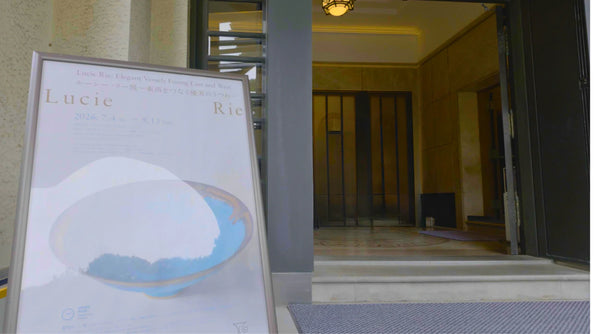
6 min readOn a July weekend, we crossed Tokyo Bay to Tokyo Big Sight for HandMade In Japan Fes 2026 — two days when roughly three thousand makers from all over Japan gather under one roof. We went to look, to learn, and to remember why we do what we do. These are our field notes.
Three thousand makers under one roof
The scale is the first thing you feel. Booths run in every direction — ceramics, textiles, glass, wood, leather, jewelry, paper, food — and a slow, steady river of people moves between them. For a studio that spends its days choosing objects one at a time, walking a hall like this is equal parts inspiration and humility: so many hands, so many hours, all in one place. It is, quite simply, one of the best rooms in Japan to feel the breadth of what "handmade" can mean.

The warmth you can feel in real time
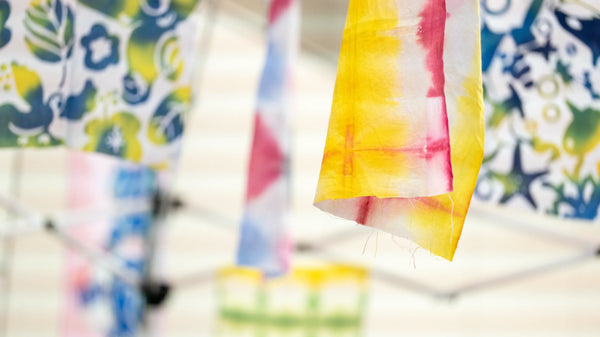
What sets a fair like this apart from any catalog is presence — you can watch the work happen, and ask about it. We stood for a while at the table of Ijiri Kazushige (井尻一茂), a third-generation woodcarver from Shiga, as he leaned over a block of wood, lifting fine curls of shaving with a chisel, a row of worn-handled gouges waiting in line. A stage carried live music over the aisles. More than seventy hands-on workshops — dyeing, carving, paper craft, kintsugi among them — invited visitors to make something with their own hands. Again and again, a few words with a maker turned a display into a conversation about how the thing was made, and why.

His workshop, Ijiri Chōkokusho, comes from Maibara in Shiga Prefecture — the Kaminyū woodcarving village, where the craft has been handed down for roughly three hundred years. Founded in 1935, it keeps the realistic, deeply three-dimensional Suiun-bori (翠雲彫) style across three generations, carving everything from shrine and temple ornament and festival floats to Buddhist altars, transom panels, house nameplates, and small pet memorial pieces.
The phrase we kept coming back to was the warmth of the handmade — in Japanese, te-shigoto no nukumori. It isn't a marketing line; it's something you feel in real time, standing in front of the person who made the thing, watching the tool meet the material.
A machine can make a clean object. Only a person can make a warm one.
Every object carries a material story
The details we love most are the ones about material. One maker turned pens from what's called stabilized wood — timber infused with resin so it resists cracking and warping and takes a deep, lasting finish. Another offered pieces turned from wood said to be connected to the Ise Grand Shrine — rare cedar and hinoki that circulate only in small quantities. Whether or not you buy, that kind of provenance changes how an object sits in the hand: you're holding not just a shape but the whole history of the material it came from. It's the same instinct that draws us to a particular clay or a particular kiln.
Paper, clay, and the crafts we came for
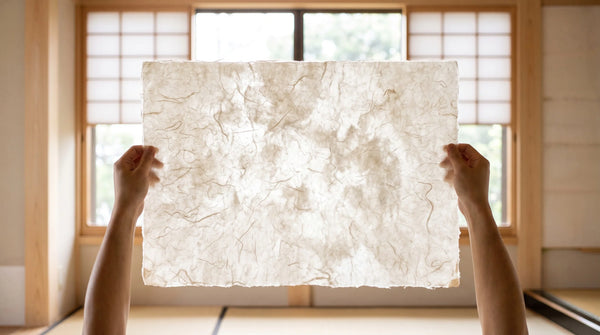
Some booths felt like old friends. Because we'd just been deep in Japan's handmade washi, the paper makers caught our eye at once. One maker stopped us in our tracks — a birdwatcher turned craftsman from Okinawa's Yanbaru forests who dyes with plants and indigo and shapes his work into tiny birds. He walked us through it and showed a portfolio; the pieces were feather-light and one of a kind, vividly colored and unlike anything else in the hall. We lingered over the regional-craft showcases too, including a section devoted to the crafts of Shiga; the rustic Shigaraki stoneware we carry grows out of exactly that world of ancient-kiln clay. And there was pure devotion on display — an artist rendering beloved pets as tiny, exacting colored-pencil portraits, each one a small act of patience. Different materials, same discipline.
What we brought back

The strongest impression wasn't any single object; it was the persistence behind all of them. Keeping a craft alive is genuinely hard — years of practice, thin margins, quiet stubborn devotion — and thousands of Japanese makers keep choosing to do it anyway. We came away wanting, more than before, to help carry Japanese craft culture to a wider audience. That is the whole idea behind ZenKiln: every piece we choose is chosen for this exact quality — the warmth of a human hand, in an object made to be used and kept. A fair like this is a good reminder of the standard.
FAQ
What is HandMade In Japan Fes?
HandMade In Japan Fes (HMJ) is one of Japan's largest handmade-craft festivals, held at Tokyo Big Sight. It gathers around three thousand makers from across the country selling one-of-a-kind work — ceramics, textiles, glass, wood, jewelry, paper, food and more — alongside hands-on workshops, live craft demonstrations, and stage performances.
When and where was HMJ 2026?
HandMade In Japan Fes 2026 was held over two days, July 11–12, 2026, at Tokyo Big Sight in Tokyo, open 11:00 to 19:00 — one of the country's largest gatherings of independent Japanese makers under one roof.
What kinds of crafts are shown at HandMade In Japan Fes?
The fair spans accessories and jewelry, fashion and textiles, ceramics and interior pieces, illustration and art, woodwork, glass, and handmade food and drink, plus a materials area and regional-craft showcases. Visitors can also try more than seventy types of hands-on workshops, from dyeing and carving to kintsugi and paper craft.
Editor's note: These notes are first-hand — we spent the day at HandMade In Japan Fes 2026, watched the work up close, and talked with several of the makers. ZenKiln is a Tokyo studio for handcrafted modern Japanese ceramics and craft; we visit makers and fairs in person, curate one piece at a time, and hand-pack and ship every order from Japan.