Hosokawa-shi: The UNESCO Paper of the Ogawa Valley
7 min readHosokawa-shi (細川紙) is handmade kōzo paper associated with Ogawa-machi and Higashichichibu in Saitama. Its name connects the region to an older papermaking tradition in Kishū, present-day Wakayama. The craft is a Japanese Important Intangible Cultural Property and part of UNESCO’s washi inscription.
What is Hosokawa-shi?
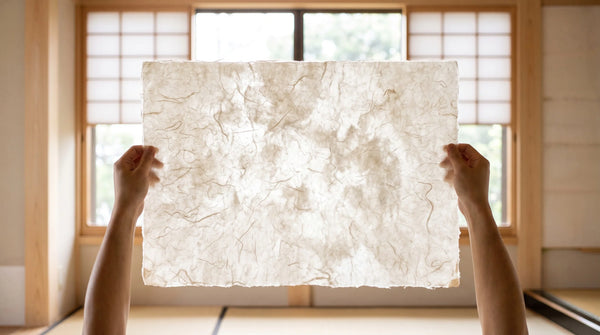
Hosokawa-shi (細川紙) is a traditional handmade washi made only from kozo (paper mulberry), produced in and around Ogawa-machi and Higashichichibu village in central Saitama Prefecture. It is a plain, undyed paper — durable, faintly glossy, and water-resistant — the kind of honest, hard-wearing sheet that Edo-period merchants trusted for their account books and that officials used for formal decrees.

New to washi in general? Start with our explainer on what washi is and why it lasts; this article zooms in on one specific, celebrated example of it.
The name that traveled
Saitama’s tourism account links the name to Hosokawa Village near Mount Kōya in Kishū. It presents the resemblance between Ogawa’s paper and the earlier Hosokawa paper as an explanation for the name’s adoption. The name therefore carries a historical connection; it does not mean the tradition had no relationship to Kishū.
Hosho (奉書) were the written decrees of the imperial court or the shogunate, and the sturdy white washi used for them was called hosho-gami. To be compared to Kishū's hosho was high praise — and the name stuck as Ogawa grew into one of the country's major paper regions.
A thousand-year valley
Ogawa’s wider papermaking history is often described as about 1,300 years old. Early evidence for paper from Musashi provides regional context, but it does not by itself establish uninterrupted use of today’s designated Hosokawa-shi method throughout that period.
The Tsukigawa River runs through Ogawa-machi, and its clean, cold, abundant water is what papermaking needs — for washing fibers, for forming sheets, for the whole cold-season rhythm of the work. (The same water made Ogawa a sake town, too.) By the late Edo period, when demand for paper was at its height, the district supported more than 750 papermaking workshops. Ogawa became, and remains, one of the closest washi-producing regions to Tokyo.
Cultural-property and UNESCO recognition
The designations recognise the craft and its transmission:
In 1978, the craftsmanship of Hosokawa-shi was designated a National Important Intangible Cultural Property of Japan — a recognition reserved for techniques of exceptional value. The designation is strict about method: authentic Hosokawa-shi uses only domestically grown kozo and the traditional nagashizuki hand-forming technique, made with traditional tools.
Hosokawa-shi joined Sekishū-banshi and Hon-minoshi in UNESCO’s 2014 washi inscription. In 2025, the inscription expanded to include Echizen Torinoko paper from Fukui, which uses gampi rather than kōzo. See the UNESCO record and Fukui Prefecture’s expansion announcement.
Selected Japanese papers are used in conservation, but that does not establish that a particular museum uses Hosokawa-shi or that every sheet is suitable for repairs. A conservator chooses paper by its properties and the treatment required.
From mulberry to sheet: an overview
The outline below groups papermaking into fibre preparation, sheet formation and finishing. Workshops may describe or count the individual stages differently.
Preparing the fiber
- Steaming the kozo. Harvested kozo branches (cut in winter) are trimmed to length and steamed in a large kettle to loosen the bark.
- Stripping the bark. Steaming loosens the bark so it can be removed from the branches. The bark is dried and stored for later processing.
- Scraping to white. The dark bark is soaked in the river to soften, then the black outer skin is removed to reveal the clean white inner bark (white kozo).
- Cooking. The prepared bark is cooked with an alkali, then rinsed to remove unwanted material. The workshop’s controlled process determines the conditions.
- Cleaning (chiri-tori). Every speck of dirt and imperfection is picked out of the wet fiber by hand — patient work traditionally done in riverside cottages.
- Beating. The cleaned fiber is pounded with wooden sticks until it separates into fine, individual filaments ready to suspend in water.
Forming the sheet
- Preparing the neri. Roots of tororo-aoi are pounded to release a clear mucilage, which is added to the vat to thicken the water and hold the fibers evenly in suspension.
- Papermaking (nagashizuki). Using a bamboo screen in a frame, the papermaker scoops the fiber-and-water slurry and rocks it back and forth, building each sheet in thin, crossing layers, then couches the wet sheets in a stack.
- Pressing. The stack of wet sheets is left to drain overnight and then pressed slowly to squeeze out water without tearing the paper.

Finishing
- Drying. Sheets are peeled off one by one and brushed flat onto boards to dry — traditionally sun-dried outdoors.
- Sorting. Each sheet is inspected in bright light and sorted; flawed sheets are set aside, and off-cuts can be pulped back into the next batch.
- Trimming. The dried sheets are stacked, squared to a ruled edge, and finished — the last step before the paper is ready to use.

Kōzo harvesting and some bark preparation are seasonal. Papermaking and visitor workshops are not confined to winter, so ask the facility which stages can be seen on your planned date.
Where to see it, and make it yourself
One of the best things about Hosokawa-shi is that it is not sealed behind glass. In the Ogawa valley you can watch the craft and try it with your own hands.
- Ogawa Washi Learning Center (Ogawamachi) — a centre in a 1936 building offering reserved papermaking experiences. Its published one-day course information lists about ¥5,000 and a usual Tuesday closure; confirm the current fee, date and booking conditions before travelling. Winter visits may offer a chance to see bark preparation.
- Michi-no-Eki Higashichichibu Washi no Sato — a roadside station in Higashichichibu with a relocated Edo-period papermaking house and a workshop where visitors can make paper with guidance.
- Michi-no-Eki Ogawamachi (Traditional Crafts Facility) — the town's recently renovated roadside station, with hands-on washi workshops suitable for all ages.
Saitama’s tourism information gives about 70 minutes from Ikebukuro to Ogawamachi on the Tobu Tōjō Line. Actual journey times depend on the service; check your route and the workshop reservation together.
Why it matters
A Hosokawa-shi sheet connects material, skill and a community that continues to transmit its practice. Understanding the steps makes its surface more interesting to look at, while the designations recognise the craft rather than guaranteeing every proposed use for the paper.
FAQ
What is Hosokawa-shi?
Hosokawa-shi is handmade kōzo paper from the Ogawa-machi and Higashichichibu area of Saitama. Its craft was designated an Important Intangible Cultural Property in 1978 and included in UNESCO’s washi inscription in 2014. That inscription expanded to four craft traditions in 2025.
Why is it called Hosokawa paper if it's made in Saitama?
The name connects to Hosokawa Village in old Kishū, now Wakayama. Saitama’s tourism account explains that Ogawa’s paper resembled the earlier Hosokawa paper, offering a historical explanation for the name’s adoption.
When did Hosokawa-shi become a UNESCO heritage?
Hosokawa-shi was included in the 2014 UNESCO washi inscription with Sekishū-banshi and Hon-minoshi. Echizen Torinoko paper was added in 2025. The Japanese Important Intangible Cultural Property designation dates to 1978.
How is Hosokawa-shi made?
Kōzo bark is prepared, cooked, cleaned and beaten; sheets are formed using nagashizuki with a fibre suspension and neri, then pressed, dried and finished. Kōzo harvesting is seasonal, but not all papermaking takes place in winter.
Can I try making washi in Ogawa?
Yes. The Ogawa Washi Learning Center and the roadside stations at Higashichichibu (Washi no Sato) and Ogawamachi offer hands-on papermaking experiences, generally by reservation. A typical one-day course at the Learning Center costs about ¥5,000, and Ogawamachi Station is roughly 70 minutes from Ikebukuro in Tokyo.
What is Hosokawa-shi used for?
Historically it served uses such as account books and documents. Today handmade papers have artistic, stationery and specialist uses. For conservation work, confirm the actual sheet’s suitability with a conservator rather than relying on its name or heritage status.
References: The regional history and visitor information draw on Saitama tourism resources; UNESCO and Fukui Prefecture provide the inscription context. See our HandMade In Japan Fes 2026 article for separate event coverage.