Asakura Isokichi: The Family That Reinvented Modern Kutani
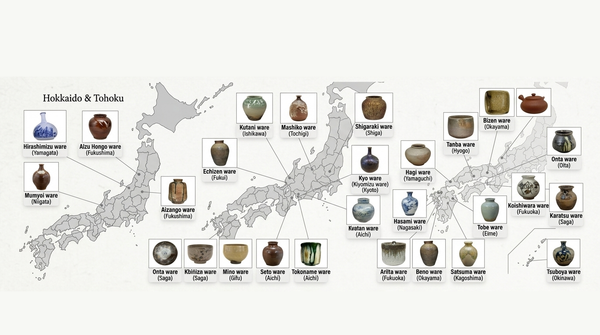
Most potters spend a lifetime perfecting a single signature look. Asakura Isokichi spent his deliberately undoing his. The second-generation head of a Kutani ware (九谷焼, the colorful overglaze porcelain of Ishikawa Prefecture) family kiln, he rebuilt his palette, his forms, and his firing roughly every ten years — and in 1996 became the first Kutani-ware artist to receive Japan’s Order of Culture. This is the story of the Asakura family, the Komatsu kiln they have run for four generations, and why their restless approach still defines what 'modern Kutani' means.
Who was Asakura Isokichi?
Asakura Isokichi (浅蔵五十吉, 1913–1998) was a Japanese ceramic artist and the leading modern master of Kutani ware. Born in Ishikawa Prefecture, he trained under the Kutani painters Tokuda Yasokichi I and Kitade Tojiro, then spent five decades exhibiting at the Nitten, Japan’s national fine-arts exhibition. In 1996 he became the first Kutani-ware artist awarded the Order of Culture — Japan’s highest honor for cultural achievement.
Born Asakura Yosaku (浅蔵与作) on February 26, 1913, in Terai-machi (now Nomi City), he was adopted into the Asakura family of Hachiman in Komatsu, where he learned to form the porcelain body from the kiln’s founder before studying overglaze color under his two teachers. His recognition built steadily: a Prime Minister’s Award at the Nitten in 1977, the Japan Art Academy Prize in 1981 for 'Impressions of Sado,' election to the Japan Art Academy in 1984 — the first ceramic artist from Ishikawa to be admitted — and the title of Person of Cultural Merit in 1992, four years before the Order of Culture.

The family kiln: Isokichi Shinkō-gama in Komatsu
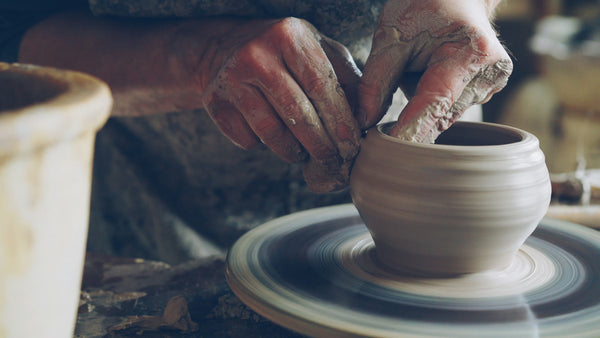
The Asakura name belongs to a working kiln, not just a single artist. Isokichi Shinkō-gama (五十吉深香陶窯) sits in Hachiman, Komatsu, and has operated for four generations. Unusually, it handles the entire process under one roof — from throwing and shaping the porcelain body through the final overglaze painting — rather than buying in blanks to decorate, which is common elsewhere in Kutani.
The lineage runs deep. The first generation, Asakura Iso-kichi, founded the kiln in the early Taishō era (the 1910s). The second generation was the Order of Culture laureate above. The third-generation Isokichi received the Ishikawa Cultural Merit Award and, in 2016, the Medal of Honor with Silver Ray. Today the kiln’s fourth generation is carried by two certified Kutani Traditional Craftsmen, Asakura Ikka and Asakura Hiroaki, working alongside the third-generation master — proof that the family’s craft is a present-tense practice, not a closed chapter.


A style that reinvented itself every decade
What set the second-generation Asakura apart was refusal to settle. His own memorial museum describes an artist who created an entirely different style of color, form, and technique roughly every ten years — never resting on a completed manner, always pushing into the next one. Over his career his palette moved from bright, luminous yellows through deeper greens and composite tones, then later into platinum and silver overglaze, and finally toward white, restrained 'colorless' glazes in his cultural-merit years.

Across all of it ran a steady subject: nature. Mountains, rivers, flowers, birds, and the sea recur through his work, but rendered with a sculptor’s eye for three-dimensional form — he was as interested in the shape a vessel cut against the light as in the picture painted on it. That fusion of sculptural body and Kutani overglaze is exactly why he is read as the artist who pulled Kutani into the modern era without abandoning its decorative soul.

The throughline of his work is a kind of disciplined restlessness: one finished style was simply the starting point for the next.
What makes Kutani ware 'Kutani'
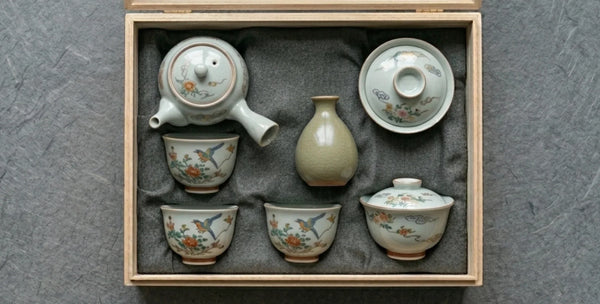
Kutani-yaki (九谷焼) is the overglaze-enameled porcelain of Ishikawa Prefecture, first fired in the mid-1600s. Its signature is the gosai (五彩, 'five colors') palette — green, yellow, red, purple, and Prussian blue — painted over a fired glaze and then re-fired at a lower temperature so the enamels sit slightly raised and jewel-bright on the surface. It is a tradition built on color and brushwork, which is why a colorist of Asakura’s ambition had so much room to move within it. (For the longer history, see our beginner’s guide to Kutani ware, and our piece on aka-e overglaze red enamel.)

Asakura inherited this overglaze logic and bent it. Yellow grounds — a signature of the aote (青手) Kutani manner, which floods a piece edge to edge with green, yellow, and other enamels — run throughout the kiln’s work. But where classic Kutani fills every inch, the later second-generation pieces let single colors and cleared white grounds do the talking. He kept the technique and changed the temperament — a useful reminder that 'traditional' Japanese craft has always contained its own reformers.
The Asakura legacy in living Kutani today

Asakura’s own pieces now live mostly in museums and the auction market, well beyond everyday use. But his real legacy is the idea that Kutani is a living tradition — passed between generations of working kilns, each free to reinterpret the five-color palette.
That tradition continues in the workshops of Ishikawa today, where contemporary makers still build and paint by hand in the gosai manner. If you own a piece of modern Kutani, our guide to caring for Kutani and Arita porcelain covers how to keep the overglaze bright for decades.
The tradition is still on the move. In June 2026, the kiln’s three current makers — the third-generation Isokichi, Asakura Ikka, and Asakura Hiroaki — presented new work in Tokyo in an exhibition titled Colour and Fire (色彩と炎), a fitting name for a family that has spent a century balancing exactly those two things. Alongside the vessels, the show featured a special display of figural Kutani — Hotei and the Seven Lucky Gods (shichifukujin), modeled and glazed in the same palette.

FAQ
Who was Asakura Isokichi?
Asakura Isokichi (1913–1998) was a Japanese ceramic artist regarded as the leading modern master of Kutani ware, the overglaze porcelain of Ishikawa Prefecture. He led his family’s Komatsu kiln, exhibited for fifty years at the Nitten national exhibition, and in 1996 became the first Kutani artist to receive Japan’s Order of Culture.
Is 'Asakura Isokichi' the same as the Isokichi kiln?
They share a romanized name but not the same kanji. The kiln’s founder was Asakura Iso-kichi (磯吉); the famous second generation took the art name 'Isokichi' written 五十吉. Both read 'Isokichi' in English. The kiln is called Isokichi Shinkō-gama (五十吉深香陶窯) and has run for four generations in Hachiman, Komatsu.
When did Asakura Isokichi win the Order of Culture?
He received the Order of Culture (文化勲章) in 1996, the first Kutani-ware artist ever to do so. It followed earlier honors including the Japan Art Academy Prize in 1981 and the title of Person of Cultural Merit in 1992. The Order of Culture is the highest distinction Japan awards for cultural achievement.
Where can you see Asakura Isokichi’s work?
His work is shown at the Asakura Isokichi Memorial Hall, part of the Nomi City Kutani Museum in Ishikawa Prefecture. The building was designed by architect Yoshiro Ikehara and has itself won architectural awards. The hall focuses on the second-generation Asakura’s representative pieces across his shifting styles.
What is Kutani ware known for?
Kutani ware is known for its bold five-color overglaze palette — green, yellow, red, purple, and Prussian blue — painted over the glaze and re-fired so the enamels sit raised and vivid. First produced in Ishikawa in the 1650s, it remains one of Japan’s most recognizable colored porcelains.
Can you buy Asakura Isokichi pottery?
Authentic Asakura Isokichi pieces are rare and mostly trade through specialist dealers and auction houses at collector prices. For Kutani you can use every day, look for contemporary work from living Ishikawa kilns made in the same overglaze tradition.
Editor’s note: ZenKiln is a Tokyo-based studio focused on Japanese ceramics and the people who make them. This article is part of our ongoing Kutani series; we do not deal in Asakura Isokichi’s own work, which belongs in museums and the specialist market.