What Is Kutani Ware? A Beginner’s Guide to Japan’s Colorful Porcelain
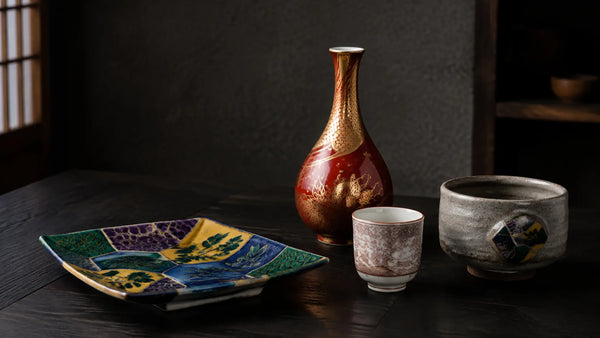
4 min readKutani Ware, or Kutani-yaki, is a Japanese ceramic tradition centred in Ishikawa Prefecture and best known for coloured overglaze decoration. Its surfaces range from dense five-colour painting and gold to spare contemporary designs, applied to tableware, tea ware, vases, and figurines.
Look closely at the painted surface. Enamels applied over the glaze and fired again can give Kutani its strong outlines and opaque colour; gold adds another kind of detail. The decoration follows the object, whether it is a cup, a teapot or a figure.
The ZenKiln Kutani Ware collection brings together different forms and approaches to painting.
A brief history
Kutani is associated with the Kaga region of present-day Ishikawa. The Kutani-yaki Kiln Museum traces production at Kutani village to the seventeenth century and describes its nineteenth-century revival. Early wares called Ko-Kutani involve questions of attribution and links with Arita, rather than one uninterrupted kiln lineage.
Today, the tradition includes pieces for tea and the table as well as vases and figures. Compare the painted surfaces on teapots and cups and mugs.
Colour and the shape beneath it
The traditional five-colour palette, Kutani gosai, comprises green, yellow, purple, red and deep blue. These can appear in dense, overlapping patterns or beside generous areas of white. For two related decorative techniques, read about aka-e overglaze red and kinrande gold brocade.

On a functional piece, the decoration is planned around the form: a bird may cross a mug handle, a floral band may follow a rim, and a scene may continue around a kyusu body. The Kutani bird kyusu is one example of painting organised around use rather than placed as a flat panel.
This emphasis on surface distinguishes Kutani from traditions where clay texture, ash, or a single glaze carries most of the visual weight. It also means two Kutani pieces can look very different while sharing the same overglaze process.
Reading the motifs
Birds, plum and cherry blossom, peonies, cranes, clouds, landscapes, geometric borders and auspicious objects recur in Kutani decoration. Some carry customary associations: cranes, for example, often express a wish for longevity.

Motif and colour density change how a piece reads. A bird-and-blossom mug leaves more white ground visible, while a gold-ground figure or densely painted plate places decoration across most of the surface. Kutani lucky cats apply the same enamel vocabulary to sculptural forms.
Look at how much of the white ground remains visible, where gold or raised detail catches the light, and how the pattern continues as you turn the piece.
Choosing a piece for everyday use
Many Kutani teapots, cups, bowls and spoons are made for regular use. Painted enamels and metallic details need appropriate care, including individual checks for microwave and dishwasher use.

Compare the Kutani floral spoon set with other plates, bowls, and spoons.
Size, handling and gifts
Start with something you already use. For coffee, check the mug’s capacity and room around its handle. For tea, consider how much you brew at once. For a vase, check its footprint and opening in the Vases & Decor collection.

Choose the painted surface you enjoy looking at, then check who made it, the technique and its condition. A dense pattern is not inherently older or more valuable than a sparse one.
For a gift, choose a form the recipient will use and check the dimensions, care and included packaging. Gifts for Tea Lovers is a starting point when you know how they like to brew.
For a new home, compare the practical and decorative pieces in Housewarming Gifts. Sake Cups & Glassware offers another option for someone who enjoys sake.
How to Care for Kutani Ware
Wash gently with mild detergent and a soft sponge unless the piece’s own instructions require a different method. Avoid bleach, abrasives and hard scrubbing across painted or gold surfaces.
Microwave and dishwasher compatibility varies by item. Check the individual product’s instructions, especially where enamel or metallic decoration is present. Our guide to caring for Arita, Hasami, and Kutani porcelain explains the practical checks; the maker’s instructions remain the reference for a particular piece.
Dry before storage, and keep rims, handles and raised decoration from rubbing against harder ceramics.
FAQ: Kutani Ware
Do I need to buy a matching set?
No. A single mug, cup or small plate can sit comfortably among the pieces you already use. Choose its size and decoration with that setting in mind.
This guide is part of ZenKiln's Kiln Studies series. For how Kutani fits among Japan's ceramic regions, see our overview of Japan's pottery regions.