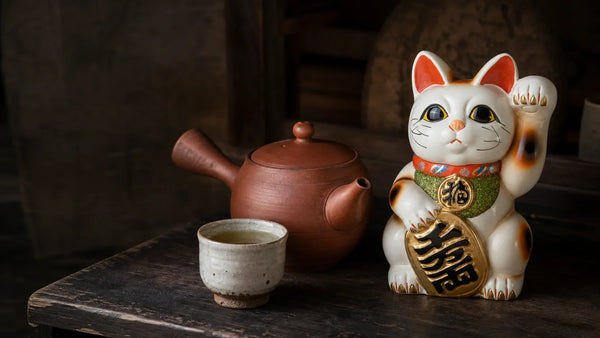
Seto ware (瀬戸焼, Seto-yaki) comes from Seto in Aichi Prefecture. The regional name also gave rise to setomono (瀬戸物), a familiar word for ceramic tableware. This long production history encompasses glazed pottery, porcelain, and decorative figures.
From medieval pottery to porcelain
Seto’s ceramic history developed from the older Sanage kilns near Nagoya. By the late twelfth century, potters were producing glazed wares now called Ko-Seto, or Old Seto. Porcelain became another major part of the industry in the nineteenth century.

One of Japan's Six Ancient Kilns
The Six Ancient Kilns, or Rokkoyō, group six medieval production regions: Bizen, Echizen, Seto, Shigaraki, Tamba and Tokoname. They are recognised together as a Japan Heritage. Seto and Tokoname are both in Aichi.
Applied glazes are an important feature of medieval Seto. The other five regions are closely associated with high-fired wares without an applied glaze, although their later production is varied. Our guide to Japan’s pottery regions provides the broader map; the Shigaraki ware guide explains natural ash effects.

The kiln of many glazes
Pale-firing local clay provided a base for coloured glazes. Imported Chinese ceramics influenced early Seto, including green celadon and brown-black tenmoku. For a comparison of visible colours, see our article on glaze colour and tea.
The following are examples of glaze names encountered in Seto and neighbouring Mino, rather than a complete official classification:
- Ki-Seto (黄瀬戸) — yellow glaze with varied surface effects
- Setoguro (瀬戸黒) — black-glazed tea ware associated with the Seto–Mino tradition
- Shino (志野) — a thick, white feldspathic glaze.
- Oribe (織部) — ware associated with Furuta Oribe, often featuring copper-green glaze.
- Tetsuaka (鉄赤) — an iron-red glaze
- Hai-yū (灰釉) — ash glaze

Seto and Mino have closely connected histories, with important tea-ware developments in the Azuchi–Momoyama period. Aichi Prefecture’s Akazu account describes that development. Akazu’s recognised seven glazes are ash, iron, Ko-Seto, Ki-Seto, Shino, Oribe, and Ofuke; this differs from the selection listed above.
From Ko-Seto to sometsuke and porcelain
Traditional accounts credit Katō Shirōzaemon Kagemasa with bringing techniques from China in the 1220s. That story belongs alongside the archaeological evidence for production, rather than replacing it. Ko-Seto jars and bottles later became valued tea utensils; our tea guide introduces the wider setting.
In the nineteenth century, Seto became a porcelain centre as well. Cobalt-blue gosu decoration beneath a clear glaze became characteristic of Seto-sometsuke; mould-forming also developed within the industry. Seto porcelain was exported and shown at international exhibitions. Seto-sometsuke is now a designated National Traditional Craft.

Both pottery and porcelain remain part of Seto production. Our stoneware and porcelain guide explains the material terms.
Seto today: tableware, novelty, and lucky cats
Seto also produces ceramic figures and ornaments, an industry often called noberuti, from “novelty”. Our Yakushi Kiln (Yakushigama) guide looks at a Seto brand associated with lucky cats. Nearby Tokoname has its own figurine industry; the maneki neko origins guide separates production history from origin legends.

Seto ware in the ZenKiln catalogue
The following catalogue examples show varied shapes and decoration. Check each listing’s documented maker or brand, material, and forming method.
- Maitōkan Floral Tripod Cup & Saucer — a three-footed cup with floral decoration. Check the listing for the brand and documented production details.
- Setsugekka Aibana Carved-Rose Dessert Bowl — compare the relief pattern and the darker colour gathered in its recesses; the listing should describe the confirmed making process.
- Yuzuriha Floral Cup & Saucer Set — a rounded cup and broad saucer with blue floral decoration; see the listing for documented production and care.
- Seto Penguin Wind Chime — a small ceramic furin shaped like a penguin, with a suspended clapper and paper tanzaku for the summer breeze.

Browse the Drinkware collection for cups and other drinking vessels.
Frequently asked questions
Can I use Seto ware every day?
Many pieces are made for everyday use. Follow the care instructions for the particular body, glaze and decoration; a regional name alone does not establish dishwasher or microwave suitability.
Sources: the Six Ancient Kilns project, Aichi Prefecture’s Akazu guide, and the Seto Pottery Promotion Association. Regional history is distinct from attribution of an individual product.