Gold and Yellow Maneki Neko: Different Colours, Different Wishes
5 min readGold Maneki Neko are often chosen with a wish for financial good fortune. Yellow cats need a separate reading: their symbolism can differ from gold, depending on the maker or region. This guide looks at those meanings and explains the difference between a gold-coloured surface and documented gold material.
Gold and yellow: check the particular meaning
The Tokoname Tourism Association’s colour guide associates gold with financial luck and yellow with finding a good partner. It is a useful example of why the two colours should not be assumed to express the same wish.
A maker may use a different colour scheme or give an individual design its own message. Read the inscription and any supplied explanation together with the colour; these are expressions of a wish, not predictions.

Gold color, gold decoration, and gold material
"Gold" means several different things on a lucky cat, and they are worth keeping apart:
- Gold color — a cat finished to look gold overall, a fully gold-toned surface.
- Gold decoration — gold-tone accents such as a gilded bell, a collar, or gold koban coins over a colored or calico body.
- Gold-leaf or gold-bearing material — some Japanese makers apply real gold leaf (kinpaku) over a ceramic body, or use a gold-bearing overglaze. This is a material claim and needs to be documented for the specific piece.
- Solid gold — a figure made of gold metal, a different product class from a ceramic lucky cat.
So a search for a "gold lucky cat" can mean any of the first three. For our own two cats we describe only what the records show: a warm yellow ground on one, and gold-tone calico decoration on the other. We do not claim gold-leaf content or a metal composition unless a piece is documented as such.

Paw position and what it adds
A common convention links the right paw with financial fortune and the left with welcoming people. A double-paw figure can combine wishes. The colour, held objects, and inscription add their own context, so a yellow cat does not automatically carry the same message as a gold one.

What our gold and yellow Kutani cats look like
The following Kutani designs offer two different surfaces to compare. Their product pages provide the documented dimensions, decoration, and packaging.
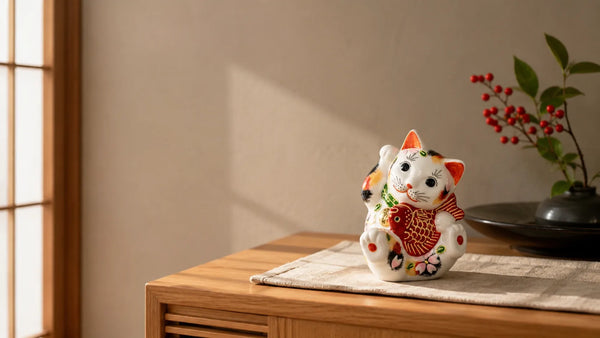
Our yellow Kutani maneki neko has a warm yellow ground with raised white detailing and coloured floral motifs. The product page should identify the actual decorative material and any documented maker attribution; raised decoration alone does not establish that it is clay slip.
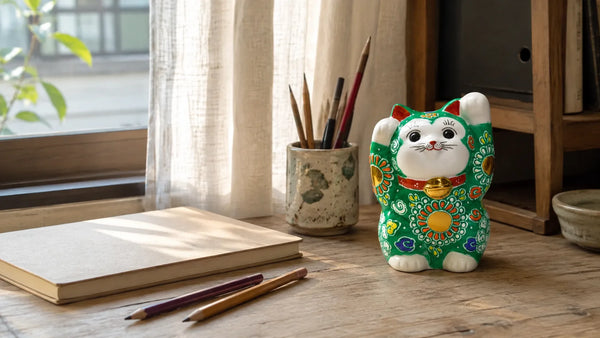
Our gold-tone calico Kutani cat takes a different route to gold: a 14 cm both-paws figure with gold-tone calico markings, raised mori-style overglaze detail, and an ema (絵馬, a Japanese votive plaque for written wishes) worked into the chest. For coin symbolism, the Tokoname lucky cat holds a large gold koban, the coin that stands in for wealth on many of these figures. Each cat is decorated individually, so small differences in tone and pattern between pieces are normal.

Choosing a gold or yellow lucky cat as a gift
For a business gift, a gold-coloured cat can acknowledge a wish for prosperity. A yellow cat may carry a different message, or simply be chosen because the recipient likes the colour. Check the dimensions, available display space, and the maker’s explanation before giving one.

To compare a three-colour design, see our calico maneki neko meaning guide. There are also dedicated guides to the green cat and red cat, and a wider maneki neko color meanings guide. Browse the maneki neko and lucky cats collection or shop opening gifts for suitable forms and sizes.
FAQ
What does a gold maneki neko mean?
A gold maneki neko is commonly associated with money, prosperity, and business good fortune, which is why gold cats are often placed by shop registers and given for new ventures. "Gold" can mean a fully gold-toned surface, gold-tone accents like a gilded bell or koban coin, or real gold leaf over ceramic, so check what a given piece actually is.
What does a yellow lucky cat mean?
It depends on the maker or region. Tokoname’s published guide associates yellow with finding a good partner, distinct from gold’s financial-luck meaning. Use the explanation supplied for the actual design.
Is there a difference between a gold and a yellow maneki neko?
Yes, their intended symbolism can differ. Tokoname’s guide is one example. There is also a material distinction: yellow describes a colour, while a gold-looking surface could be paint, metallic decoration, or documented gold leaf.
What does it mean when a lucky cat holds a coin?
The oval coin on many maneki neko is a koban (小判), an old Japanese gold coin that stands for wealth and prosperity. A cat holding or displaying a koban reinforces the money wish, which is why coin-bearing cats are often gold or gold-accented and popular as business gifts.
What should I check on a ZenKiln lucky-cat product page?
Look for the documented maker or brand, material, dimensions, decoration, and included packaging. Ask about any detail that matters to your choice but is not specified, such as whether metallic decoration contains gold.
This article explains colour and surface terminology. Product-specific attribution, materials, and packaging should be supported by the individual listing’s records.