Washi at the Tea Table: Where Paper Meets Ceramic
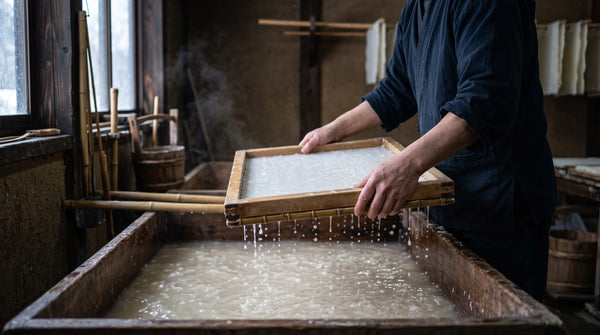
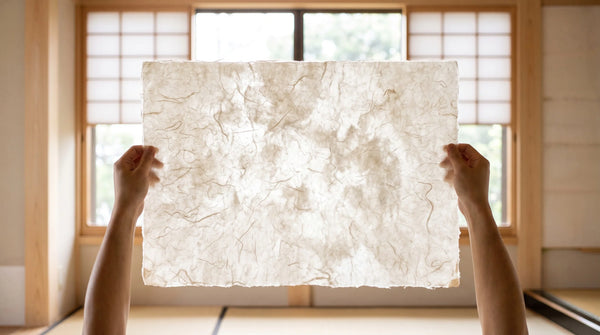
3 min readPaper can hold a sweet, add texture under a setting, wrap a protective gift box or carry a note. Choose the sheet for that job. Our washi introduction explains the material, including the particular handmaking traditions recognised by UNESCO.
Kaishi for sweets and tea practice
Kaishi (懐紙) are small folded sheets traditionally carried in the kimono. They serve several purposes at tea, including holding sweets. In Urasenke’s usucha instructions, the drinker wipes the drinking point with fingertips, then cleans those fingers on kaishi. Follow the host or teacher’s guidance for the school and tea being served.
At home, a sheet of kaishi intended for serving food can catch crumbs and provide a seasonal accent beside a cup. Choose by its stated use and finish, especially for moist sweets or fruit, rather than assuming that any plain washi is suitable for food contact.

Coasters, mats, and the surface under the pot
A paper coaster or mat can add colour and texture to a setting. Ordinary thin washi is not dependable insulation or a waterproof barrier. Use a suitable trivet for a hot pot and a moisture-resistant coaster where condensation could mark the table.
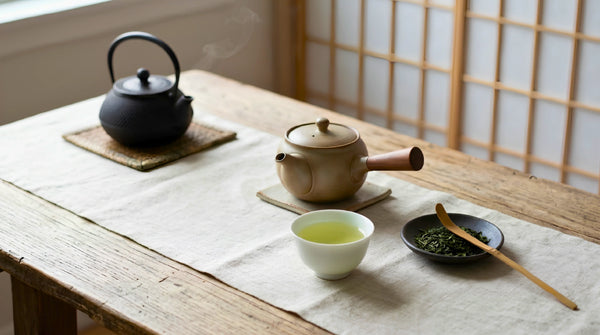
For a coordinated setting, choose paper that leaves the cup and food easy to see. The same practical attention to space appears in our six essentials of tea.

Wrapping a teaware gift
Washi makes an attractive outer wrapping for a teaware gift. Cushion and secure a fragile object first, then fold the decorative paper around its protective package. For shipping, it still needs appropriate cushioning and a strong outer carton; a single sheet and cord cannot provide that protection.
If the bowl has a paulownia box, check that it supports the object with suitable cushioning. Decorative paper can go around that package; it does not replace the protective packaging.

Adding a personal note
Write a short note about why you chose the piece or how you hope it will be used. If the card is intended as a keepsake, ask about paper composition and stability; the washi label alone does not guarantee longevity.

For daily tea, use fresh serving sheets and match any moisture-resistant finish to the food. A simple tea set is enough to build a setting around. For papers you intend to keep, our works-on-paper care guide covers storage and handling.
Sources: Urasenke’s usucha instructions above and Tsujitoku’s kaishi guide. Tea-school practice and everyday paper products have different instructions.