The Beginner's Tea Set: What You Need to Brew Sencha at Home
5 min readBrewing Japanese green tea at home is simpler than it looks. You do not need a tea master or a shelf of equipment — you need three things, chosen well. This guide covers exactly what goes into a beginner's tea set for brewing sencha, why each piece matters, and the few minutes of technique that turn good leaves into a good cup.
The short answer: three pieces
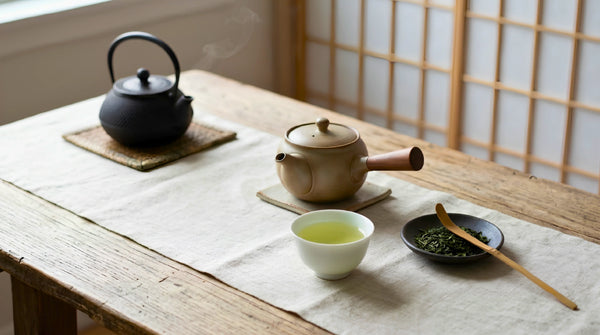
Begin with a teapot that can strain loose leaves, cups for the people drinking, and a way to measure or estimate water temperature. A thermometer is useful while learning; a second vessel can help cool the water.
- A side-handled kyusu with a suitable strainer is a convenient choice. Our kyusu teapot care guide explains cleaning and strainer care.
- Two yunomi — everyday teacups, taller than they are wide, with no handle.
- A kettle and a way to check the cooled water temperature.
1. The teapot: why a kyusu
A yokode kyusu has a side handle at an angle to the spout. Other kyusu have rear or overhead handles. Choose a comfortable grip, a strainer suitable for the leaf, and a usable capacity that matches your cups and usual number of drinkers.
This hand-painted Arita kyusu is a good first pot — porcelain, easy to clean, and sized for daily use:
If you would rather start with everything matched in one box, the set below pairs a kyusu with two cups — a complete starter in a single purchase. Browse the full range in Teapots & Tea Sets.
2. The cups: yunomi for every day
A handleless yunomi is a familiar choice for sencha, but another comfortable cup can work too. Choose the number and capacity for your routine, and alternate pours when sharing tea to even out the strength. Browse Cups & Mugs.
3. How to brew sencha at home
Sencha rewards cooler water and a short steep. The single most common mistake is water that is too hot, which pulls out bitterness instead of sweetness. Here is the everyday method:
- Boil, then cool. For the example below, let the water cool to about 80°C. Transferring it into a cup or cooling vessel helps, but the final temperature depends on water volume and the vessel’s starting temperature; one minute is not a reliable guarantee.
- Measure leaf and water together. One published starting recipe, Ippodo’s standard sencha brew, uses 10 g of leaf with 210 ml of water for a concentrated cup. Follow your tea packet’s recipe when it differs.
- Steep for 60 seconds for that recipe, then pour. Other sencha, especially deeply steamed leaf, may need a different time. Adjust one variable at a time to suit the tea and your taste.
- Pour in stages. Fill each cup a little at a time, alternating, until both are full and the pot is empty. This keeps both cups equal in strength.
- Save the leaves. Good sencha gives two or three infusions; the second is often the sweetest. Use slightly hotter water and a shorter steep each time.
Cooler water tends to emphasise sweetness and umami, while hotter water can bring a brisker taste. Gyokuro is a distinct shaded tea commonly prepared cooler; it is not simply a higher grade of sencha.
For summer, use the tea maker’s cold-brew recipe with clean equipment and refrigeration. Our guide to Japanese summer cooling and ryō o toru explores seasonal vessels and serving ideas.
Choosing material: porcelain or stoneware
Glazed porcelain and glazed stoneware can both work well. Kutani includes porcelain and earthenware products, so check the individual piece rather than assign one material to the whole region. Weight and heat retention also depend on wall thickness, size, and form. Our Japanese stoneware vs porcelain guide discusses clues and their limits; Japan's pottery regions introduces regional context.
Going further: matcha and the tea ceremony
Once everyday sencha feels natural, many people grow curious about matcha — the stone-ground green tea powder that is whisked rather than steeped. Matcha asks for different gear: a wide, shallow chawan (tea bowl) and a bamboo whisk, not a kyusu. The formal practice built around it, chanoyu, is an art the Metropolitan Museum of Art describes as a choreographed ritual of host, guest, and utensils. You do not need any of that to enjoy a bowl at home — just a chawan you like. Explore Matcha Bowls when you are ready.
FAQ
What is the minimum I need to brew Japanese green tea?
A teapot or infuser that suits the leaf and a comfortable cup are enough. A side-handled kyusu is one option. Measure leaf, water, and time consistently while learning; a second cup is useful when serving another person, but not essential.
What temperature should sencha be brewed at?
About 70–80°C is a useful starting range for many sencha, though the tea maker’s recipe takes priority. Ippodo’s standard recipe uses 80°C. Cooling by transferring water can help, but use a thermometer if you need a repeatable temperature.
What is the difference between a kyusu and a regular teapot?
Kyusu is a Japanese teapot term that includes several handle arrangements. The side-handled version recommended here is a yokode kyusu. Check the actual strainer design and usable capacity rather than assuming every kyusu has the same construction.
Can I use the same set for sencha and matcha?
Sencha is steeped and strained; matcha is whisked in water. You can use the same drinking cup after preparing either tea, but whisking matcha is easier in a bowl with room for a whisk. A kyusu strainer does not prepare matcha in the same way it prepares loose-leaf sencha.
Is porcelain or stoneware better for a beginner?
A smoothly glazed porcelain or stoneware pot can be a practical start. Check the inner surface, cleaning access, strainer, and care instructions. Heat retention and weight depend on the individual vessel, not only whether it is called porcelain or stoneware.
Source: Ippodo’s standard sencha recipe, linked above. Treat it as one starting method and follow the instructions for the tea you buy. Product cards provide current item details and availability.