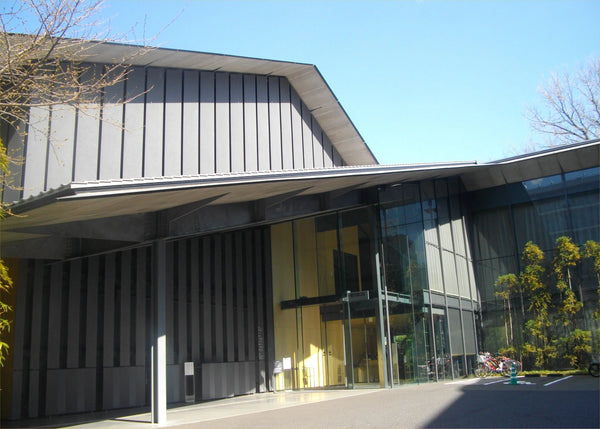
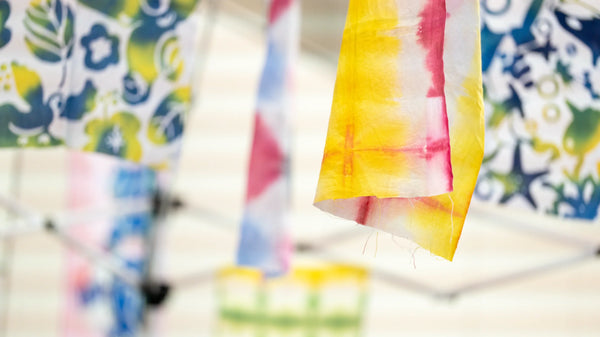
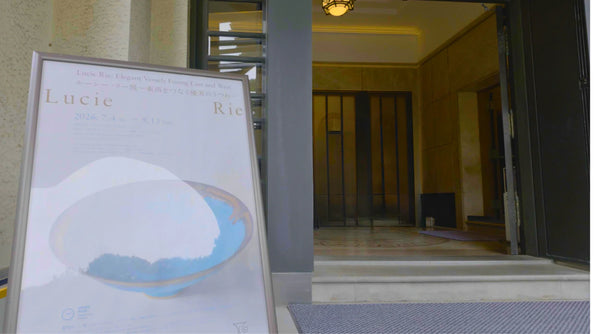
Creema’s HandMade In Japan Fes took place at Tokyo Big Sight on 11–12 July 2026. Its organiser guide reported around 3,000 creator participations across the two days, a cumulative count. This article uses the published programme as a starting point for looking at craft materials and making.
A two-day meeting of crafts
The programme combined a marketplace with workshops and performances, spanning ceramics, textiles, glass, wood, jewellery, paper, food and other work. Demonstrations offered a way to learn about processes as well as finished objects.

Looking at how objects are made
At a demonstration, watch which tools shape the surface and which steps take place away from the display. For a documented example beyond the programme itself, Ijiri Kazushige’s Shiga workshop describes a woodcarving practice passed through generations.

Ijiri Chōkokusho is in Kaminyū, Maibara, where woodcarving has a history of roughly 300 years. Founded in 1935, the workshop has continued through three generations. Its Suiun-bori (翠雲彫) carving includes religious ornament, festival floats, transom panels and smaller commissions.
A tool mark or carefully finished small detail can make the work easier to understand. Ask how it was made rather than assuming that an uneven edge proves handwork.
Ask about the material
For wood, ask about species, coating and any resin treatment. A claimed link to a shrine or historic building needs a named source and supporting records. Those details help distinguish the material’s history from a story attached to the finished product.
Paper, clay, and regional craft
Our Hosokawa-shi article follows a paper tradition, while the Shigaraki guide introduces ceramics from Shiga. For an individual purchase, connect the regional name with the maker’s actual materials and methods.
Questions to carry forward

Whether choosing at a fair or from an online catalogue, ask who made the object, what work was done by hand or machine, which materials were used and how it should be cared for. Clear answers are more useful than a general handmade label.
Sources: Creema’s HMJ 2026 guide, Ijiri’s workshop profile and Japan Finance Corporation’s account of the business. The workshop history above comes from the linked sources, not a ZenKiln interview. The venue and event photographs in this article were taken on site by ZenKiln.