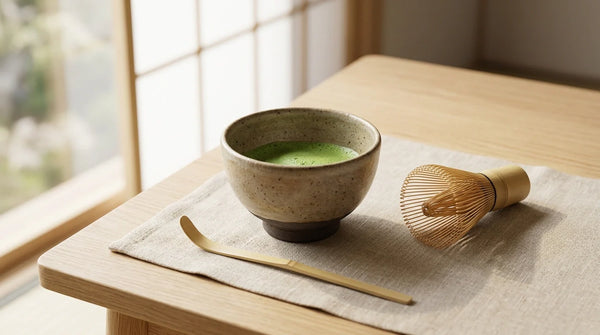
A chasen’s handle and fine tines are shaped from one section of bamboo. The whisk blends matcha with water; its flexibility lets it move through the tea with a light touch. It will wear with use, so choosing a suitable design and keeping the tines clean and dry both matter.
What a chasen actually is
A chasen (茶筅) mixes powdered matcha with water. For foamy usucha, or thin tea, whisking also incorporates air. Technique and the desired finish vary with tea-school practice; foam alone does not define every well-prepared bowl.
Takayama’s whisk-making tradition
Takayama in Ikoma, Nara Prefecture, is a recognised centre of chasen making with a history traced to the Muromachi period. The regional craft name applies to that production, not to every bamboo whisk sold elsewhere.
The official traditional-craft record describes hand splitting, shaving and shaping, using hachiku, kurochiku or madake bamboo with cotton thread.
For a Takayama purchase, look for an identified maker and origin. KOGEI JAPAN’s craft archive gives further background.
How a chasen is made
Bamboo is selected and prepared before shaping. The official Takayama account describes winter harvesting of hachiku that is two to three years old, followed by exposure to winter conditions and storage. Preparation varies and does not make bamboo immune to cracking.
Larger splits are divided again into fine tines. The maker softens, shaves and shapes the tips, then uses thread to separate the inner and outer arrangement. Controlling thickness and spacing takes care; the number of early splits is different from the finished tine count.
Reading the tines: kazuho and prong counts
Look at the tine arrangement, tip condition and stated purpose. For formal practice, use the design your teacher or school specifies.
Fine, numerous tines can help make foamy usucha. Ask the maker or teacher for a suitable koicha design, rather than choosing by a single tine number.
Kazuho (数穂) is a common designation. Read the maker’s specification for its tine arrangement and use; the name does not establish an identical count or a manufacturing origin.
How to use a chasen
Following the maker’s instructions, stand the tines in water for a minute or two before use and inspect them for damage. Keep hands clear of hot water.
For foamy usucha, sift and measure matcha into a suitable tea bowl, then add water according to the tea maker’s recipe. Whisk lightly from the wrist in a back-and-forth W or M motion, avoiding pressure against the base. Use an interior with room for the whisk to move. Our tea-bowl traditions guide introduces different forms. For more on the bowl's interior, rim and weight, see our everyday matcha bowl guide.

Caring for a bamboo chasen
After use, rinse the tines without soap and leave the whisk to dry in open air. A suitable kusenaoshi supports the head in the position its shape allows; keep air circulating around the tines. Never enclose a damp whisk in its tube. Replace damaged or mouldy whisks. See our companion guide to matcha bowl, chasen, and chashaku care.
From the ZenKiln catalogue
Check the origin and specifications for the whisk, and the usable size and care instructions for the bowl:
- Kazuho Bamboo Chasen — supplied with a storage tube; let the whisk dry fully before enclosing it.
- Iroe Yū Hidamari Cats Chawan — a painted Kutani bowl supplied in a wooden presentation box.
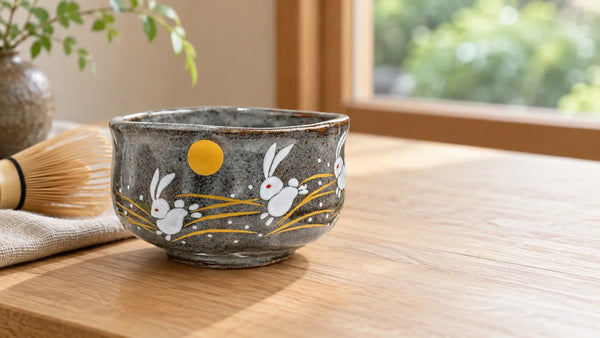
- Kōzan Kiln Hane-Usagi Chawan — a grey surface with raised white rabbit motifs; the colour does not identify an ash-glaze recipe.
- Iroe Yū Hana Floral Chawan — a floral-patterned bowl.
Browse the full Matcha Ritual collection for bowls and whisks together, or our Gifts for Tea Lovers selection.
FAQ
Can I use a chasen with any tea bowl?
Choose a stable bowl with enough open space for the whisk to move without scraping the sides or base. Depth alone is not the deciding factor. A narrow cup can restrict movement; check the bowl’s interior dimensions as well as its overall size.
Care reference: Ippodo’s chasen guidance. Check the actual maker and origin of a whisk rather than attributing it from this regional introduction.