Maki-e: The Japanese Art of Sprinkled-Gold Lacquer
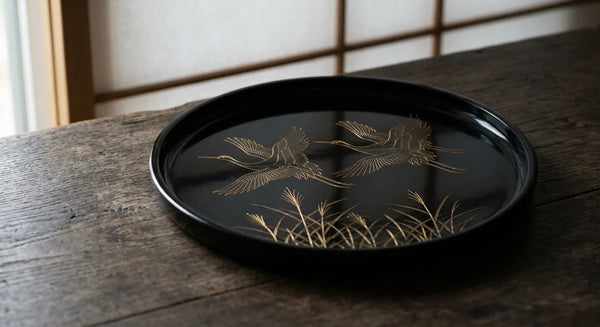
4 min readOn a lacquer box, maki-e can appear as a fine gold line, a raised leaf or a field of scattered metal. The name means “sprinkled picture”: metal powder is placed onto a design drawn in lacquer. The way that design is built and polished gives each technique its character.
What Is Maki-e?
An artisan draws in urushi (漆), lacquer refined from tree sap, and sprinkles metal powder onto the tacky design. A bamboo tube, makizutsu, or a soft brush, kebo, helps place the powder. Loose powder is removed; further lacquer and polishing depend on the technique.

Maki means “to sprinkle” and e means “picture”. Powder builds the design differently from a sheet of gold leaf. The reference overview of maki-e lists copper, brass, tin and platinum as well as gold and silver among the metals used for different colours and textures.
From early decoration to workshop traditions
The National Diet Library’s Japan Search gallery identifies eighth-century makkinru decoration in the Shōsōin treasures as an early form. Maki-e spread further during the Heian period on furnishings and religious objects. Britannica’s overview provides additional background.
Later workshop traditions include the Kōami and Igarashi families. Reference accounts identify Kōami Dōchō (1410–1478) among the early named masters associated with surviving works. By the Edo period, maki-e decorated sword fittings, bridal furnishings and tea utensils as well as other objects.
The Three Core Techniques of Maki-e
Three principal methods describe how the metal design sits against the surrounding lacquer. A combined technique, shishiai togidashi maki-e, brings raised and polished work together.
Hiramaki-e (平蒔絵) — Flat Maki-e
Hiramaki-e leaves the design slightly raised above the ground. The painted lacquer receives metal powder, which is secured and polished. This relatively direct method became widely used during the Azuchi-Momoyama period.
Togidashi Maki-e (研出蒔絵) — Burnished Maki-e
In togidashi maki-e, lacquer covers the metal design and the surrounding ground. Polishing then reveals the pattern within a smooth surface. Togidashi means bringing out by polishing.
Takamaki-e (高蒔絵) — Raised Maki-e
Takamaki-e builds relief with lacquer mixed with material such as charcoal or clay powder. Metal powder finishes the raised motif, allowing a wing or branch to stand above the background. Shishiai togidashi maki-e combines this modelling with polished work and requires careful control of both.

Maki-e's Relatives: Raden, Chinkin, and Gold on Porcelain
Maki-e can share a piece with other techniques. Raden (螺鈿) inlays iridescent shell. Chinkin (沈金) holds gold leaf or powder in lacquer-lined incisions. Nashiji, “pear skin”, places metal flakes in translucent lacquer for a speckled ground.

Fired gilding on porcelain uses a different process from attaching powder to lacquer. Wood is a common lacquer base, but other materials can also support lacquer decoration. Check the technique as well as the material beneath it.
Looking at and caring for maki-e
Notice the density of the metal, the fine lines and any raised areas without touching the decoration to test it. For attribution, ask for the maker, process and associated records. A signed box can support a documented history but is not conclusive on its own.

Follow the maker’s instructions for the object. For washable serving lacquerware, use lukewarm water, a soft cloth or sponge and mild detergent, then dry promptly. Avoid soaking, abrasives, dishwashers, microwaves and ovens; keep pieces away from direct sunlight and dry heated air. Decorative, fragile or repaired work may need a different method. See our guide to urushi lacquerware care.
Maki-e in regional lacquerware
Our studies of Wajima-nuri and Kishu lacquerware place decoration alongside the wooden body, foundations and finishing coats. For gold decoration fired on a glazed ceramic surface, read kinrande gold-brocade porcelain.
FAQ
Can maki-e be applied to a ceramic object?
A ceramic body can support lacquer decoration. Ask whether the gold is fixed with lacquer or by a ceramic firing process, then follow the care instructions for the finished piece.
Sources: the National Diet Library gallery and reference overviews linked above. Individual museum records and makers’ descriptions identify the techniques used on particular objects.