Calico and Orange Maneki Neko: Meanings and Differences
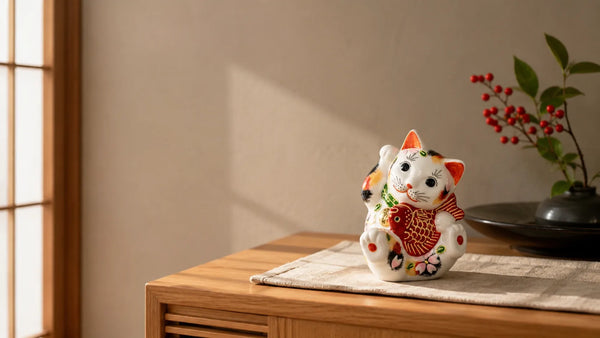
2 min readThe white, orange and black patches of a calico maneki neko recall the Japanese mike-neko (三毛猫), or three-coloured cat. It is a familiar lucky-cat pattern associated with good fortune in a broad sense. A solid orange figure is a different design, and its meaning is less fixed.
Our maneki neko colour guide compares the wider palette.
Calico and orange are different choices
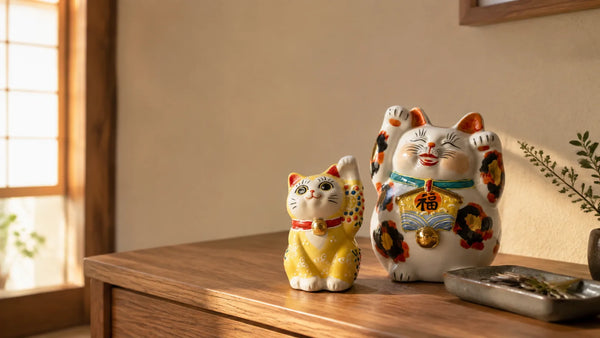
Choose calico for the familiar three-coloured coat rather than one narrowly defined wish. With an orange figure, look at the inscription and other motifs and read the maker’s explanation; “warm” or “lively” describes an impression of the colour, not a settled traditional meaning.
How the symbolism compares
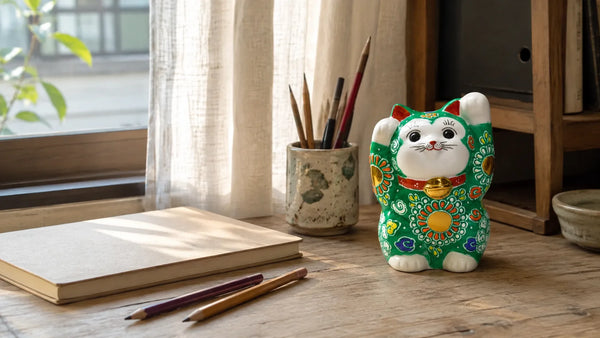
The Tokoname Tourism Association’s guide associates gold with financial luck and black with protection, a reading explored in our black maneki neko article. There is no universal ranking that makes one colour luckier than another.
Many familiar beckoning-cat figures use a calico pattern, but their history cannot be traced to one confirmed original object. Maneki neko meaning and origins introduces the overlapping stories and ceramic traditions.
Choosing a Calico or Orange Maneki Neko
Compare how the pattern works with the rest of the figure: the Kutani gold calico cat adds gold, the Kutani tai cat carries a red sea bream, and the Tokoname lucky cat offers another regional form. Check dimensions and paw position for the place it will stand. The care guide covers cleaning and display, and the Lucky Cats collection has more examples.
FAQ
Is a calico Maneki Neko a good gift?
It can suit a general wish for good fortune without assigning a specific goal to the recipient. Choose a form and pattern they would enjoy displaying, and check its size and included packaging before ordering.