Maneki Neko Meaning and Origins: What Japan’s Lucky Cat Really Means
4 min readManeki Neko means “beckoning cat.” The raised paw is not waving goodbye; it reflects the Japanese gesture of beckoning someone closer, with the palm facing down. The figure is both a folk symbol and a ceramic object, commonly associated with welcome and good fortune.
Its origin cannot be reduced to one confirmed event. Gotokuji Temple in Tokyo preserves the best-known legend, while Imado pottery connects the cat to Edo-period ceramic production. Paw position, colour, and the objects held by the cat developed into further layers of customary meaning.
What Does Maneki Neko Mean?
In Japanese, maneku means “to beckon” and neko means “cat”. The figure usually expresses a welcome or a wish for good fortune.
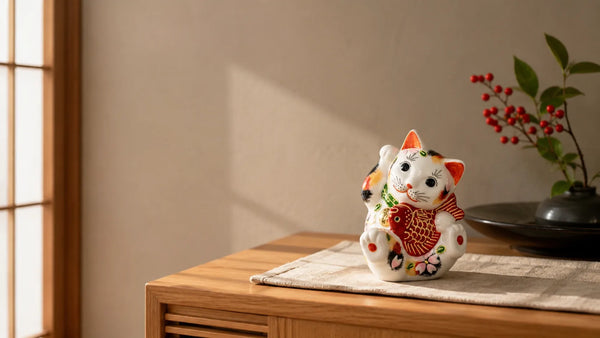
Maneki Neko appear at shop entrances, restaurants, family homes, and on personal shelves. The Lucky Cats collection shows how the same gesture changes across kilns and sizes, including the familiar Tokoname left-paw form. For cleaning and safe display, use the maneki neko care guide.

The stories behind the cat
Temple legends and Edo pottery preserve different accounts of the cat’s beginnings. No single surviving account settles its origin.
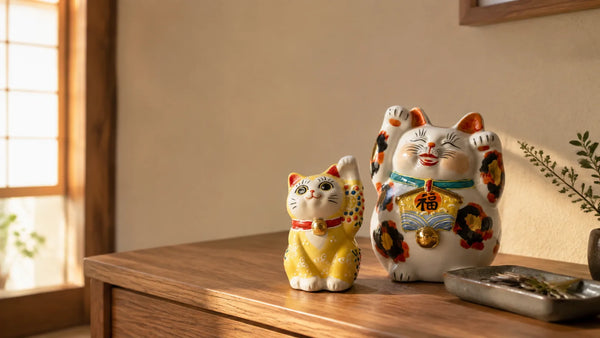
Makers have continued to adapt the form, including designs such as this mother-and-kitten cat. Other feline pieces appear in Gifts for Cat Lovers.
Gotokuji and the Legend of Good Fortune
In Gotokuji Temple’s account, a cat beckons Ii Naotaka into the temple before a storm. The temple preserves this story as its own origin tradition.
Gotokuji’s cat holds no coin. Visitors pray at Shofuku-den for family well-being, prosperous business, luck and happiness. Other designs combine the cat with additional auspicious figures, such as the Seven Lucky Gods maneki neko from Yakushi Kiln.
Imado, Edo Pottery, and the Ceramic Thread
Another important thread leads to Imado, an old pottery district in Edo. Historical references to Imado pottery place Maneki Neko and Inari fox figurines alongside everyday wares, connecting lucky-cat folklore directly with the history of ceramic production.
As the motif spread, different pottery centres developed their own forms. Tokoname became particularly well known for ceramic Maneki Neko, while Kutani workshops used coloured overglaze decoration and gold. Compare the Tokoname figure with a Kutani gold calico cat. Seto production is discussed in the guide to Yakushi Kiln (Yakushigama).
Left Paw vs. Right Paw: What the Raised Paw Means
Paw position is one of the most widely recognised distinctions. A raised left paw is commonly said to welcome people, guests, or customers. A raised right paw is more often associated with money or good fortune.
Both raised paws may combine wishes for welcome and good fortune, with the details explained by the maker. Compare a left-paw Tokoname cat with a double-paw Kutani cat.
Maneki Neko Colors and Symbolism
Colour adds a customary layer, with meanings that can differ by place and maker. The Tokoname tourism guide, for example, separates gold for financial luck from yellow for a good partner. See Maneki Neko colour meanings, with examples including a black Kutani cat and a gold calico cat.
From shop entrances to household shelves
Maneki neko appear at shop entrances, in temple traditions and on shelves at home. A business owner may choose one to welcome customers; someone else may simply enjoy the figure’s expression or painted surface.
Regional clay, moulding, painting, glaze, inscriptions, coins, bibs, and held objects all change how the cat is read. The motif also moves beyond figurines: a Kutani cat mug carries feline imagery without functioning as a lucky-cat charm.
Choosing a place for a lucky cat
For a shelf or desk, measure the available space and check the figure’s footprint, weight and height. An entrance or counter may suit a larger cat, provided it has a stable surface.
The Housewarming Gifts and Shop Opening Gifts collections offer examples for these occasions. Choose a design whose expression and customary meaning suit the recipient.
Compare regional forms in the Lucky Cats collection, from Tokoname figures to Kutani painting and Seto-related designs.
FAQ: Maneki Neko Meaning and Origins
Is Maneki Neko Japanese or Chinese?
Maneki Neko is Japanese. Outside Japan it is sometimes mistaken for a “waving cat,” but the figure comes from Japanese folklore and ceramic tradition.
Where did Maneki Neko come from?
Several traditions contribute to its history. Gotokuji preserves a temple legend, while Imado connects early ceramic cats with Edo pottery. The evidence does not point to one confirmed starting event.