Yakushi Kiln (Yakushigama): Seto's Modern Maneki Neko Tradition
4 min readYakushigama (薬師窯), often called Yakushi Kiln in English, makes the beckoning-cat motif part of a broad range of seasonal ceramic ornaments. It is a brand of Chugai Touen in Seto City, Aichi Prefecture, a centre known for decorative ceramic figures.
What is Yakushi Kiln (Yakushigama)?
Chugai Touen was founded on August 13, 1952, according to the company’s official website. Yakushigama is its ornament brand, and Suhara Ceramic Workshop (須原陶磁工房) is its production division. The founding date belongs to the company; the site does not give a separate brand-launch date.
The brand’s range combines moulded forms and painted decoration. Materials and finishes vary: check an individual design for its clay or porcelain body and whether a gold detail is leaf or another finish.
The story behind the name "Yakushi"
The kiln takes its name from Yakushi Nyorai (薬師如来), the Buddha of Medicine in Japanese Buddhism. According to local accounts, a small shrine dedicated to Yakushi Nyorai once stood on the grounds of Chugai Touen during the Edo period. The shrine is said to have been built by Gyoki (行基), an eighth-century Nara-period monk known across Japan for founding temples and directing public works.
The brand says the Yakushi Nyorai image is now enshrined at Hosenji Temple (宝泉寺) in Seto, where festivals are held on November 8 and 12. The name “Yakushi kiln” keeps this local connection visible.
Seto novelty and Yakushigama’s figurines
Seto novelty is the name given to the region’s decorative ceramic figures, particularly the porcelain figures made for export from the Meiji period onward. Mould-making and detailed painting became central skills across its workshops.

Seto belongs to the Six Ancient Kilns grouping with Tokoname, Shigaraki, Bizen, Tamba and Echizen. These are six historic production centres, rather than a ranking by age. Read the Six Ancient Kilns project for Seto’s history and the word setomono.
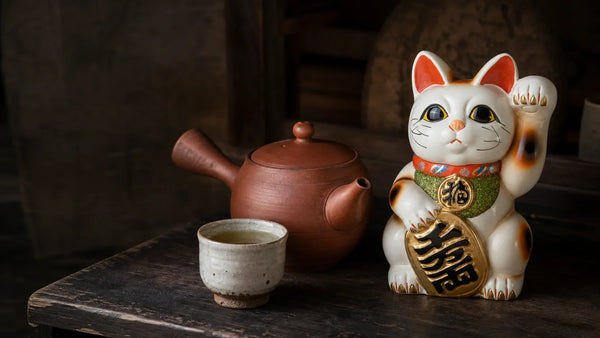
On Yakushigama cats, inscriptions often express a wish: shōfuku (招福) invites good fortune, kaiun (開運) suggests opening to good fortune, and kinun (金運) refers to financial luck.
Faces, inscriptions and held objects
- A mallet, sea bream or group of deities adds meaning to the raised paw. Shichifuku (七福) means “seven blessings”; Shichifukujin (七福神) names the Seven Lucky Gods. Read the inscription together with the figures shown.
- Compare the eyes, whiskers, ears and collar: their details give each cat its expression.
- The range extends beyond cats to zodiac animals, Seven Lucky Gods figures, takarabune treasure boats and other seasonal ornaments.
Yakushigama's modern Maneki Neko range
The range includes small shelf ornaments and larger figures for a counter or entrance:
- Double-paw cat with the Seven Lucky Gods, 25.5 cm: both paws rise above figures of the deities arranged around the body.
- Cat with mallet, sea bream and chirimen collar, 26.5 cm: celebratory motifs and a textured crepe-fabric collar. Check the fabric specification if the fibre matters to you; chirimen names the weave, not silk alone.
- Mother and Kitten Maneki Neko, 7 cm — a compact piece for a desk or small display shelf.
- Moving-paw cat, 21 cm: a battery-powered design with a mechanical right paw.
- Takarabune treasure boat with twelve zodiac figures: a New Year design featuring the animals together.
Browse the full Yakushi Kiln collection, or the wider Lucky Cats catalogue for variants by colour and paw position from Yakushigama and other named kilns.
Choosing a cat for an occasion
Start with where it will stand and the message you want to give:
- For a new shop — choose a stable position on a counter or shelf, where the cat can be seen without obstructing work.
- For a new home — select a size and expression the recipient will enjoy living with.
- For New Year, consider a zodiac ornament and check the animal for the year you are celebrating.
- For a personal collection — compare the expression, inscription, and ceramic finish with pieces already displayed.

A raised right paw commonly expresses financial good fortune; a left paw welcomes people. Both paws may combine these wishes. For colour associations, read Maneki Neko Color Meanings.
- Measure the available space before choosing a size, including the depth of the shelf or counter. A larger cat needs a stable surface with room around its base.
- Check which box is included for a gift. A maker’s printed box helps identify and protect the model; a tomobako is a different kind of accompanying, inscribed box associated with an artist’s work.

FAQ
Are Yakushi Kiln Maneki Neko handmade?
The brand describes production and painting at its Suhara workshop. Designs may combine moulded forms with hand finishing. Check the description of the model for specific claims such as hand-painted inscriptions or gold leaf.
Written by ZenKiln Editorial. Sources: Yakushigama’s official brand and company history and its 2026 Maneki Neko catalogue.
This guide is part of ZenKiln's Kiln Studies series. To see where Seto sits among Japan's ceramic regions, read our overview of Japan's pottery regions.