Gin-tsugi: Repairing Japanese Ceramics with Silver
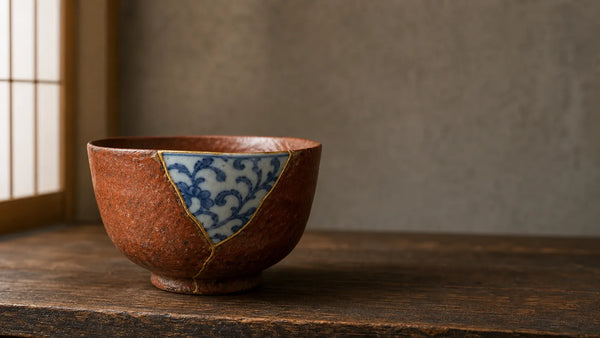
5 min readGin-tsugi (銀継ぎ), “silver joinery”, finishes a lacquer repair with silver rather than gold. The seam begins with a cooler metallic colour and may darken as the silver tarnishes. Whether that changing appearance suits a piece is a choice to discuss with the repairer.
This guide covers silver-finished lacquer repair, the choice of metal and the care questions to ask before a repaired piece returns to use. For gold repair, see our companion guide to kintsugi, the art of gold-repaired pottery.
One craft, two metals: where gin-tsugi fits
Silver finishing belongs to the broader family of lacquer repairs commonly discussed under kintsugi. The fragments are joined and losses filled before a surface finish is applied. The metal changes the appearance of the seam; it does not impose one philosophy on every owner or repair.
Bakōhan is a famous staple-repaired Chinese tea bowl associated with Ashikaga Yoshimasa. Tokyo National Museum’s account says it was sent to China in search of a replacement and returned with staples when none could be found. This is a recorded tradition about the bowl, not proof of when gold or silver lacquer repair began.
In a traditional repair, lacquer-based adhesive and fills join the fragments and rebuild losses. Mugi urushi is a wheat-flour and lacquer adhesive; filling mixtures differ with the work. The silver is a surface finish applied to a still-tacky lacquer line, not a soldered joint.
How a silver repair is actually made
A repairer fits and joins the fragments, allows the adhesive to cure, fills losses and refines the seam before finishing. Materials, layer thickness, temperature and humidity determine the schedule. There is no universal two-week stage or fixed humidity for all repairs.

A silver finish may use a black lacquer undercoat, while gold is often applied over red bengara lacquer. Powder adheres to the tacky finishing line and bonds as the lacquer cures. The repairer chooses the sequence and finishing method for the materials; complete work can take weeks or months.

Raw urushi can cause contact dermatitis, and broken ceramic edges are sharp. This description is not a home repair procedure. Gen Saratani’s repair page shows a practitioner’s work; it does not establish heat, solvent or food-contact compatibility for your piece. Ask the repairer to confirm all materials and intended uses.
Sulphur compounds can tarnish silver, changing its colour from bright metal to darker tones. Gold is less prone to tarnishing, though the lacquer and seam can still wear or change with use.

Silver or gold? Matching the metal to the piece
Compare a silver or gold line against the object’s existing colours. Silver can make a restrained contrast with dark, blue or grey surfaces, including the black glazes discussed here. Gold may echo existing gilding or stand out against another colour. These are visual preferences, not rules for which glaze can be repaired.

Ask for the full quote: labour and the extent of damage matter as well as the metal. Strength depends primarily on the damage, adhesive, preparation and execution, rather than whether silver or gold finishes the surface.
The wider repair family: joined fragments and staples
Yobitsugi (呼継ぎ) incorporates a fragment from another vessel into a repair. Other repairs reunite original fragments or use appropriately matched replacements. Staple repairs mechanically bridge a break; they are a different construction from lacquer-and-metal finishing.

The Freer Gallery’s 2008–09 exhibition “Golden Seams” examined repaired ceramics. In Tokyo, the Ebara Hatakeyama Museum holds Seppō, a seventeenth-century red Raku tea bowl by Hon’ami Kōetsu, with gold-powder lacquer repairs across firing cracks. Repair can become part of a work’s interpretation. In another use of lacquer and metal, Wajima’s chinkin sunken-gold carving decorates a surface rather than joining fragments.
Caring for a silver-repaired piece
First establish whether the repair is approved for food or liquid use. If it is, follow the repairer’s washing and temperature instructions; gentle hand-washing is commonly required. Avoid dishwashers, cooking heat and microwaves for metal-finished lacquer repairs. Our microwave and dishwasher guide explains why a whole object’s construction matters.

Do not use silver dips or abrasives on a repaired seam. Ask the repairer before polishing tarnish or removing stubborn stains; the cha-shibu tea-stain guide does not override repair-specific care. For storage, protect the piece from pressure and impacts as described in our long-term storage guide.
Comparing colours in the collection
These pieces illustrate palettes you might discuss with a repairer. They are not guarantees that a future break could be restored for use:
- Iroe Yū Hidamari Cats Chawan — painted decoration on a muted ground.
- Kutani Yoshidaya Mountain Sakura & Bird Yunomi — a decorated everyday cup.
- Shigaraki Zansetsu Vase — contrasting light and dark surfaces.
- Kutani Honkin Hanazume Cup & Saucer — a floral design incorporating gold decoration.
For related objects, browse our Gifts for Tea Lovers collection and use the individual listing for current specifications and availability.
FAQ
Is a silver-repaired piece food-safe?
Ask the repairer to confirm all adhesives, fillers, pigments and finishes for the food, temperature and contact conditions you intend. Natural urushi and silver alone do not establish the whole repair’s suitability. Keep a piece with an unknown repair for display until assessed.
My piece is missing fragments entirely. Can it still be repaired?
It may be possible to rebuild a loss with a suitable fill or fit another fragment, including a contrasting one in yobitsugi. The size and location of the loss affect both feasibility and future use.

This is an introduction to repair, not a DIY procedure or certification of a particular vessel. Museum records above document the historical examples.