Reading a Chawan's Foot Ring: What the Kōdai Reveals
Written by Team ZenKiln · from our Tokyo atelier
Pick up almost any Japanese tea bowl and the first things you notice are the glaze, the painting, the silhouette. Experienced collectors look somewhere else first: they turn the bowl over. The foot ring — the kōdai (高台) — is the most honest part of a chawan. The glazed surface shows you what the maker wanted you to see; the foot shows you how the bowl was actually made. This guide explains how a kōdai is formed, the classic foot-ring shapes worth knowing, what the exposed clay tells you, and how to inspect one without putting the bowl at risk.
What Is a Kōdai?
Kōdai (高台) is the raised foot ring on the underside of a Japanese ceramic vessel. It lifts the body off the table, gives the drinker something to grip from below, and — because it is usually left unglazed — exposes the raw clay of the bowl. In tea culture, the foot is treated as a legitimate part of the design, not an afterthought.
That last point separates chawan from most Western tableware. A factory dinner plate hides its base; a tea bowl presents it. When a chawan is passed around for viewing after tea, guests are expected to look at the foot — its shape, the trimming marks, the texture of the clay — as closely as they looked at the glaze. The kōdai is where the potter's hand is least disguised.
How a Foot Ring Is Made
On a wheel-thrown bowl, the foot is not thrown — it is carved. The potter throws the bowl with extra clay left at the base, lets it firm up to the leather-hard stage, then inverts it on the wheel and trims the excess away with a kanna, a small steel trimming tool. This process, called kezuri (削り), cuts the foot ring free and thins the lower walls to their final weight.
Trimming leaves evidence. Fine concentric tool lines, a slight chatter where the kanna skipped, a spiral where the potter finished the center of the foot — these marks are individual to the maker's speed and touch, which is why two bowls of identical pattern can feel different in the hand. Hand-built bowls, including many raku-type chawan, skip the wheel entirely: their feet are carved freehand and tend to be lower, softer-edged, and less symmetrical, which is part of their character rather than a defect.
A Field Guide to Foot-Ring Types
Tea-ware vocabulary names foot rings the way wine vocabulary names finishes. A few of the classic forms:
- Wa-kōdai (輪高台) — the standard circular ring foot, cleanly trimmed. The default on most porcelain and stoneware chawan.
- Takenofushi-kōdai (竹節高台) — a "bamboo-node" foot with a stepped profile resembling a joint of bamboo, strongly associated with Ido-type bowls in the Korean peninsular tradition that Japanese tea masters prized.
- Wari-kōdai (割高台) — a split or notched foot, deliberately cut through in one or more places. A bold, sculptural choice seen on some Momoyama-period-style tea wares.
- Kairagi (梅花皮) — not a foot shape but a foot texture: glaze that has crawled and beaded into rough granules around the lower body and foot, named for its resemblance to plum-blossom bark. On Ido-type bowls it is celebrated, not repaired.
None of these terms is a grading system. A plain wa-kōdai on a well-made bowl is not "lesser" than a dramatic wari-kōdai — the foot should suit the bowl. What the vocabulary gives you is a way to notice deliberate choices you might otherwise read as accidents.
What the Exposed Clay Tells You
Because the foot is usually unglazed, it is the one place you can see and touch the actual clay body of a chawan:
- Color and texture. A bright white, smooth, glassy foot indicates porcelain. A gray, buff, or rust-toned foot with visible grain indicates stoneware or earthenware. Iron-rich clays fire darker and often show small dark specks.
- Weight logic. A bowl that feels right in the hand usually has a foot trimmed in proportion to its walls. A foot left thick and heavy on a thin-walled bowl, or vice versa, suggests less careful finishing.
- Firing evidence. Small rough scars on the foot or inside it — me-ato (目跡) — are marks left by the small supports that kept stacked wares from fusing in the kiln. On traditional wood-fired wares these are accepted as part of the bowl's biography.
- The ring test of honesty. An unglazed foot is not an unfinished foot. Leaving the kōdai bare is deliberate: glaze there would fuse the bowl to the kiln shelf during firing.
Marks, Seals, and Signatures
The underside is also where most kilns and workshops sign their work. On modern Kutani ware, for example, you will commonly find a red or gold mark reading 九谷 (Kutani) together with the kiln or workshop name — the bowls in our own catalog carry marks like the red 遊 seal of the Iroe Yū workshop or the 九谷 幸山 mark of the Kōzan kiln, both in Ishikawa Prefecture. A few practical notes:
- A foot mark identifies the kiln or workshop, not necessarily an individual artist, unless the maker states so.
- Absence of a mark is common on older folk wares and on some traditions that historically did not sign — an unmarked foot is not evidence of a fake.
- On boxed pieces, the signed wooden box (tomobako) often carries more attribution detail than the foot itself; keep box and bowl together.
How to Inspect a Foot Ring Properly
In a formal tea gathering, examining the utensils — haiken (拝見) — happens at the host's invitation, and the etiquette exists mostly to protect the wares. The same logic applies at home or at a dealer's table:
- Remove rings and watches before handling.
- Work low: keep the bowl a few centimeters above a soft surface — a cloth, tatami, or your lap — never at chest height over a hard floor.
- Support the body with one hand and tilt the bowl toward you rather than flipping it overhead.
- Run a fingertip, not a nail, around the foot to feel the trimming.
- Set the bowl down foot-first, gently — the unglazed ring can scratch lacquer and polished wood, so use a cloth or board on fine surfaces.
For day-to-day care of a matcha bowl and its companion tools, see our guide to matcha bowl, chasen, and chashaku care. New to chawan etiquette generally? Start with how to hold a chawan and our five tea bowl traditions every collector should know.
Feet Worth Turning Over: Chawan in the ZenKiln Collection
Every chawan we carry is photographed and described with its maker disclosed, and the foot of each tells its own story:
- Kutani Hana floral matcha chawan by the Iroe Yū workshop — hand-thrown stoneware with the workshop's red 遊 seal at the foot.
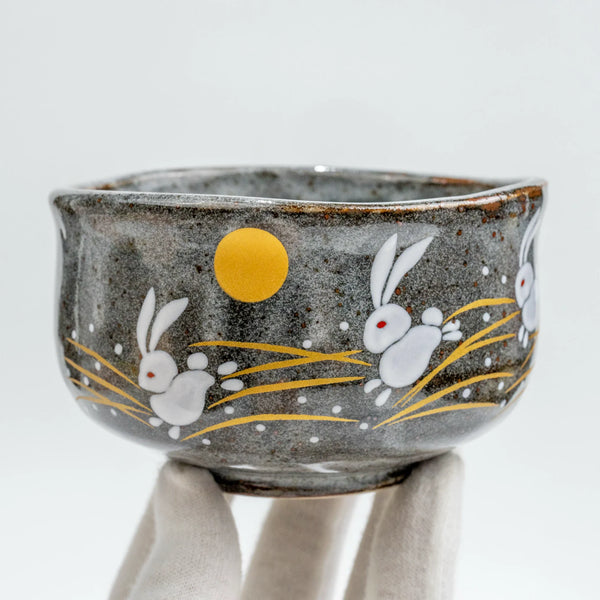
- Kutani Hane-Usagi leaping rabbit moon bowl by Kōzan kiln — speckled gray ash-glaze stoneware with a gold 九谷 幸山 foot mark.
- Hidamari rabbit Kutani matcha chawan — a pair of painted rabbits above a trimmed wa-kōdai, paulownia gift box included.
- Hidamari cats-in-blooms tea bowl — wabi-sabi gray glaze on stoneware, Ø 11 cm, with kiri box.
Browse the full range in our teaware collection.
Frequently Asked Questions
What is the kōdai on a Japanese tea bowl?
The kōdai is the foot ring on the underside of the bowl. It is carved (not thrown) at the leather-hard stage, usually left unglazed, and is considered an intentional part of the bowl's design in Japanese tea culture.
Why do collectors turn a tea bowl upside down?
The foot is the least disguised part of a chawan. It reveals the raw clay body, the maker's trimming style, firing evidence, and any kiln seal or signature — information the glazed surface conceals.
Does an unglazed foot mean the bowl is unfinished?
No. The foot is left bare deliberately, because glaze on the foot would fuse the bowl to the kiln shelf during firing. The exposed clay is part of how a chawan is meant to be appreciated.
What is kairagi?
Kairagi (梅花皮) is glaze that has crawled and beaded into rough granules near the foot, named for its resemblance to plum-blossom bark. On Ido-type tea bowls it is a celebrated trait rather than a flaw.
Do all chawan have a maker's mark on the foot?
No. Many older folk wares and some traditions were historically unsigned. A mark identifies a kiln or workshop when present, but an unmarked foot is not evidence of a fake — boxed pieces often carry attribution on the signed tomobako instead.
How should I set a chawan down on a wooden table?
Gently, foot-first, ideally on a cloth or board. The unglazed foot ring is abrasive enough to scratch lacquer and polished wood over time.
Editor's note: Foot-ring terminology in this article reflects established Japanese tea-ware vocabulary. Where individual kilns are mentioned, attribution follows the maker information disclosed on each product page; we do not attribute marks, dates, or makers beyond what our suppliers document.