How to Choose a Japanese Sake Cup: Ochoko, Guinomi, Sakazuki
5 min readReach for a bottle of sake and the next question is what to pour it into. The choice is not only decoration: the cup you pick changes how warm the sake stays, how much you drink at once, and whether the aroma reaches you. This guide sorts out the three cups people ask about most, the ochoko, the guinomi, and the sakazuki, then helps you match a cup to the sake you drink and the way you drink it.
The three cups, plainly
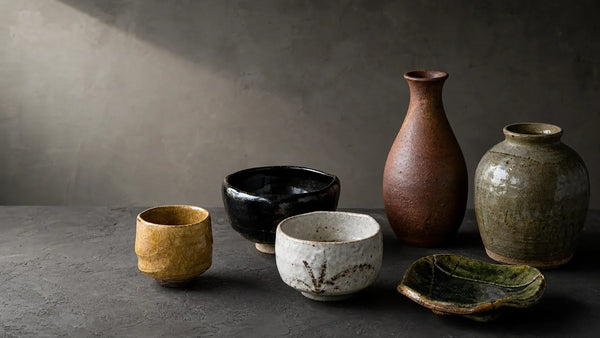
An ochoko is the small, everyday sake cup; a guinomi is the larger cup for slow sipping; a sakazuki is the flat, shallow cup used for ceremonies. The ochoko (お猪口) holds a mouthful or two and is what a tokkuri flask pours into at most tables. The guinomi (ぐい呑み), from a phrase meaning to drink in one gulp, is wider and deeper, favored when you want to nose a good sake rather than only sip it. The sakazuki (盃) is the flat, saucer-like cup seen at weddings and shrine rituals, including the san-san-kudo exchange.
Two more vessels round out the picture. A tokkuri (徳利) is the narrow-necked flask for warming and pouring; a katakuchi (片口) is an open lipped pitcher used for chilled sake. A masu (枡) is the square wooden box that traditionally holds one gō, about 180 ml, and is sometimes used as a cup itself.

Match the cup to the temperature
Sake is served chilled, at room temperature, or warmed, and the temperature should guide the cup. Hot sake, or atsukan, is a winter pour served around 50°C; it suits a small ceramic ochoko you refill often, so it stays warm in the cup. Chilled sake, reishu, is served around 10°C like a white wine, and high-grade sake is usually drunk cool because heat can flatten its aroma. For chilled premium sake, reach for glass or a wider cup that lets the fragrance open.
This is why a sake drinker often keeps more than one cup: a ceramic ochoko for warm winter sake, and a glass for chilled summer bottles.

Material changes the drink

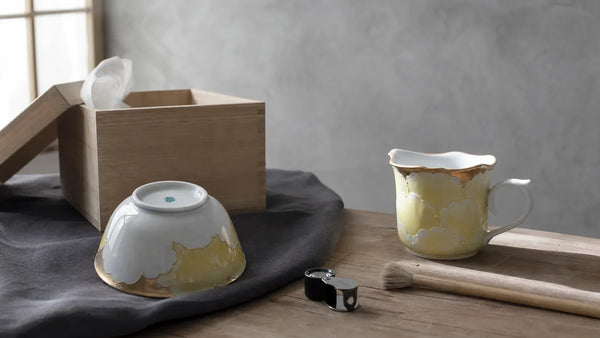
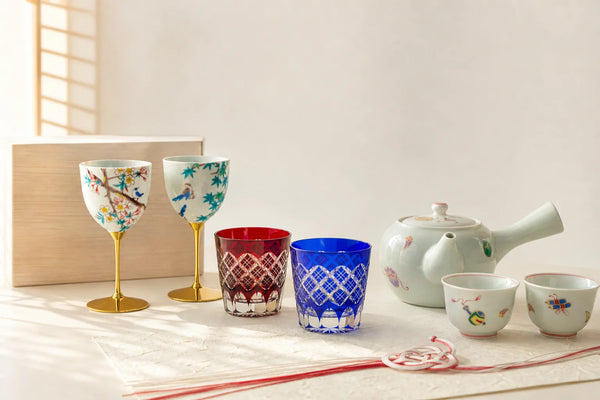
Porcelain, glass, and stoneware each do something different. Hand-painted porcelain from Kutani keeps warm sake warm and gives you a decorated surface to enjoy; the Kutani ochoko set of five in a wood box ($56) is the classic table set. Glass suits cold sake and shows its clarity, whether an Edo glass ochoko with gold leaf ($48) or a cold set with an ice pocket that keeps a summer pour crisp. Stoneware, like a double-wall Mino rock cup, holds temperature and feels substantial in the hand. If you are unsure how a material behaves, our guide to stoneware versus porcelain covers the differences.

Sets, servers, and gifts
For a table, a set beats a single cup. A tokkuri-and-cup set such as the Kutani three-piece sake set ($155) pairs a flask with matching cups; a Mino katakuchi set ($118) gives you an open pitcher made for cold sake. Through summer, a cold sake set with an ice pocket ($125) chills the carafe without watering the sake down, which fits the ideas in our guide to Japanese summer cooling. Sake ware also makes a reliable gift, since a boxed set reads as considered without your having to guess a size.

How to choose, quickly
Decide by three questions. Who drinks it: a casual drinker is happy with an ochoko, while a sake lover appreciates a guinomi. How they drink it: warm sake wants ceramic, chilled sake wants glass. And the occasion: everyday tables want a set, while weddings and formal toasts call for sakazuki. When in doubt, a five-cup ceramic ochoko set covers the most ground. Browse the full range in our Drinkware collection.

Shipped from Japan
Every cup and set above is held in our studio in Japan and ships from Japan, most in a wooden box suited to giving. Where a set is one of a kind, its stock runs low by nature, so for a gift with a date it is worth choosing early.
FAQ
What is the difference between an ochoko and a guinomi?
An ochoko is the small everyday sake cup that holds a mouthful or two and pairs with a tokkuri flask. A guinomi is larger and deeper, meant for slower sipping and for taking in the aroma of a good sake. Many drinkers own both and choose by the sake and the mood.
Should sake be served hot or cold?
Both are traditional. Sake is served warmed (atsukan, around 50°C) as a winter drink, at room temperature, or chilled (reishu, around 10°C) like a white wine. High-grade sake is usually drunk cool, because heat can dull its aroma. Warm sake suits a small ceramic ochoko; chilled sake suits glass.
What is a sakazuki used for?
A sakazuki is a flat, shallow, saucer-like cup used mainly for ceremonies and formal occasions, such as weddings and shrine rituals. The san-san-kudo wedding ritual uses stacked sakazuki. For everyday drinking, most people use an ochoko or a guinomi instead.
What material is best for a sake cup?
It depends on how you drink. Porcelain and stoneware hold heat and suit warm sake, and hand-painted porcelain adds a decorated surface. Glass suits chilled sake and shows its clarity. Many sake drinkers keep a ceramic cup for winter and a glass cup for summer.
How many sake cups come in a set?
Traditional Japanese ceramic sets are often sold in fives rather than the Western pairs or sixes, so a boxed ochoko set of five is common. Sake sets may instead pair a single tokkuri flask or katakuchi pitcher with two matching cups.
ZenKiln is based in Japan; we source directly from kilns across the country and ship every order from Japan, most sets in their own wooden box.