Washi at the Tea Table: Where Paper Meets Ceramic
5 min readPaper has a useful place beside ceramics: holding a sweet, adding a seasonal accent, wrapping a gift, or carrying a note. Our guide to what washi is introduces the material and the specific handmaking traditions that are UNESCO-recognized. Not every sheet sold as washi is handmade or part of that inscription.
Kaishi: the paper at the heart of tea
Kaishi (懐紙) are small folded sheets traditionally carried in the kimono. They serve several purposes at tea, including holding sweets. In Urasenke’s usucha instructions, the drinker wipes the drinking point with fingertips, then cleans those fingers on kaishi. Follow the host or teacher’s guidance for the school and tea being served.
At home, a sheet of kaishi intended for serving food can catch crumbs and provide a seasonal accent beside a cup. Choose by its stated use and finish, especially for moist sweets or fruit, rather than assuming that any plain washi is suitable for food contact.

Coasters, mats, and the surface under the pot
A paper coaster or mat can add colour and texture to a setting. Ordinary thin washi is not dependable insulation or a waterproof barrier. Use a suitable trivet for a hot pot and a moisture-resistant coaster where condensation could mark the table.
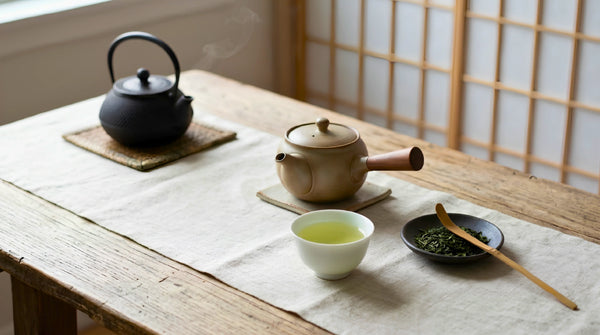
The logic here rhymes with the way ceramics work on the table. Just as the vessel and the setting shape how a cup of tea feels, the paper layer is part of the same quiet composition — a neutral ground that lets the pot and cups speak.

Wrapping: paper as the first thing you touch
Washi makes an attractive outer wrapping for a teaware gift. Cushion and secure a fragile object first, then fold the decorative paper around its protective package. For shipping, it still needs appropriate cushioning and a strong outer carton; a single sheet and cord cannot provide that protection.
A tea bowl may be kept in a kiri-bako, a paulownia-wood box, with suitable cushioning. Washi can decorate the outside of a protective package, or wrap a non-fragile gift. The presentation and the protection have different jobs.

A note that lasts
A short note on a washi card makes a personal addition to a gift. Paper varies in fibre, sizing, dyes, and additives; long-term stability is a property to check with the supplier rather than infer from the word washi.

Bringing paper to your own table
You don't need a ceremony or a special occasion. A few easy ways to let washi and ceramics share a table:
- Choose kaishi labelled for serving food, with a finish suitable for the sweet or fruit you want to serve.
- Add a paper mat for texture; use a suitable trivet or protective coaster wherever heat or moisture could damage the table.
- Wrap the protective box of a teaware gift in washi and finish with a cord.
- Write the note on washi. A card or a slip of good paper turns a gift into a keepsake.
Match the paper to the job. Some kaishi have moisture-resistant treatments for particular foods, while plain paper may absorb moisture quickly. Check its intended use and replace used serving sheets. Enjoy it alongside a tea set; our guide to caring for works on paper covers keepsakes rather than disposable food papers.
FAQ
What is kaishi paper?
Kaishi are small folded sheets used for sweets, writing, wiping, and other tasks. Materials and manufacture vary; some are handmade. At a formal tea gathering, the way they are used depends on the school and the tea being served.
Can you use washi as a coaster or table mat?
Paper coasters and mats can add a seasonal accent. Check the product’s intended use. Ordinary washi should not be relied on to protect a table from a hot pot or persistent condensation; use an appropriate trivet or protective coaster.
How do you wrap a gift in washi?
First secure and cushion the fragile item in suitable packaging. Fold washi around that protective package and add a cord if desired. For shipping, include proper cushioning and an outer carton; the decorative sheet is only the outer presentation layer.
Is washi part of the tea ceremony?
Yes. Kaishi hold sweets and have other roles in tea practice. Urasenke’s usucha guide describes wiping the drinking point with fingertips and then wiping those fingers on kaishi. Other procedures should be followed as taught by the relevant school, rather than combined into one universal rule.
What kind of washi is best for the table?
For food, choose kaishi sold for that purpose and check whether its finish suits moist foods. For decorative mats, wrapping, or notes, choose the texture and colour you enjoy. Handmade status or undyed fibres alone do not establish food-contact suitability.
Sources: Urasenke’s usucha guide, linked above, and Kyoto kaishi specialist Tsujitoku’s product guide. These distinguish formal tea practice from the varied everyday uses and specifications of paper products.