How to Appreciate Tea Aroma: Leaf, Brew and Empty Cup
4 min readThe scent above a warm cup can differ from what remains after the last sip. To explore tea aroma, start with a familiar tea and notice a few stages of the brew. You do not need specialist vocabulary or a long tasting session.
Notice the leaf, the brew and the empty cup

Smell the dry leaf, then the aroma above the brewed tea. If you prewarm an empty pot, drain it before adding leaf and noticing the scent; this does not require rinsing the tea. Once the drink is comfortable to sip, notice the aroma as you breathe out. You can return to the emptied cup at the end. Keep away from hot steam and leave a hot lid in place rather than picking it up to smell it.
Write two or three words at each stage. For a comparison on another day, use the same tea, water, vessel and brewing recipe before changing one variable.
How fragrance changes as tea cools
As tea cools, the aromas released and what you perceive can change. There is no fixed sequence in which floral, roasted or woody notes should appear. Notice what is there without expecting every stage to reveal something new.
The scent left in a cooled, empty cup can be interesting, but it is not a grade test. Tea, brewing strength, cup cleanliness and time all affect it; a faint scent does not mean poor tea, and a lingering sweet scent does not establish high quality.
Building an aroma vocabulary
Use familiar comparisons: flowers, citrus peel, apple, honey, steamed greens, seaweed, toasted rice, bread or wood. Broad words such as “roasted” or “green” are enough if a more specific comparison does not come to mind.
You can also note whether a scent appears immediately or lasts. A brief, simple fragrance can be enjoyable; the exercise does not require finding complexity in every tea.
What fragrance can—and cannot—tell you
Hojicha is a useful tea for noticing roasted notes. Green or grassy impressions can be normal in green tea and do not establish under-processing. Aroma alone cannot reconstruct the tea’s production or storage. Set aside tea that looks mouldy or smells unexpectedly musty and ask the seller; do not taste it to test safety.
Compare your impressions with the maker’s description and brewing advice. The two can help you learn a tea’s character without turning each scent into a claim about how it was produced.
How vessels and method shape the fragrance
A clean vessel and a repeatable brewing method make comparisons easier.
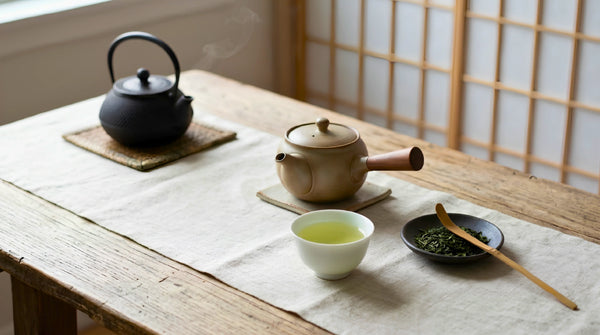
Choose a clean, odour-free cup comfortable to hold. A kyusu helps separate leaf from the brew, while white porcelain makes the liquor’s colour easier to see. Our porcelain yunomi and the cups in this Arita–Hasami tea set offer different forms. For repeat tastings, keep the cup the same so changes in shape and temperature do not complicate the comparison.

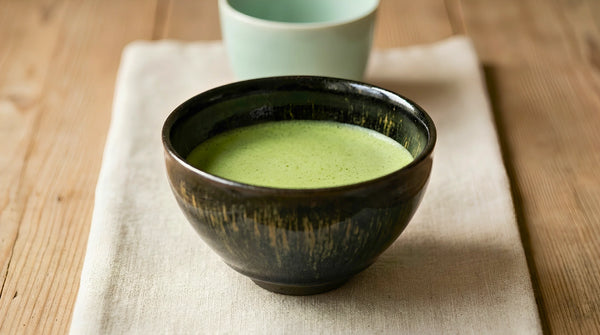
Sencha and gyokuro can suggest green or marine notes; hojicha often has roasted aromas. Umami is a taste, distinct from aroma. Matcha has its own green fragrance and is whisked in a suitable bowl. The beginner’s sencha guide covers equipment, and tea and glaze colour looks at the cup’s visual role.
“Listening” to incense
Monkō, often translated as “listening to incense”, names a practice of appreciating fragrance within kōdō (香道), the Japanese way of incense. It offers a parallel to attentive tea tasting without making the two practices identical.

The Metropolitan Museum of Art describes incense etiquette developing alongside tea ceremony during the Muromachi period (1392–1573). Its account includes passing a small heater among guests, with aromatic wood gently warmed over charcoal and ash on a mica plate. This differs from lighting a stick of incense. Our Incense & Kōdō collection contains incense utensils. The Met’s Song-dynasty tea bowl provides a separate example of the objects used in tea’s history.
For your own cup, a note such as “more roasted while warm” or “little scent left afterwards” is enough. Record the impression you had, then enjoy the tea.
Further reading: Ippodo’s introduction to tea types describes its teas, and the Met’s incense history above gives context for kōdō.