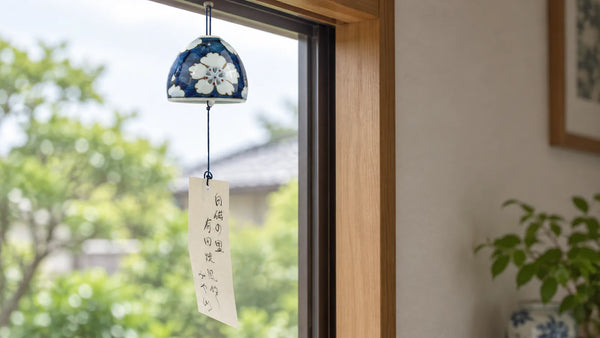
A fūrin (風鈴) is a Japanese wind bell. A breeze catches the hanging strip, moves the clapper and makes the bell sound. Heard from an eave or an open window, that small sound is closely associated with summer in Japan.
Glass, ceramic and iron bells each offer different forms and sounds. Size, wall thickness and the way the clapper strikes also matter, so listen to a recording of the design you are considering.
What Does Furin Mean?
The name means “wind bell”. The strip below the clapper is often paper and is called a tanzaku. Compare the shapes in the Japanese Wind Chimes collection, including this striped Arita porcelain bell.
Why Furin Feels Like Summer in Japan
The sound suggests a passing breeze and a sense of relief from the heat. Japan’s Ministry of the Environment discusses this summer custom as a way of feeling cool, rather than lowering the air temperature.
The same seasonal idea appears in blue-and-white porcelain and cold glass, discussed in Japanese summer cooling and the art of ryō o toru. A sculpted goldfish furin adds another motif closely tied to summer.
Where Japanese Wind Chimes Come From
The older history of furin is usually linked to futaku, bells hung at Buddhist temples. These earlier bells are commonly described as protective objects, and sources often say they were believed to ward off evil or misfortune. Over time, wind bells moved beyond temple settings and became part of everyday seasonal life in homes.
In Shinohara Maruyoshi’s account of Edo furin, glass bells became familiar to ordinary households in the late Edo period. The workshop forms its bells without moulds, paints them inside, and leaves a rough sounding edge. These are features of its particular glassmaking tradition.
Glass, Ceramic, and Iron Furin
The material affects the bell’s weight, appearance, sound and care.
Glass Furin
Glass bells can have a bright, clear note. In the Edo tradition described above, the unpolished sounding edge contributes to that note.
Ceramic and Porcelain Furin
Ceramic and porcelain furin offer opaque surfaces for painted decoration, as on the Arita floral furin and the Yakushigama black goldfish furin. Listen to the individual bell to judge how soft, sharp, or sustained its sound is.
Iron Furin
Cast iron can produce a sustained ring. The Nambu iron double-bell fūrin uses two bells that sound together.
Where to Hang a Furin at Home
The traditional position is beneath an eave, where the bell catches light airflow while remaining sheltered. Indoors, a window or entryway can work if the strip has enough room to move. Avoid strong wind: repeated impact can chip ceramic and glass bells or pull the hanging cord loose.
Check the sound as well as the dimensions, particularly near neighbours or a quiet room. Keep paper strips out of rain, bring the bell inside during storms, and follow the material-specific instructions in the furin care guide.

Before choosing, check the material, dimensions and hanging weight, whether a strip is included, and where the maker recommends displaying it.
Patterns and sculpted bells
Arita Floral Ceramic Wind Chime
Painted flowers cover the small porcelain bell of this Arita floral wind chime.
Arita Stripe Ceramic Wind Chime
On the Arita striped wind chime, fine cobalt lines circle the white porcelain bell.
Yakushigama Shiba Inu Furin
The bell of the Yakushigama Shiba Inu fūrin takes the shape of a parent dog and puppy.
Seto Penguin Wind Chime
The Seto penguin wind chime turns the bell into a small animal figure, best seen close up.
Nambu Iron Double Bell Wind Chime
The Nambu iron double-bell wind chime contrasts with the ceramic figures above: its paired metal bells are arranged for their combined sound.
Goldfish Furin Wind Chime
The goldfish furin combines a sculpted ceramic body with a motif long associated with Japanese summer displays.
A small sound of summer
A fūrin makes moving air audible. Its paper strip shifts before you hear the bell, giving the breeze a visible movement as well as a sound.
For a housewarming present, choose a bell that suits the recipient’s space and taste in sound. Japanese Wind Chimes and Housewarming Gifts offer starting points.
FAQ: Furin and Japanese Wind Chimes
How does a fūrin differ from a multi-tube wind chime?
A fūrin usually has a single bell and clapper, with a hanging strip to catch the breeze. A multi-tube chime uses several suspended tubes. There are variations, including paired bells, so compare the individual sound as well as the shape.