What Tea Goes With What Glaze: A Pairing Guide by Color
Ask a tea drinker in Japan why they reached for a particular cup, and the answer is rarely "because it was clean." Pairing tea with glaze color is a quiet craft built on one practical idea: the glaze is the backdrop against which you taste and, just as importantly, see your tea. A dark bowl makes bright matcha glow; a pale interior lets you read the green of a good sencha. None of this is rigid law — it is centuries of accumulated eye, and once you understand the logic you can break it on purpose. This guide walks through the major glaze families and the teas that tend to flatter each.
The one principle behind every pairing
Before the specifics, hold onto a single rule of thumb: contrast reveals, harmony soothes. When a tea's liquor — the brewed color in the cup — is the point of pride, you want a glaze that shows it off, usually by contrast. When the tea is dark and the moment is about warmth rather than display, a glaze in a sympathetic earthy tone feels right. Almost everything below is a variation on that idea, plus a second layer the tea ceremony adds on top: season and vessel shape.
The glaze does two jobs at once. It sets the visual stage for the tea's color, and it sets the emotional temperature of the moment — cool and clarifying, or warm and grounding.
Dark glazes — tenmoku and iron blacks for matcha
The classic pairing in all of Japanese tea is whisked matcha in a dark bowl. Matcha is opaque jade-green and rises into a fine froth, and against a black or deep-brown interior that green all but lights up. This is why tenmoku (天目) bowls have been prized in the tea room for centuries.
Tenmoku began as Chinese Jian ware — dark, iron-rich stoneware made in Fujian during the Song dynasty (960–1279), its glaze breaking into "hare's-fur" streaks, oil-spot mottling, or partridge speckles. According to the Kyoto National Museum, Japanese priests admired these black teabowls at a temple on Mt. Tianmu — Tenmoku in Japanese — and carried both the bowls and the name home; potters in Seto later made their own versions. You can see one of the Chinese originals, a hare's-fur Jian bowl, in the collection of The Metropolitan Museum of Art.
Pair dark glazes with: matcha above all, but also dark roasted and fully oxidized teas — a deep hojicha, an aged black tea, a roasted oolong — where the amber liquor reads richly against the dark wall and the mood is contemplative rather than crisp.
If you are choosing a bowl for whisked matcha, browse our matcha bowls — such as this hand-painted Kutani matcha chawan on a speckled gray ash glaze. For more on the bowls themselves, see our Teabowl Studies.
Celadon — green seiji for sencha and gyokuro
Move from whisked matcha to steeped leaf tea and the goal flips. Sencha and gyokuro are loose-leaf green teas whose brewed liquor is a pale, luminous yellow-green, and the whole pleasure is judging that color: is it bright and tender, or dull and over-steeped? You cannot read that against black. You read it against pale.
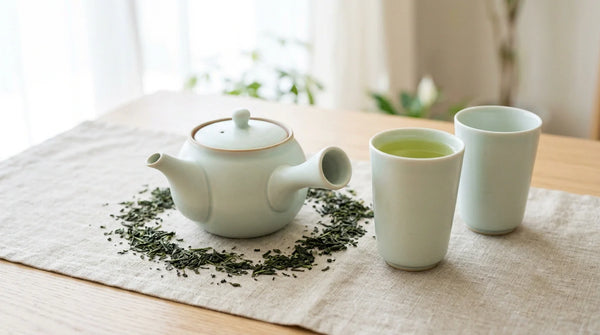
Celadon, known in Japanese as seiji (青磁), is the green-to-blue-green glaze produced when iron in the glaze is fired in a reduction (oxygen-starved) atmosphere. It runs from the Longquan kilns of China through Korean Goryeo celadon to Japan's own Hizen and Arita celadon wares — a family well represented in the Met's collection. A celadon cup's soft green interior sits in gentle harmony with green tea: close enough in hue to feel unified, pale enough to let the liquor's exact shade show through.
Pair celadon with: sencha, gyokuro, lighter green oolong, and delicate white teas — any tea where a clear, jewel-like liquor is part of the experience.
Our Color of Utsuwa series looks more closely at how glaze color shapes the character of a vessel.
White porcelain — hakuji and blue-and-white for the truest read
If celadon flatters green tea, white porcelain tells the unvarnished truth about it. Hakuji (白磁) — plain white porcelain — and sometsuke, the blue-and-white painted style, give the most neutral possible background, which is exactly why tea tasters and serious sencha drinkers favor a white-lined cup. The brewed color appears with no tint borrowed from the glaze.

This is also why many Japanese cups are decorated on the outside but left plain white on the inside: the painting is for you, the white interior is for the tea. A small white porcelain yunomi or a thin sencha cup keeps heat moving and aroma rising, and shows the liquor honestly.
Pair white porcelain with: high-grade sencha and gyokuro you want to evaluate, white tea, and any first brew you are tasting critically. When you care most about seeing the tea, choose white.
For the honest read, look to white porcelain teaware such as these white porcelain sencha cups from the Arita–Hasami corridor, or a single porcelain yunomi.
Amber and earthy glazes — ame, kohiki, and hakeme for hojicha and black tea
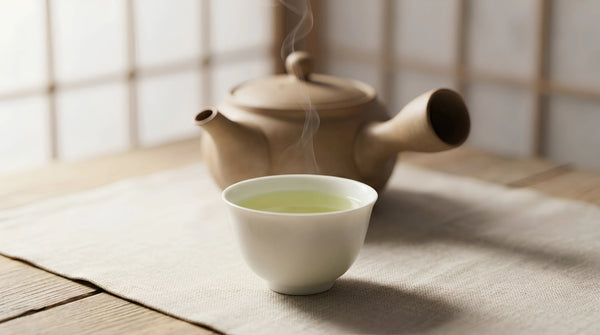
Roasted and oxidized teas live at the warm end of the spectrum. Hojicha (roasted green tea), bancha, black tea, and darker oolongs brew to amber, russet, and red-brown. Against a cold white cup those warm liquors can look muddy; against a warm glaze they look generous.

This is the home of the iron-amber ame (飴) glaze, of warm iron glazes generally, and of the soft, milky surfaces of kohiki and the brushed-white hakeme and mishima slip wares. These glazes carry an earthiness that meets a roasted tea halfway — the toasty aroma of hojicha and the toasty color of an ame glaze belong to the same world.
Pair earthy and amber glazes with: hojicha, genmaicha, bancha, black tea, and roasted oolong — warm-liquor teas where comfort, not clarity of green, is the point. A soft kohiki-slip cup is an easy match for a warm-toned brew.
Wood-fired and unglazed — Bizen, Tokoname, and Oribe for everyday leaf tea
Not every vessel has a glossy glaze, and that is its own pairing. The unglazed, wood-fired stonewares of Bizen and the iron-rich clay of Tokoname have long been associated with steeped tea — Tokoname's red kyusu teapots especially. Their raw, mineral surfaces suit honest everyday leaf tea: bancha, genmaicha, hojicha, robust sencha. Oribe's deep copper-green glaze, by contrast, brings a bold splash of color and pairs happily with casual green tea where you want personality over restraint.
Pair wood-fired and unglazed ware with: everyday sencha, bancha, genmaicha, and hojicha — the teas of the kitchen table rather than the formal tray. Browse our teapots and kyusu for everyday steeping.
The seasonal layer: glaze brightness and bowl shape
Japanese tea practice adds a second axis to color — season — and it travels with both glaze and form. In the warm months, lighter, brighter glazes and shallow open bowls feel cooling, because a wide, shallow hira-chawan lets tea lose heat and look airy. In winter, deeper colors and a tall, narrow tsutsu-chawan hold warmth and read as cozy. So a pale celadon in July and a dark tenmoku in January are not only about the tea in the cup — they are about the weather around it. Let glaze brightness rise in summer and deepen in winter, and your pairings will feel right even before you taste.
A quick reference table
| Glaze family | Color | Best for | Why |
|---|---|---|---|
| Tenmoku / iron black | Black, dark brown | Matcha; dark roasted teas | Dark wall makes bright matcha froth and amber liquor glow |
| Celadon (seiji) | Soft green / blue-green | Sencha, gyokuro, light oolong | Pale green harmonizes with and reveals green liquor |
| White porcelain (hakuji), sometsuke | White, blue-and-white | High-grade sencha, gyokuro, white tea | Neutral ground shows the tea's true color |
| Ame / kohiki / hakeme | Amber, cream, brushed white | Hojicha, bancha, black tea | Warm tones meet warm, roasted liquor |
| Wood-fired / unglazed (Bizen, Tokoname), Oribe | Earth tones, copper green | Everyday leaf tea | Raw mineral surfaces suit honest, casual brews |
Treat all of this as a starting eye, not a cage. The conventions exist because they reliably make tea look and feel better — but a celadon cup of hojicha or a tenmoku bowl in midsummer can be a deliberate, lovely choice. Learn the grammar first; then write your own sentences.
FAQ
What color glaze is best for matcha?
Dark glazes are traditional for matcha. A black or deep-brown tenmoku bowl makes the opaque jade-green froth of whisked matcha stand out by contrast, which is why tenmoku bowls have been prized in Japanese tea for centuries. Lighter bowls work too, but the classic pairing is dark.
Why are sencha cups often white or pale green inside?
Because sencha and gyokuro are valued partly for the color of their brewed liquor — a clear yellow-green. A white porcelain or pale celadon interior lets that color show honestly, while a dark glaze would hide it. The white-inside, decorated-outside cup is a direct response to this.
What is tenmoku glaze?
Tenmoku is a dark, iron-rich glaze that originated as Chinese Jian ware in Fujian during the Song dynasty. Japanese priests brought the black teabowls home from Mt. Tianmu (Tenmoku in Japanese), and the name stuck. Its glaze often breaks into hare's-fur streaks or oil-spot mottling.
What kind of cup is best for hojicha?
Warm-toned glazes suit hojicha. Because roasted teas brew to an amber or russet color, an iron-amber ame glaze, a creamy kohiki, or an earthy unglazed surface flatters the liquor and echoes the tea's toasty character better than a cool white cup.
Does glaze color actually change how tea tastes?
Glaze does not change the chemistry of the tea, but it strongly shapes perception. Color contrast affects how vivid the liquor looks, and a vessel's material and wall thickness affect heat retention and aroma. Since taste is partly visual and thermal, the right glaze makes a tea read as better.
Is there a seasonal rule for glaze color?
In tea practice, lighter and brighter glazes paired with shallow open bowls suit summer because they feel cooling, while deeper colors and tall, narrow bowls suit winter because they hold warmth. It is a convention of mood rather than a strict rule, but it reliably makes the moment feel appropriate.
A note from the studio: ZenKiln works directly with kilns across Japan and ships from Tokyo. The pairings above reflect long-standing tea-room convention, not fixed rules — choose the cup that makes your tea look and feel right to you.