Maki-e: The Japanese Art of Sprinkled-Gold Lacquer
Written by Team ZenKiln · from our Tokyo atelier
Maki-e (蒔絵, literally "sprinkled picture") is the Japanese art of drawing in wet lacquer and then sprinkling gold or silver powder over the design before it dries. It is the most widely used decorative technique in Japanese lacquerware, and the reason a small urushi box or bowl can hold a landscape of shimmering metal that seems to float just beneath the surface. This guide explains what maki-e is, where it came from, the three core styles a collector should know, how it differs from gold on porcelain, and how to care for a maki-e piece so it lasts for generations.
What Is Maki-e?
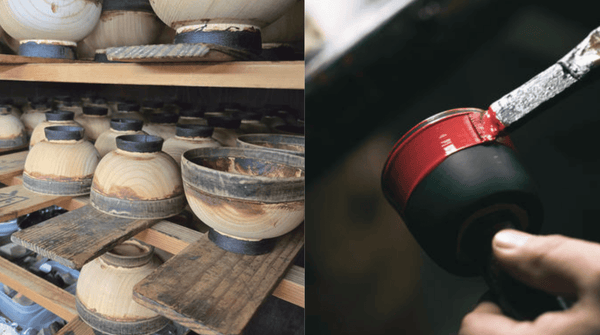
Maki-e is a family of lacquer-decoration techniques built on urushi (漆), the refined sap of the Japanese lacquer tree. An artisan paints a design in urushi, and while the lacquer is still tacky, dusts it with fine metal powder — most often gold or silver — using a small bamboo dusting tube (makizutsu) or a soft, hair-tipped brush (kebo). The powder bonds to the wet lacquer; everything else is brushed away. Layers of clear lacquer are then applied and polished to lock the metal in place.
The word itself tells the story: maki means "to sprinkle" and e means "picture." Unlike gilding, where a solid sheet of gold leaf is laid down, maki-e builds an image grain by grain. According to Wikipedia's overview of the technique, artisans draw on a palette of metals well beyond gold and silver — including copper, brass, tin, and platinum — to vary color and texture across a single composition.
A Thousand Years of Sprinkled Gold
Maki-e is one of Japan's oldest continuous decorative arts. Encyclopædia Britannica dates the technique's main development to the Heian period (794–1185), when it was used to decorate folding screens, inrō (small tiered cases worn at the waist), letter boxes, and ink-slab cases (suzuribako). Britannica notes that the oldest surviving maki-e object dates to the year 919 — a span of more than a thousand years of unbroken practice.
Over the following centuries the craft organized itself into workshops and lineages. The Wikipedia record identifies Kōami Dōchō (1410–1478) as the first lacquer master tied to specific surviving works, and credits the Kōami and Igarashi families as the founders of the two major schools of later Japanese lacquer-making. By the Edo period (1603–1868), maki-e had become a luxury language of its own — covering everything from samurai sword fittings to bridal trousseaus and tea utensils.
The Three Core Techniques of Maki-e
Maki-e is usually classified into three processes, distinguished by how the metal sits relative to the lacquer surface. A fourth, shishiai togidashi maki-e, combines two of them. Knowing these names is the single most useful thing a new collector can learn, because they describe what your eye and fingertip are actually reading on the object.
Hiramaki-e (平蒔絵) — Flat Maki-e
In hiramaki-e, the design sits in low relief, just slightly proud of the surrounding surface. The artisan draws in lacquer, sprinkles the metal powder, seals it with more lacquer, and polishes. It is the most direct of the three methods, and it became the workhorse style during the Azuchi-Momoyama period when demand for maki-e rose sharply.
Togidashi Maki-e (研出蒔絵) — Burnished Maki-e
Togidashi maki-e produces a design that is perfectly flush with the surface — you can see the picture but not feel it. After the metal is fixed, the entire object is coated in black lacquer, then patiently polished back (togidashi means "to bring out by polishing") until the buried design re-emerges as a smooth, glowing plane. Because the pattern and the ground are one continuous surface, the metal is unusually well protected.
Takamaki-e (高蒔絵) — Raised Maki-e
Takamaki-e builds the design up off the surface in high relief. The artisan thickens the lacquer with charcoal or clay powder to make a stiff modeling paste, sculpts the motif, and then finishes the raised form with sprinkled metal. The result has real depth — a crane's wing or a sprig of pine can stand visibly above its background. Shishiai togidashi maki-e layers the polished togidashi finish over a takamaki-e form, and is considered the most demanding combination of all.
Maki-e's Relatives: Raden, Chinkin, and Gold on Porcelain
Maki-e rarely works alone. On many fine pieces it is combined with sister techniques that a buyer will encounter under separate names. Raden (螺鈿) inlays cut pieces of iridescent shell — mother-of-pearl or abalone — into the lacquer. Chinkin (沈金) carves fine lines into the cured lacquer and rubs gold leaf or powder into the grooves. Nashiji ("pear skin") suspends flakes of gold in translucent lacquer to create a speckled golden ground. These are distinct crafts, but they share maki-e's vocabulary of lacquer and metal.
One distinction matters more than any other for shoppers: maki-e is gold on lacquer, not gold on porcelain. Maki-e decorates an organic urushi surface built over wood or paper, with metal powder sprinkled into wet sap. Gold decoration on ceramics — kinsai (金彩, gold accents) and kinrande (金襴手, "gold brocade") — is a completely different craft: real or imitation gold is painted onto already-glazed porcelain and fixed with a low-temperature firing. They can look related at a glance, but the materials, the makers, and the care requirements are not the same.
How to Recognize and Care for Maki-e
Genuine maki-e shows the hand. Look for slight irregularities in the metal density, fine tool lines, and — in takamaki-e — actual relief you can feel with a fingertip. Printed or transfer "gold" decoration tends to be perfectly uniform and sits in a thin, even film. The presence of related techniques such as nashiji grounds, shell raden, or a signed paulownia storage box (tomobako) all point toward hand-finished work rather than mass decoration.
Care is simple but non-negotiable. Urushi is durable in daily use but vulnerable to three things: heat, abrasion, and prolonged water. Wash maki-e by hand in lukewarm water with a soft cloth or sponge and a little mild soap, then dry immediately. Never use a dishwasher, microwave, or oven; never soak the piece; and keep it out of direct sunlight and dry, heated air, which can make the lacquer crack over time. For a full routine, see our guide to urushi lacquerware care, and for the regional traditions behind these pieces, our studies of Wajima-nuri and Kishū-shikki.
Maki-e in the ZenKiln Catalogue
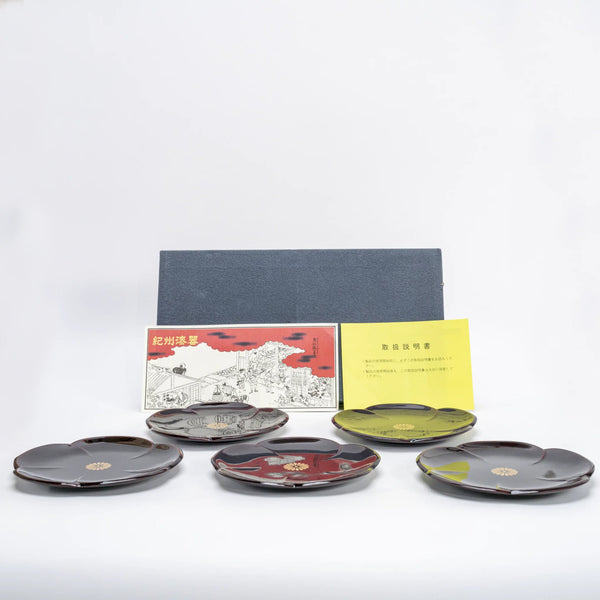
ZenKiln's lacquerware is sourced in Japan and ships from Tokyo. A clear example of takamaki-e-style gold work is our vintage Wajima lacquer bowl pair with bamboo maki-e, a Shōwa-era meoto-wan ("husband-and-wife") set finished in gold bamboo-grass on vermilion and black, with its original paulownia box. For the broader urushi tradition, our Kishū-shikki lacquer plate set of five shows the deep tame-nuri finish of Wakayama lacquerware. And to see the porcelain contrast discussed above, compare our Kutani real-gold "Honkin Hanazume" cup and saucer — gold fired onto porcelain rather than sprinkled into lacquer. Browse the full antique urushi lacquerware collection for current pieces.
FAQ
What does maki-e mean?
Maki-e (蒔絵) literally means "sprinkled picture." The name describes the core method: an artisan draws a design in wet urushi lacquer and sprinkles fine metal powder — usually gold or silver — over it before the lacquer dries. The powder adheres only to the lacquered design, building an image grain by grain rather than from a solid sheet of gold leaf.
What are the three types of maki-e?
The three core techniques are hiramaki-e (flat, low-relief), togidashi maki-e (polished flush with the surface), and takamaki-e (raised in high relief). They differ in how the metal sits relative to the lacquer ground. A fourth method, shishiai togidashi maki-e, combines the raised modeling of takamaki-e with the polished finish of togidashi and is the most technically demanding.
How old is the maki-e technique?
Maki-e developed mainly during Japan's Heian period (794–1185), and Encyclopædia Britannica records that the oldest surviving maki-e object dates to the year 919. That makes it one of Japan's oldest continuously practiced decorative arts, with more than a thousand years of documented history across screens, boxes, tea utensils, and personal accessories.
Is maki-e the same as gold decoration on porcelain?
No. Maki-e is metal powder applied to an organic urushi lacquer surface built over wood or paper. Gold on porcelain — known as kinsai or kinrande — is gold painted onto already-glazed ceramic and set with a low-temperature firing. They can look similar but are different crafts with different makers, different base materials, and different care needs.
How do you care for a maki-e lacquer piece?
Wash maki-e by hand in lukewarm water with a soft cloth and mild soap, then dry it right away. Never put it in a dishwasher, microwave, or oven, and avoid soaking it or leaving it in direct sunlight or dry, heated air. Urushi is tough in everyday use but cracks when exposed to heat, abrasives, or prolonged moisture.
Editor's note: ZenKiln is a Japan-based curator working directly with kilns and lacquer workshops; every piece is hand-packed and ships from Tokyo. This article was written by the ZenKiln Editorial team and verified against museum and reference sources.