Hagi Ware: Yamaguchi Tea Ceramics and the Seven Changes
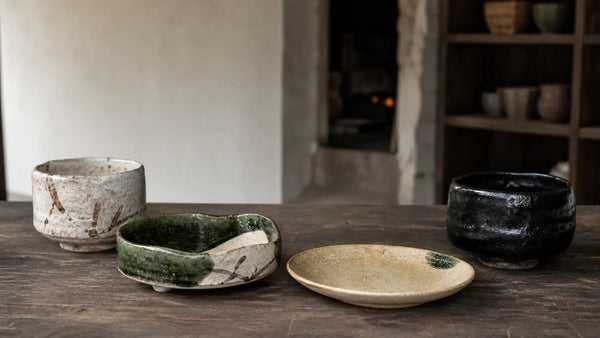
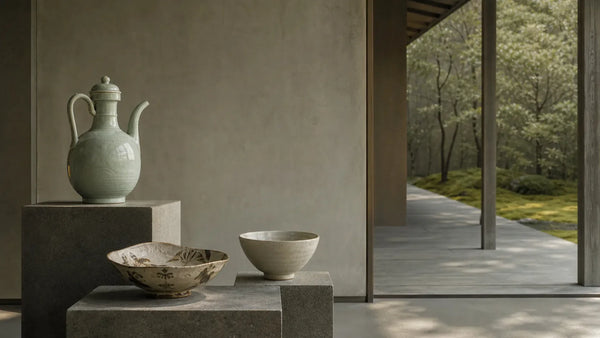
A guide to Hagi ware from Yamaguchi Prefecture: its Korean and Mori-clan origins, daido clay and ash glazes, the seven changes of nanabake, kannyu crackle, and how to...
The Journal
Mino Ware: Shino, Oribe, and the Kilns of Gifu
Mino ware is made in eastern Gifu and accounts for around half of Japan's ceramic production. A guide...
Nezu Museum Ceramics Exhibition 2026: A Visitor's Guide
The Nezu Museum opens its ceramics collection across three galleries this August, splitting China, Japan and the Korean...
How to Choose a Japanese Sake Cup: Ochoko, Guinomi, Sakazuki
Ochoko, guinomi, or sakazuki? How to pick a Japanese sake cup by shape, material, and whether you drink...
SetoSeto Ware: The Kiln That Named Japanese Pottery
Seto ware is so old its name became setomono, the everyday Japanese word for pottery. A guide to...
How to Tell if Japanese Pottery Is Handmade and Authentic
A practical guide to reading a Japanese ceramic: the foot ring, the glaze and brushwork, the base mark,...
Japanese Wedding & Newlywed Gifts: Ideas and Etiquette
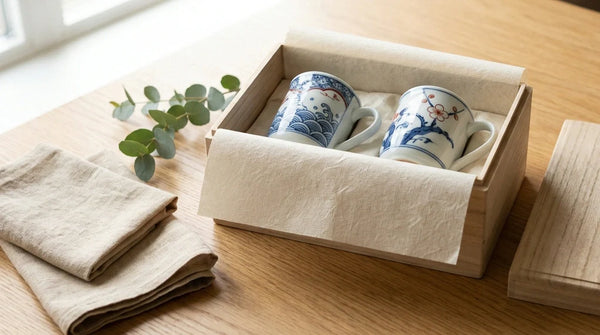
What to give a couple in handmade Japanese ceramics, from paired cups to a shared donabe, plus the...
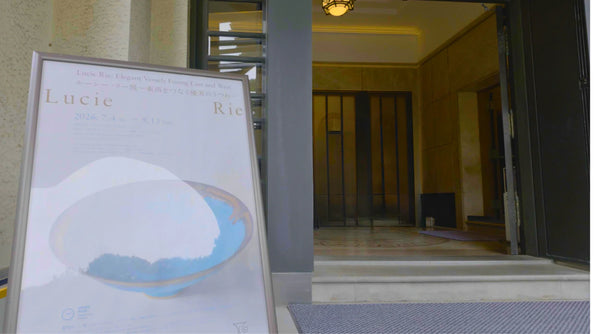
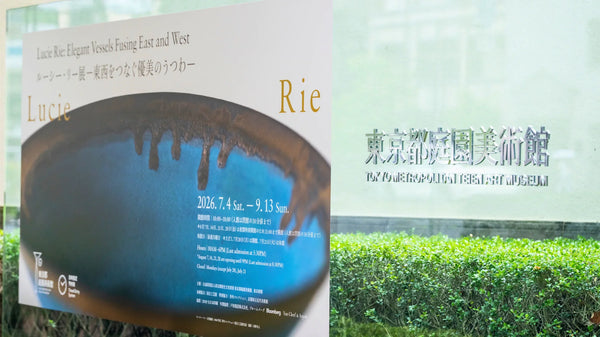
Lucie Rie at Teien: A Review of the East–West Vessels Show
The Teien Art Museum sets Lucie Rie's wheel-thrown vessels inside a 1933 Art Deco house — a fitting...
Lucie Rie in Tokyo: A Guide to the 2026 Teien Museum Show
The Teien Art Museum brings Lucie Rie’s wheel-thrown vessels into a 1933 Art Deco house this summer. Dates,...
KutaniAsakura Isokichi: The Family That Reinvented Modern Kutani
Across four generations in Ishikawa, the Asakura family has kept Kutani ware in motion. Their story begins with...
5 Thoughtful Japanese Ceramics for a Housewarming Gift
Five Japanese ceramic housewarming gifts chosen by use: a donabe for shared cooking, a mug or tea set...
OverviewJapan's Pottery Regions: A Guide to Japanese Ceramics
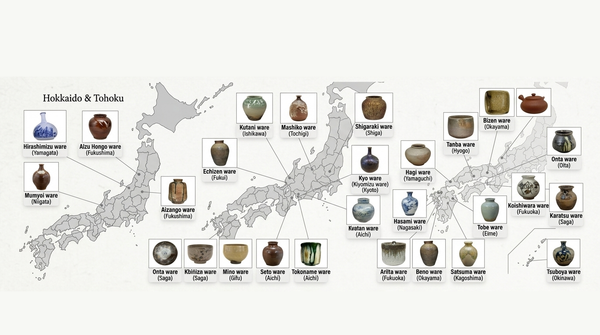
Japan’s ceramic map is not one tradition but dozens, each shaped by local clay, fuel, trade, and taste....
OverviewJapanese Stoneware vs Porcelain: 5 Ways to Tell
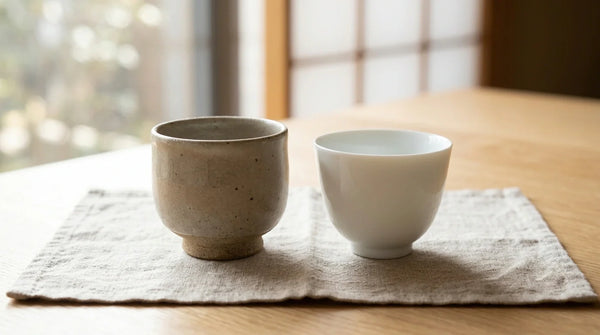
Stoneware or porcelain? Five hands-on tests — water absorption, foot ring, crackle, tap-tone, and translucency — separate Japanese...
What Is Furin? Japanese Wind Chimes and the Sound of Summer
A furin does more than ring in the wind. Its light summer sound, the shape of its bell,...
Maneki Neko Meaning and Origins: What Japan’s Lucky Cat Really Means
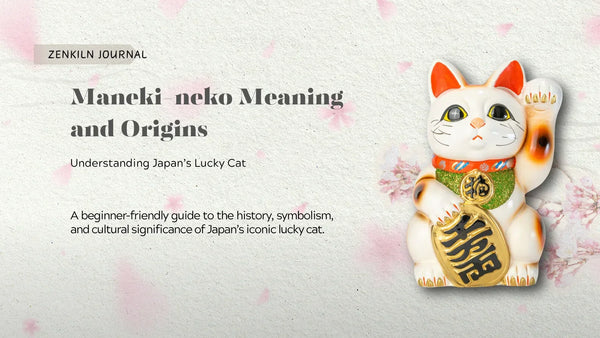
The raised paw of a maneki neko is not waving goodbye—it is beckoning luck closer. Its origin stories,...
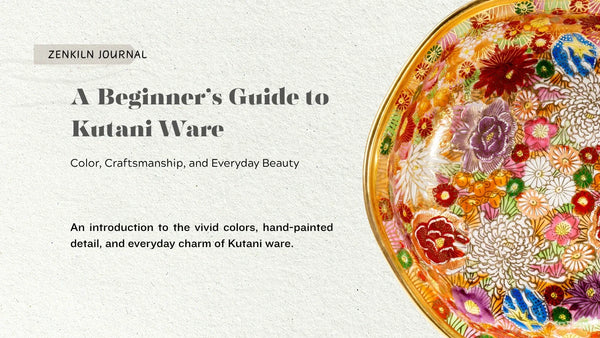
KutaniWhat Is Kutani Ware? A Beginner’s Guide to Japan’s Colorful Porcelain
Kutani ware is Japanese porcelain at its most painterly: vivid overglaze color, confident linework, and motifs that range...
No studies match your search. Try a broader term.
ゼンキルン 誌
Stories, studies & care from the workshop
Deep dives into kilns, glazes, and the wares behind them.
A guide to Hagi ware from Yamaguchi Prefecture: its Korean and Mori-clan origins, daido clay and ash glazes, the seven changes of nanabake, kannyu crackle, and how to...
Living with and caring for handmade Japanese pieces.
Four ongoing series from the workshop — pick a thread and follow it.
Every story in the Journal, newest first.