What Is Washi? A Guide to Japan's Handmade Paper
6 min readA sheet of Japanese paper can be thin enough to transmit light yet strong enough for demanding work. Some carefully selected papers are used in conservation; others become stationery, screens or packaging. For background, see Nippon.com’s introduction to washi. This guide focuses on traditional handmade washi while explaining why the word alone does not guarantee a material, method or lifespan.
What is washi?
Washi (和紙) means Japanese paper. Traditional hand papermaking is an important part of it, but contemporary washi also includes machine-made papers and blends. Yōshi (洋紙) likewise should not be reduced to one fibre or quality grade.
Kōzo (paper mulberry), mitsumata and gampi bast fibres are important traditional materials. Their properties and the way they are processed help determine the finished sheet. Some papers are thin and translucent; others are thick, opaque, coloured or coated.
Fibre choice is only part of the story. Cooking, beating, sheet formation, additives and finishing all affect the result. Awagami’s manufacturer FAQ describes both handmade and machine-made production, so bast fibre does not imply that a sheet must be formed by hand.
The three fibers: kozo, mitsumata, and gampi
Three important traditional fibres have distinct characteristics:
- Kōzo (楮, paper mulberry) has comparatively long fibres and is valued for strong, flexible sheets. It is used in the Sekishū-banshi, Hon-minoshi and Hosokawa-shi traditions recognised in UNESCO’s 2014 inscription. The expanded inscription now also includes a gampi-paper tradition.
- Mitsumata (三椏) — a softer, finer fiber with a gentle sheen and a smooth surface. It yields a more refined sheet historically prized for printing and fine stationery.
- Gampi (雁皮) can produce a smooth, lustrous surface. Its shorter fibres call for different handling from kōzo. Rarity, cost and appearance vary by source and paper; it is not automatically the most valuable choice for every purpose.
The bark is processed to separate usable fibres, including cooking, washing and beating. This produces a papermaking furnish or pulp too; “pulp” is not a word reserved for wood-based machine paper.

Compare specifications, not national labels
A useful comparison asks what a sheet contains, how it was made and what it is intended to do. Handmade paper and machine-made paper can both use varied fibres and can both be well suited to their purpose. Country of origin alone does not establish strength or permanence.
| Quality | Traditional handmade washi | Other papers, including machine-made washi |
|---|---|---|
| Main material | Bast fibres such as kōzo, mitsumata and gampi | Varies: wood, cotton, bast fibres or blends |
| Made by | Hand, sheet by sheet | Hand or machine, depending on the product |
| Strength | Depends on fibre, processing and sheet weight | Depends on fibre, processing and sheet weight |
| Longevity | Depends on composition and environment | Depends on composition and environment |
| Cost & volume | Varies by labour, material and scale | Varies by labour, material and scale |
| Character | May show texture, deckle edges or translucency | Can be uniform or textured; product-dependent |
Choose by the task. A decorative wrapping sheet is not automatically conservation paper, and a machine-made sheet is not necessarily short-lived. For repair or long-term contact with an artwork, obtain the specific composition and suitability information.
Why washi lasts
Some traditional Japanese papers have survived for centuries, but no universal lifespan follows from the name washi. Fibre quality, residual chemicals, sizing, pigments, acidity, light, humidity and handling all matter. Conservators select specific papers for specific treatments; ordinary craft paper should not be assumed suitable for repairing an artwork.
For a print, letter or lampshade, match the paper to its intended use and protect it from unsuitable conditions. A flexible, attractive sheet can still fade, weaken or be damaged by moisture.

How washi is made (in brief)
The heart of traditional washi is a sheet-forming method called nagashizuki. The papermaker suspends the cooked, beaten fibers in a vat of water together with neri — a natural mucilage traditionally drawn from the root of the tororo-aoi plant — which thickens the water and keeps the fibers evenly floating. Using a bamboo screen (su) set in a frame, the maker scoops and rocks the slurry back and forth, building the sheet in thin, crossing layers. The wet sheets are pressed, then dried, and finally sorted and trimmed.
Winter is important for kōzo harvesting and some traditional work, but paper is also made at other times of year. Our companion piece on Hosokawa-shi, the UNESCO paper of the Ogawa valley, follows one regional tradition.
Where washi shows up in daily life
For most of Japanese history, washi wasn't precious — it was infrastructure. It filtered light through shoji (sliding paper screens) and fusuma (room partitions); it softened the glow of andon lamps and lanterns; it became fans, umbrellas, and letter paper. Much of that is still around, and washi has found new roles too:
- In the home: shoji and lampshades, where its job is to diffuse light beautifully.
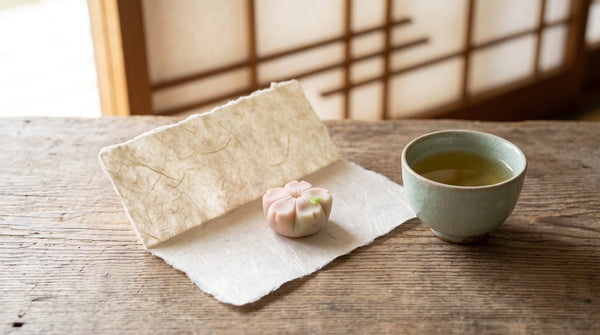
- In writing and gifts: letter paper and envelopes, gift wrap, and kaishi (the small folded papers used at tea).
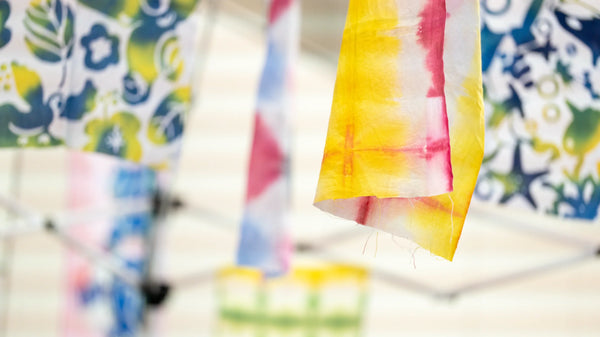
- In craft and art: origami, calligraphy, printmaking, and dyed decorative papers.
- In conservation: as backing and repair paper for prints, books, and paintings the world over.

That range — humble and everyday on one end, museum-grade on the other — is exactly what makes washi worth knowing.
Is washi still made today?
Handmade washi remains a living craft. UNESCO’s 2014 inscription brought together Sekishū-banshi in Shimane, Hon-minoshi in Gifu and Hosokawa-shi in Saitama. In 2025 it expanded to include Echizen Torinoko paper from Fukui, a gampi-paper tradition. See the UNESCO record and Fukui Prefecture’s announcement. This recognises specific craft traditions, not every sheet sold as washi.
FAQ
What is washi made of?
Kōzo, mitsumata and gampi are important traditional fibres, but contemporary washi can contain other fibres or blends. Check the maker’s composition and process description for the particular paper.
Is washi the same as rice paper?
“Rice paper” is an imprecise name for several different products. Traditional kōzo paper is made from bark fibre, not rice. However, some contemporary Japanese papers include rice straw or other blends, so “contains no rice” is not a definition of all washi.
Why is washi so strong?
Long kōzo fibres can contribute strength and flexibility, especially in thin sheets. The actual result depends on fibre preparation, formation, additives and sheet weight; not every washi is stronger than every other paper.
What is washi used for?
Traditionally, washi was used for shoji screens, sliding doors, lanterns, fans, umbrellas, and letters. Today it is also used for stationery and gift wrap, origami and other crafts, calligraphy and printmaking, and — because of its strength and stability — for conserving and repairing artworks and documents in museums worldwide.
How long does washi last?
Some examples survive for centuries under favourable conditions. That does not guarantee the lifespan or conservation suitability of a new sheet. Use the maker’s specifications and appropriate storage rather than relying on the word washi.
Is washi still made by hand today?
Yes. Japan has many living hand-papermaking traditions. The UNESCO inscription included three kōzo-paper traditions in 2014 and expanded in 2025 with Echizen Torinoko gampi paper. Machine-made washi is also produced.
References: This overview draws on papermaker information and the heritage records linked above. Our related HandMade In Japan Fes 2026 article provides separate event context; an event account is not a substitute for material specifications.