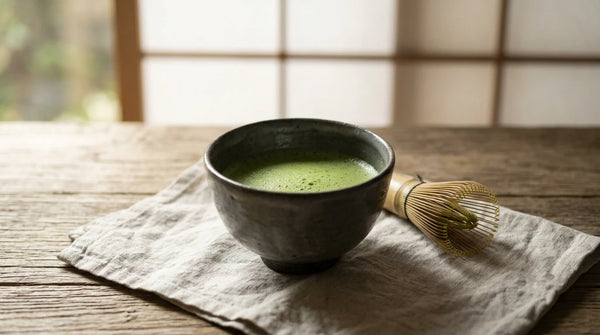
Mino ware (美濃焼) comes from eastern Gifu Prefecture. Its range includes Shino and Oribe tea wares, porcelain tableware and decorative objects. The regional name can appear on a studio-made bowl or a factory-produced dinner set, so it tells you where to begin researching a piece rather than how it must look.
Where Mino ware is made
The designated production area includes Tajimi, Toki, Mizunami, Kani and Ena cities, and Mitake Town in the Tōnō region. Production involves specialist suppliers and workshops as well as individual potters.
Mino ware received national Traditional Craft designation on July 22, 1978, covering fifteen types. Shino, Oribe, Ki-Seto and Setoguro are among its historic tea-ware styles.
The traditional-craft standard specifies bodies including mogusa, Mino, kibushi and gairome. A modern regional label alone does not establish that every item meets the designated craft’s requirements.
Early production in Tōnō
Pottery in the Tōnō region goes back more than 1,300 years. It is thought to have begun in the late Kofun period, in the seventh century, when hard unglazed Sue ware was fired in anagama — tunnel kilns cut into a hillside. The technique arrived by way of the Korean peninsula.
By the Heian period, Mino potters were producing ash-glazed wares. Kiln numbers grew, and the area developed into a major production centre. For a neighbouring tradition known for wood-fired clay surfaces as well as modern glazed work, see our Shigaraki ware guide.

The four Momoyama styles
Tea culture encouraged the development of distinctive Mino wares during the Azuchi–Momoyama period. Four names remain particularly useful when comparing those works:
Shino has a thick white feldspathic glaze, often over iron-brown designs. Tea bowls, water jars and food dishes carry plant, landscape or geometric motifs. In nezumi-shino, designs are cut through an iron-rich coating before glazing; beni-shino has a reddish appearance.
Oribe takes its name from Furuta Oribe (1544–1615), a military commander and tea practitioner associated with Sen no Rikyū. Ao-oribe combines copper-green glaze with iron-brown painting; Narumi-oribe introduces reddish clay, and sō-oribe is green throughout. Irregular forms, including the kutsugata or shoe-shaped bowl, are another feature of the tradition.
Ki-Seto, “yellow Seto”, has a pale yellow glaze, sometimes with copper-green or iron-brown accents. Dishes may carry designs impressed into the clay before firing.
Setoguro, “Seto black”, is associated with pulling a vessel from the hot kiln to cool rapidly and develop its black glaze. Many tea bowls have cylindrical bodies, trimmed ridges and uneven rims.

Twentieth-century excavations in Mino changed the attribution of tea wares previously grouped under Seto and informed renewed interest in these styles. The neighbouring regions have closely connected histories; our Seto ware guide follows the other part of that history.
Why Mino makes so much of Japan's tableware
Mino’s large tableware industry includes both everyday factory production and individual studio work. A regional label leaves plenty still to discover about the particular maker, material, and finish.
Exports expanded during the First World War as European supplies declined. Manufacturers in an already established ceramics district increased production, contributing to the scale of the modern industry.

Porcelain production developed in the nineteenth century with influence from Arita and Seto. Blue-and-white and overglaze-enamelled porcelain became part of the region’s output alongside pottery. Our Arita ware guide explains the earlier porcelain history.
What to look for when buying Mino ware
Because "Mino ware" covers so much ground, the useful questions are about the piece rather than the label.
- Check the stated body. Weight, colour, and translucency offer clues, but do not reliably identify material or region alone. Our guide to telling Japanese stoneware from porcelain explains their limits.
- Ask about the glaze. A documented technical or style name provides more context than a colour alone, while the colour remains useful for choosing a piece you like.
- Inspect the foot, rim and finish for condition as well as making details. Trimming marks and glaze variation do not by themselves prove handwork. Our guide to making, marks and provenance explains how to use those clues.
- Check the attribution. A potter, workshop, manufacturer and retail brand identify different roles; the listing should make clear which is documented.
- Check care before buying. Follow the maker’s instructions for microwave and dishwasher use; a regional name or a hand-painted finish alone does not establish compatibility. Metallic decoration needs particular caution.
To place Mino on the wider map, see our overview of Japan's pottery regions.
Mino ware in the ZenKiln catalogue
The following examples show contemporary shapes and finishes. Refer to their listings for documented attribution, material, capacity, and packaging.

- Tabata Shigemichi Double-Wall Rock Cup, 300 ml — compare the double-wall design, colour options, and attribution recorded on the product page.
- Mino Champagne Luster Sake Set — a pouring vessel and cup with a lustre finish. Confirm the set contents, capacity, and care on the listing.
- Mino Kobachi Set of Eight — small dishes with different decoration. The product page gives the current set contents and packaging.
- Mino Mushroom-House Incense Burner — a small hollow house under a red mushroom-cap roof, with smoke rising through the chimney.
- Mino Cat Incense Holder — a white cat beside a blue dish. Check the listing’s maker attribution and how the holder is intended to be used.
Browse the rest in Drinkware and Incense & Kōdō.
Researched by the ZenKiln editorial team in Japan, using the craft and regional sources below. Individual product pages provide their own attribution and care information.
Sources: Traditional Crafts Aoyama Square, MINO Yaki (Ceramics) · JAPAN HOUSE Los Angeles, Ten Styles of Mino Ware · Gifu Prefecture Tourism Federation, Mino Ware