Cover photograph: Nezu Museum entrance, 2014, by Kentin / Wikimedia Commons, licensed CC BY-SA 3.0. Converted to WebP without content retouching. The photograph predates the 2026 exhibition.
A Ceramic Travelogue: China, Japan, and the Korean Peninsula runs at Tokyo’s Nezu Museum from August 15 to October 12, 2026. Ceramics from the three regions occupy separate galleries, offering opportunities to compare forms, decoration and uses across the collection.
Updated September 25, 2026 from the museum’s currently published information, this is a researched visitor guide, not a first-hand exhibition review. Exhibition dates, displays, access, and photography guidance may change; confirm details on the museum’s official page before visiting. The editorial illustrations below are visual aids, not records of the museum’s actual displays or exact exhibited objects; use the museum’s images for those.
A selection from the Nezu collection
The exhibition draws from the museum’s roughly 2,300 ceramics. Chinese works occupy Gallery 1, Japanese works Gallery 2, and works from the Korean Peninsula Gallery 5. Galleries 3 and 4 have concurrent displays of Buddhist art and ancient Chinese bronzes.

The three galleries, and what anchors each
Gallery 1: China
The museum highlights an eleventh-century Yue-kiln ewer and basin: hot water in the basin warmed wine in the ewer. A sixteenth-century Jingdezhen vase combines red and green enamels with gold peonies. Our article on kinrande gold brocade provides related context for gilded porcelain.
Gallery 2: Japan
Dishes by Ogata Kenzan (1663–1743) combine underglaze iron and cobalt with overglaze gold in seasonal designs. A foliated dish with three auspicious fruits offers another form to compare. Our guide to Arita ware introduces Japanese porcelain history.
Gallery 5: The Korean Peninsula
A fifteenth-century Joseon Buddhist cabinet has peony decoration inlaid with white slip. An eighteenth-century jar from the Gwangju official kiln is also listed. For earlier Korean inlay traditions, see the Met’s essay on Goryeo celadon.
Tea ceramics in Gallery 6
Running concurrently in Gallery 6 is a display titled Meibutsu: Distinguished Tea Ceramics, and its centerpiece is a tea bowl named Shibata, an Important Cultural Property from the 16th-century Joseon dynasty. The museum's Japanese-language page identifies it more precisely as an ao-ido type.

Ido is a Japanese tea-world classification for Korean bowls of the Joseon period. Japanese tea practitioners came to prize their forms and surfaces, but the original uses and production context of particular examples remain subjects of research. The Tokyo National Museum’s discussion of Korean tea bowls of the Joseon dynasty gives historical context without making every Ido bowl’s earlier life identical.
When looking at tea bowls, compare the foot, rim and overall shape. Our guide to reading a chawan’s kōdai explains what a foot ring can reveal and what remains uncertain.
Ways to compare the objects
Choose a feature that interests you and look for related examples:
- Glaze colour. Compare the depth, tone and distribution of green on celadon. Iron, glaze composition and firing conditions contribute to its appearance; our seiji guide explains these factors.
- Decoration. Look at how a painted or inlaid motif follows the vessel’s shape. The gallery labels identify the materials and techniques for each work.
- Form. Follow the profile of a rim or shoulder, then notice how the surface reflects light. Our hakuji guide develops this way of looking at white porcelain.
Planning your visit
The Nezu Museum sits at 6-5-1 Minami-Aoyama, Minato-ku, about eight minutes on foot from Omotesandō Station. Hours are 10:00 to 17:00, last entry 16:30. The museum is closed Mondays, with the exception of September 21 and October 12, and is also closed on September 24.
For this August 15–October 12, 2026 exhibition, the museum lists online timed tickets at ¥1,400 for adults and ¥600 for eligible students; same-day tickets cost ¥200 more. High-school students and younger enter free with valid ID. The museum’s exhibition page provides the booking link. These prices apply to this named exhibition, not every future show.
Garden access is included with museum admission. Allow extra time if you would like to walk its hillside paths.
From the gallery to your own shelf
The following contemporary ceramics offer visual comparisons in colour, shape, and decoration. Their histories and makers are separate from the museum objects; each product page gives its own details.
Compare the Kōzan kiln leaping-rabbit matcha chawan, the Arita blue and gold kinrande cup and saucer, and the faceted Arita sometsuke bowl with karakusa arabesque by their individual surfaces and forms. The Hagi-yaki cup and saucer pair offers another glaze tradition; our article on hagi no nanabake explains how some Hagi surfaces change with use. A grey colour name alone does not identify an ash-glaze recipe.
More in Kutani ware, Arita & Hasami ware, and gifts for tea lovers.
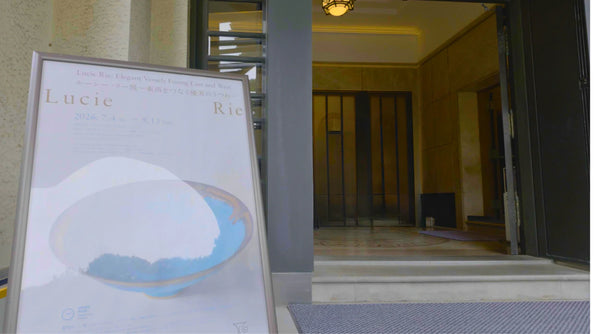
Our Lucie Rie at the Teien Art Museum article now records the Tokyo exhibition that ended on September 13, 2026.
Photography
Follow the museum’s photography rules and staff guidance for each space and object.
Sources and update: the Nezu Museum’s Japanese and English pages for A Ceramic Travelogue, checked September 25, 2026, and its 2013 Ido tea-bowl exhibition archive for historical context. This is a researched guide. The museum’s own pages provide the authoritative exhibit images and visiting details.