Hida Shunkei: The Transparent Lacquer That Shows the Wood
3 min readThe grain remains visible beneath the warm lacquer of Hida Shunkei. Made in Takayama and the surrounding Hida region of Gifu, it uses transparent urushi, often over a yellow or red tint. On a tray or box, the direction and pattern of the wood form much of the decoration.
“Transparent” does not mean colourless: the lacquer contributes its own tone. The wooden base and the layers above it both affect the finished appearance.

Forms include trays, flower containers, nested boxes, lunch boxes, and utensils for tea and sake.
Hida Shunkei received national Traditional Craft designation in 1975 under the Ministry of International Trade and Industry, the predecessor of today’s METI. The designated craft uses natural lacquer and specified woodworking methods.
A Four-Hundred-Year Story From Takayama
The traditional origin account dates to around 1607. A Takayama carpenter is said to have shaped a tray from sawara cypress after noticing the grain, then asked a local lacquerer for a finish that would leave it visible. Its colour was compared with a tea-storage jar called hi-shunkei, attributed to a Kamakura-period potter. The account explains the craft’s name; it should not be read as a documented recipe unchanged since its founding.

Early production was associated with tea utensils before expanding into boxes, trays and other household objects. Local timber and woodworking skills supported the craft. Wholesalers promoted Hida Shunkei at international exhibitions in the Meiji and Taishō periods, and railway access brought a souvenir market. Production declined when lacquer was scarce during the Second World War, then recovered in the postwar period.
How the Transparent Lacquer Is Made
Woodworkers prepare bases from timber such as hinoki cypress, sawara cypress and Japanese horse chestnut, dried over an extended period. Three methods suit different forms: hegimono uses split boards for trays and boxes; magemono bends steamed wood into rounded containers, with joints secured using cherry bark; hikimono turns circular objects on a lathe.

The surface is prepared and tinted, then given a soybean-based undercoat to control absorption. Transparent lacquer is applied above it.

The Traditional Crafts Aoyama Square process guide describes lacquerers preparing their own transparent finishing lacquer and adjusting its use for temperature, humidity, and season.
Yellow and red grounds
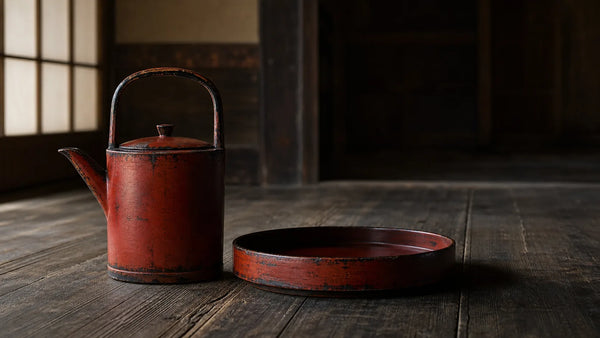
Ki-shunkei uses a yellow ground, often producing an amber-gold effect. Beni-shunkei uses red for a deeper reddish tone. Both reveal the grain; compare individual pieces in the light where you plan to use them.

Living With Hida Shunkei
For washable tableware, use lukewarm water and a soft cloth or sponge, then dry promptly. Avoid soaking, dishwashers and microwaves, as well as prolonged direct sunlight or heat from a nearby heater. Follow the maker’s instructions for the particular object; a display piece may require different care.

Colour and sheen can change with time, handling and storage. That change is not necessarily an improvement. Have peeling, cracks or damaged exposed wood assessed rather than treating them as desirable ageing.
Pieces to Pair With a Shunkei Table
Ceramic cups and vessels can make attractive companions for a woodgrain lacquer tray. The pieces below are visual pairing suggestions from other craft traditions.
Try the Arita gold-glazed tea set for a lustrous contrast, the Shigaraki coffee cup and saucer set for a textured surface, or the Kutani floral ochoko set of five for a small sake service. Check each item’s product page for its materials and included packaging. More suggestions appear in Gifts for Tea Lovers.

Related Urushi Studies articles cover maki-e sprinkled-gold lacquer, Yamanaka wood-turned lacquerware and Tsugaru-nuri.
Source: Traditional Crafts Aoyama Square’s Hida Shunkei profile describes the origin account, materials, and making process. The ceramic products linked here are suggested companions for a lacquer setting, not examples of Hida Shunkei.