How to Appreciate Tea Aroma: Channels, Cold Fragrance, and Listening
8 min readTea changes as you drink it. The scent above a warm cup may feel quite different from the fragrance left after the last sip. Tea aroma appreciation begins with noticing those changes, without needing a specialist vocabulary. This guide offers a few ways to pay attention to the leaf, the brew, and the empty cup, and considers the Japanese practice of “listening” to incense.
Aroma arrives in channels, not all at once
Try noticing the fragrance at a few different moments. These are useful prompts for an informal tasting, rather than a prescribed assessment method.

Start with the dry leaf, then the aroma above the brewed tea. If you prewarm an empty pot, drain it before adding the leaf and notice its scent there too; this does not require rinsing the tea. After a comfortable sip, notice the aroma as you breathe out. Finally, smell the emptied cup. Keep your face away from hot steam and do not handle a hot lid just to smell it.
You may notice something different above the cup, during a sip, and after the cup is empty. None of these moments needs to supply a verdict on the tea.
For a useful comparison, keep the tea, water, vessel, and brewing method the same. Write down a few impressions before changing one variable in the next brew.
How fragrance changes as tea cools
Temperature affects how aroma is released and perceived. Some scents are easier to notice above warm tea; others may seem more apparent later. Floral, roasted, and woody impressions do not fall into a fixed hot-to-cold sequence, and that sequence will not be the same for every tea.
Compare the warm brew with the emptied cup if you enjoy the exercise. A faint cold-cup scent does not establish poor quality, and lingering sweetness does not establish good quality. Brewing strength, vessel cleanliness, time, and the tea itself all affect what you notice.
Treat the cooled cup as another observation, alongside the warm aroma and taste. It is not a reliable standalone test of grade, freshness, or careful manufacture.
Building an aroma vocabulary
To appreciate fragrance you need words for it, and tea tradition has a rich palette. Most tea aromas fall into recognizable families: floral (orchid, osmanthus, lilac), fruity (stone fruit, citrus, ripe apple), honey and sweet (nectar, caramel, malt), green and vegetal (fresh grass, seaweed, steamed greens), roasted (toasted rice, chestnut, baked bread — the signature of fire), and woody, earthy, and aged (cedar, camphor, autumn leaves, the mellow depth of aged tea).
You can also describe how immediate or persistent an impression feels. A simple, short-lived fragrance can be enjoyable; complexity and persistence are not requirements every tea must meet.
What fragrance can—and cannot—tell you
Roasted notes can be a useful clue to a tea’s processing: hojicha is an accessible place to notice them. Fresh green or grassy notes can be normal in green tea and do not by themselves show under-processing. Aroma alone cannot reconstruct firing, storage, or age. If a tea appears mouldy or smells unexpectedly musty, set it aside and ask the seller rather than tasting it to test safety.
Compare your impressions with the maker’s description and brewing advice. The two can help you learn a tea’s character without turning each scent into a claim about how it was produced.
How vessels and method shape the fragrance
A clean vessel and a repeatable brewing method make comparisons easier.
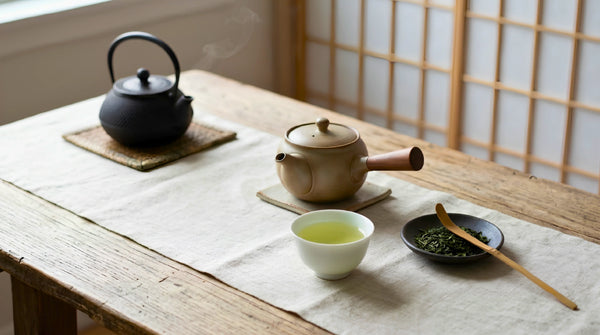
Use a clean, odour-free cup that is comfortable to hold. White porcelain helps you see the liquor’s colour; it is not uniquely able to preserve fragrance, and a fine spout does not guarantee better aroma. A kyusu can be convenient for pouring and separating the leaf from the brew. Our white porcelain yunomi and white porcelain sencha cups offer different shapes to try. For comparisons, use the same cup each time so that changes in shape and temperature do not complicate the result.

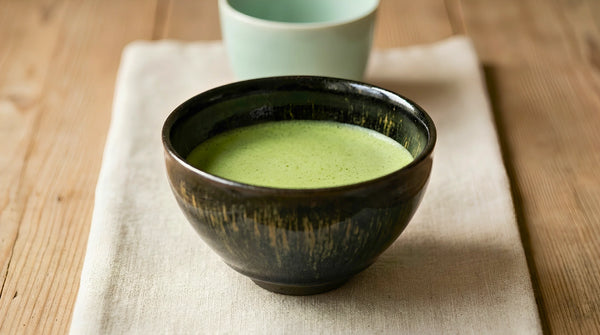
Sencha and gyokuro may suggest fresh green or marine notes, while hojicha often brings roasted impressions. Umami is a taste, distinct from aroma. Matcha has its own green fragrance and is prepared in a matcha bowl; historical tenmoku bowls of the Song dynasty offer a separate view of tea’s material history. Our guide to building a beginner's sencha tea set covers practical equipment, and our guide to pairing tea with glaze color explores the visual experience of the cup.
"Listening" to fragrance: what kōdō teaches tea
The deepest lesson in aroma appreciation comes not from tea but from its sister art: kōdō (香道), the Japanese way of incense. In kōdō, practitioners do not say they smell incense. They say they listen to it — monkō, "listening to fragrance." The phrase is not a quirk of translation but a philosophy: fragrance is treated as something subtle enough that it must be received with the full, quiet attention you would give to a faint sound, not grabbed at with the nose.

According to The Metropolitan Museum of Art, the etiquette of kōdō developed during the Muromachi period (1392–1573) alongside the tea ceremony. Its account describes passing a small heater among guests, with incense wood gently warmed over charcoal and ash on a mica plate. This is one historical form of incense appreciation, distinct from simply lighting an incense stick. See our Incense & Kōdō collection for incense utensils.
Bring that posture to a cup of tea and everything changes. To "listen" to a tea's aroma is to slow down, empty the mind of expectation, and let the fragrance come to you across its channels and temperatures. It folds naturally into ichi-go ichi-e (一期一会, "one time, one meeting") — the idea that this exact cup, at this exact warmth, will never recur. Aroma, the most transient thing in the cup, becomes a teacher of presence. You are not cataloguing a smell; you are paying complete attention to something that is already disappearing.
For tea, the useful lesson is attention. A tasting note can be as modest as “more roasted while warm” or “very little scent left in the cup.” Recording what you notice is more useful than forcing the tea into an expected pattern.
A simple way to practice
Brew a familiar tea using its maker’s instructions. Smell the dry leaf and the aroma above the cup, let it cool enough to drink comfortably, then notice the fragrance during and after a sip. Return to the empty cup if you wish. Write two or three words at each stage and compare them on another day. Keep the exercise brief enough that the tea remains a pleasure.
FAQ
What is tea aroma appreciation?
Tea aroma appreciation means paying attention to a tea’s fragrance as well as its taste. You can notice the dry leaf, the brewed tea, the aroma during a sip, and the emptied cup. These observations describe your experience; they do not independently prove the tea’s quality or production history.
What is cold-cup aroma and why does it matter?
Cold-cup aroma is the scent that remains in an emptied cup after it cools. It can be interesting to compare with the warm brew, but it is not a standalone quality test. A faint scent does not necessarily indicate inferior tea, nor does a sweet lingering scent prove a high grade.
Why do kōdō practitioners say they "listen" to incense?
In kōdō, the Japanese way of incense, the practice is called monkō, "listening to fragrance." The phrasing reflects a philosophy that scent is subtle and must be received with quiet, full attention, like a faint sound, rather than actively sniffed. The same attentive posture deepens how one appreciates tea aroma.
What kind of cup is best for smelling tea?
Choose a clean, odour-free cup that is comfortable to use. White porcelain helps show the tea’s colour, but is not uniquely best for aroma. For a fair comparison between brews, keep the cup and brewing method consistent.
How does aroma reveal how a tea was made?
Aroma can suggest characteristics such as roasting, but it cannot establish the full production or storage history. Green or grassy notes can be normal in green tea. Compare your impressions with the maker’s information rather than treating any single scent as proof.
Do different Japanese teas have different aromas?
Yes. Sencha and gyokuro can have fresh green or marine impressions, hojicha often has roasted notes, and matcha has its own green fragrance. These are broad descriptions: individual teas, brewing methods, and personal perception vary. Umami is a taste rather than an aroma.
Further reading: Ippodo’s introduction to tea types describes the character of its teas, while The Met’s history of Japanese incense provides context for kōdō. Use the tasting exercises here as prompts for your own observations.