Japanese Summer Cooling: The Art of Ryō o Toru
6 min readA chime at the window, blue-and-white dishes, a glass of chilled tea: small objects can give a summer room a refreshing character. The Japanese expression ryō o toru (涼を取る) means seeking relief from the heat. It includes actual coolness, such as resting in a breeze, as well as the seasonal associations explored here. This guide looks at objects for the summer table; their appearance and sound do not replace effective cooling in hot conditions.
Ryō o toru: seeking relief from the heat
The reading is ryō o toru (涼を取る). Shogakukan’s Daijisen dictionary defines it as escaping the heat by such means as enjoying a cool breeze. Nōryō (納涼) is another term for seeking summer coolness. Neither term is limited to psychological effects or to cooling without electricity.
Water, morning glories, goldfish, and waves appear on many summer objects. On a table, these motifs can suggest the season and give the eye a refreshing point of interest. The effect is an aesthetic association, not a change in room temperature.
Furin: a sound associated with summer

A furin (風鈴) makes air movement audible. In an Environment Ministry interview, Shinohara Furin Honpo describes the bell’s summer association through awareness of a breeze. Choose a sound you enjoy, hang the chime securely, and consider neighbours and quiet hours. Our furin care guide covers care for different materials.
A bell can draw attention to a passing breeze. It does not lower the air temperature.
Different chimes offer different sounds and designs. Ikenaga’s range includes a Nambu cast-iron double-bell furin; its Osaka-based brand should not be confused with the location or identity of a particular caster. Other choices include an Arita hakuji furin in blue-and-white stripe and a sometsuke goldfish furin designed by Yakushigama. Pitch and sustain depend on the individual bell’s shape and construction as well as material, so listen to a recording where available. Our guide to what furin are and why they mean summer gives more context, and the Wind Chimes collection brings the objects together.
Sometsuke blue: why cobalt porcelain reads as cool

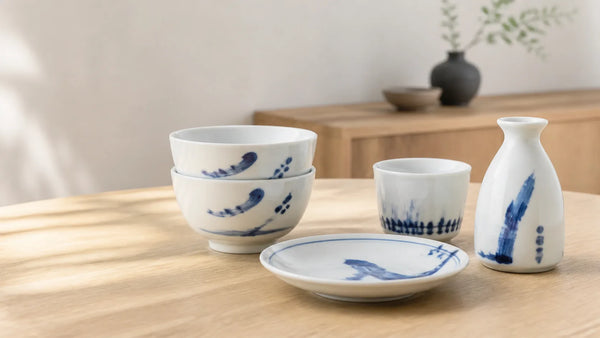
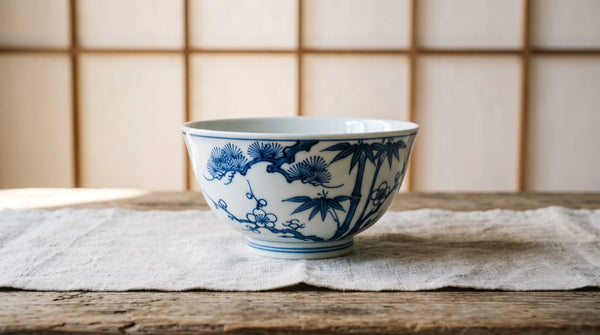
A blue line against white porcelain can suggest water and clear light. Sometsuke (染付), cobalt-blue decoration beneath a clear glaze, is an appealing choice for a summer table. This is a visual suggestion: the same ware can be enjoyed in any season, and red or gold decoration has a place at the summer table too.
Blue-and-white porcelain developed in Arita, in present-day Saga Prefecture, during the early seventeenth century. The name Imari is associated with the nearby shipping port and with export wares. The Met’s account of Edo-period Japanese porcelain places these ceramics in the wider history of production and trade. For this table setting, try small blue-and-white dishes or a blue-rimmed cup. Our article on how sometsuke found its voice looks at the technique, and the Arita & Hasami collection offers contemporary examples.
Glass for cold things: Edo glass and the ice-pocket carafe

Glass earns its summer place because it shows the cold. A clear or blue vessel reveals ice, condensation, and the line of a chilled drink — the visual cues the eye reads as refreshing before the first sip. Tokyo's Edo garasu (Edo glass) and its cut-glass cousin Edo kiriko are the classic summer makers here.
For chilled sake, a Toyo Sasaki blue cold-sake set with a built-in ice pocket separates the cooling ice from the drink. The amber ice-pocket carafe offers the same serving idea in a warmer colour. For a small serving, a deep-blue Edo glass ochoko with gold leaf provides another option. Follow the maker’s temperature instructions: do not freeze ordinary glassware or expose it to abrupt temperature changes. See our guide to washing Edo kiriko and avoiding thermal shock and browse Sake & Glassware.
Mizudashi: cold-brewing tea for the heat

Mizudashi (水出し) means brewing with cold water. It offers another way to enjoy sencha or gyokuro, often with a gentler balance than a hot infusion. The result depends on leaf quantity, water, and time; cold brewing does not guarantee a particular sweetness or eliminate caffeine.
Use a clean, food-safe pitcher or a suitable kyusu and follow the tea producer’s cold-brew recipe. Refrigerate while brewing, strain as directed, and consume promptly. Our beginner's guide to brewing sencha at home covers basic equipment, with pots in Teapots & Tea Sets.
Putting together a small summer table
A chime, a few blue-and-white dishes, and a glass carafe are enough to create a small summer setting. Choose them for the sound, colour, and serving function you enjoy. These touches can accompany the broader practice of ryō o toru without standing in for actual relief from heat. The Summer Gift Edit gathers related pieces in one place.
FAQ
What does ryō o toru mean?
Ryō o toru (涼を取る) means seeking relief from heat, for example by resting in a cool breeze. It includes actual cooling and is not limited to sound or visual suggestion. Nōryō (納涼) is a related term for enjoying summer coolness.
Do Japanese wind chimes actually cool you down?
A wind chime does not lower the temperature. Its sound can remind a listener of a breeze and of summer, which some people find refreshing. Tone varies by the bell’s construction and size as well as material; iron, ceramic, and glass cannot be ranked by one universal pitch or sustain rule.
Why is blue-and-white porcelain associated with summer?
Blue-and-white can evoke water and clear light, making it an appealing summer choice. Sometsuke is cobalt-blue decoration beneath a clear glaze. Its seasonal use is flexible: it is also everyday tableware throughout the year.
What is mizudashi green tea?
Mizudashi is tea brewed with cold water. Use the producer’s recommended leaf quantity and time, brew in a clean vessel in the refrigerator, strain as directed, and drink promptly. Different teas give different results, and cold brewing does not make green tea caffeine-free.
Which Japanese vessels are best for serving cold drinks?
Choose a food-safe vessel suited to the drink and temperature. Glass shows the liquid and any ice clearly; an ice-pocket carafe keeps cooling ice separate from the drink. Ceramic cups can also work well. Follow the maker’s instructions on refrigeration, freezing, and temperature changes.
Reading note: the expression ryō o toru is explained in Shogakukan’s dictionary, and the wind-chime association is described in the linked interview with Shinohara Furin Honpo. The table settings here are suggestions for enjoying seasonal objects.