Japanese Summer Cooling: The Art of Ryō o Toru
3 min readA chime at the window, a blue-and-white dish and a glass of chilled tea can give a room a summer character. Ryō o toru (涼を取る) means seeking relief from heat. These seasonal objects can accompany that relief; their sound and appearance do not replace effective cooling.
Ryō o toru: seeking relief from the heat
Shogakukan’s Daijisen dictionary explains ryō o toru through actions such as enjoying a cool breeze. Nōryō (納涼) is a related term. At the table, motifs such as water, waves, goldfish and morning glories give objects a seasonal association.
Furin: a sound associated with summer

A furin (風鈴) makes air movement audible. In an Environment Ministry interview, Shinohara Furin Honpo describes the bell’s summer association through awareness of a breeze. Choose a sound you enjoy, hang the chime securely, and consider neighbours and quiet hours. Our furin care guide covers care for different materials.
Listen to a recording where available: shape and construction affect pitch and sustain as well as material. Compare Ikenaga’s Nambu cast-iron double bell, an Arita striped porcelain bell and a Yakushigama goldfish design. Product information should distinguish the brand from the maker and production location. Our furin introduction gives context, with further examples in Wind Chimes.
Blue-and-white dishes

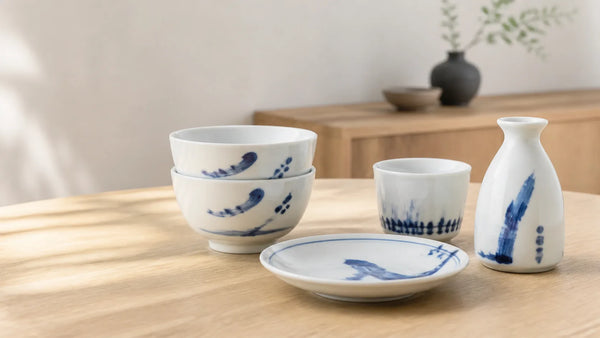
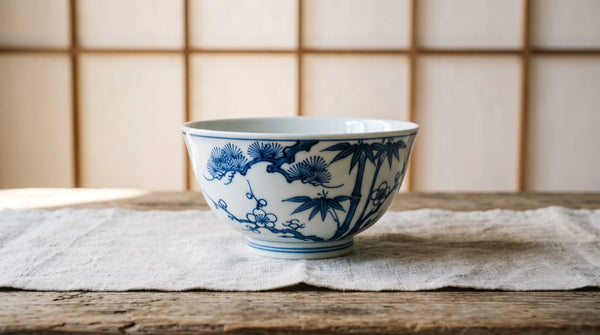
A blue line against white can suggest water. Sometsuke (染付), cobalt-blue decoration beneath a clear glaze, offers that contrast on cups and small dishes. Use it with other colours you enjoy; these pieces need not be put away when summer ends.
Blue-and-white porcelain developed in Arita during the early seventeenth century. The name Imari relates to the shipping port and export wares. The Met’s Edo-period porcelain account explains the trade, and our sometsuke study explores the technique. The Arita & Hasami collection has contemporary examples.
Glass for serving chilled drinks

Clear or blue glass lets you see the drink, ice and condensation. It can be a useful summer serving choice, but ordinary glass still needs protection from abrupt temperature changes.
For chilled sake, a Toyo Sasaki blue cold-sake set with a built-in ice pocket separates the cooling ice from the drink. The amber ice-pocket carafe offers the same serving idea in a warmer colour. For a small serving, a deep-blue Edo glass ochoko with gold leaf provides another option. Follow the maker’s temperature instructions: do not freeze ordinary glassware or expose it to abrupt temperature changes. See our guide to washing Edo kiriko and avoiding thermal shock and browse Sake & Glassware.
Mizudashi: cold-brewing tea for the heat

Mizudashi (水出し) is brewing with cold water. Sencha and gyokuro can give a different balance from a hot brew; leaf quantity, water and time affect the result. Cold brewing does not make the tea caffeine-free.
Use a clean, food-safe pitcher or a suitable kyusu and follow the tea producer’s cold-brew recipe. Refrigerate while brewing, strain as directed, and consume promptly. Our beginner's guide to brewing sencha at home covers basic equipment, with pots in Teapots & Tea Sets.
Putting together a small summer table
Choose one or two objects for the way you use the room or table: a sound you like, a small serving dish or a carafe for sharing a drink. The Summer Gift Edit brings related pieces together.
Sources: Shogakukan’s dictionary for the expression and the Environment Ministry’s interview with Shinohara Furin Honpo for the bell’s summer association, linked above. The table settings are ZenKiln’s suggestions.