Aka-e: How Red Enamel Warmed Japanese Porcelain
Written by Team ZenKiln · from our Tokyo atelier
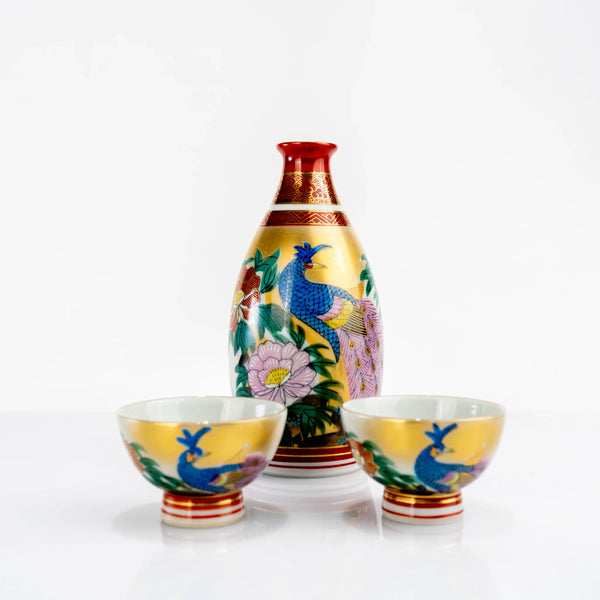
Aka-e (赤絵) means “red picture,” and it marks one of the warmest turns in the history of Japanese porcelain: the moment painters in Arita stopped working only in cool cobalt blue and began laying brilliant enamel over the finished glaze. If sometsuke gave Japanese porcelain its quiet blue voice, aka-e gave it heat — iron-red, gold, and a polychrome glow that sits on the surface and catches the light. This is the second entry in Color of Utsuwa, our series on the colors that define Japanese ceramics.
What aka-e actually means
Aka-e belongs to a family of techniques called uwa-e (上絵), or overglaze painting. The porcelain is glazed and fired to maturity first, producing the hard white surface we recognize. Only then does the decorator paint — in enamels colored with metal oxides — directly onto that glassy glaze, and a second, cooler firing fuses the color in place. The defining note is a clear iron-red, which is where the name comes from, but an aka-e palette usually carries green, yellow, aubergine, black, and gold alongside it.
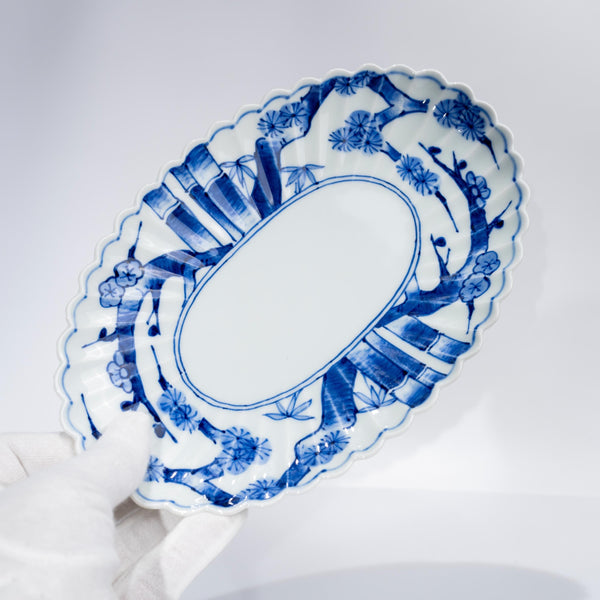
The contrast with sometsuke is the whole point. Sometsuke is underglaze blue: cobalt painted onto the raw body and sealed beneath a single high firing, so the color sits perfectly flush. Aka-e is overglaze: it rides on top of the glaze, in faint relief, added in a separate step. One technique cools the eye; the other warms it. Many of the most prized Arita pieces use both at once — blue drawn under the glaze, red and gold laid over it.
One piece, two firings. A porcelain body is glazed and fired once at around 1,300 °C to vitrify it. The overglaze enamels are then painted on and set in a second, much cooler firing — roughly 700–850 °C — hot enough to fuse the colored glass to the surface, yet gentle enough to keep the reds and golds bright.
How red came to Arita
Porcelain making began in the Arita district of Hizen province — today’s Saga Prefecture — in the early 1600s. By tradition the discovery of porcelain stone there is credited to Korean potters, and Encyclopædia Britannica dates the start of manufacture to 1616. For its first decades, Arita’s output was blue-and-white: cobalt under a clear glaze, in the manner of the Chinese porcelains then prized across Asia.
The turn to red came in the 1630s, when potters at Arita worked out how to fire colored enamels over the glaze — and, as The Metropolitan Museum of Art puts it, “in addition to blue-and-white porcelain, multicolored objects could now be made.” One celebrated result was the work of the Kakiemon kiln, whose decorators painted figures, animals, and flowers in a clean palette of red, yellow, green, blue, and black on a milky-white ground. By the 1640s a denser, more sumptuous manner now called Old Imari (Ko-Imari) had appeared, piling on color and gold until the pattern covered the whole vessel.
“Imari” is a harbor, not a kiln. The porcelain was made at Arita but shipped from the nearby port of Imari, and the name stuck. From Imari the Dutch East India Company carried these wares to Europe, where their red-and-gold “brocade” surfaces became some of the first Japanese art many Europeans ever saw.
The family of red: aka-e, iro-e, nishikide, kinrande
Walk through any collection of Japanese porcelain and you’ll meet a cluster of overlapping terms. They are worth keeping straight, because each names a slightly different relationship between red, color, and gold:
- Iro-e (色絵) — “colored picture,” the umbrella term for all overglaze polychrome enamel.
- Aka-e (赤絵) — the red-led branch of iro-e, where iron-red carries the design.
- Nishikide (錦手) — the “brocade” manner: underglaze blue combined with overglaze red and gold, packed as densely as woven silk.
- Kinrande (金襴手) — “gold brocade,” in which gold is laid over a red or blue enamel ground for a frankly opulent effect.
Red was never only an Arita story. In Kaga — modern Ishikawa Prefecture — the bold early-Edo overglaze wares associated with Kutani took the palette in a different direction, with darker, more daring color and a painter’s freedom that still defines Kutani ware today. The Met even groups certain mid-1600s enameled plates under a “Ko-Kutani” style. Aka-e, in other words, is less a single look than a whole temperament that spread across Japan’s porcelain regions.
How to read — and live with — a red-and-gold piece
Aka-e rewards close looking, and a little of the history above turns a pretty cup into a legible object.
Feel the surface. Run a fingertip lightly across the decoration. Overglaze enamel sits in very slight relief — you can often feel the red and gold standing just above the glaze — while underglaze blue stays perfectly smooth. On a nishikide piece you can sometimes feel the two layers within a single pattern.
A quick test: if you can feel the color, it’s overglaze (aka-e); if the colored line is glassy-smooth and flush, it’s underglaze (sometsuke). Most Old Imari and kinrande pieces combine both in one design.
Read the gold honestly. Gold is applied last and is the softest layer, so faint haloing on a rim or handle is the ordinary signature of a piece that has been used and loved — age, not damage.
Care follows from the same fact. Because the enamel and gilding live on the surface, gilded aka-e and kinrande should be hand-washed in warm water, kept out of the dishwasher, and never microwaved — metallic gold will arc and scorch under microwaves, and dishwasher abrasion wears the gilding away. Treated gently, the colors hold their brilliance for generations.
Aka-e in the ZenKiln collection
ZenKiln works with kilns in the Arita and Hasami porcelain corridor of Kyushu, where the aka-e and nishikide traditions are still painted by hand. A few pieces that speak the red-and-gold language especially well:
- Arita Imari Red & Gold Kinrande Chrysanthemum Cup & Saucer — hand-painted by Tokukō, with iron-red, gold, and a chrysanthemum-brocade ground: textbook kinrande.
- Arita Ko-Imari Wisteria Cup & Saucer — a Sehei-gama set in the Old Imari cartouche manner, blue under the glaze with red and gold above.
- Arita Ko-Imari Lidded Bowl — a covered rice-and-soup bowl in the richly painted red, blue, and gold Ko-Imari style.
- Arita Imari Shikunshi Cup & Saucer — Old Imari cartouches with a shu-dami red wash framing the “four noble plants.”
- Arita Misuzu Red-Matte Lidded Rice Bowl — a contemporary take, where a modern aka-matto (red-matte) overglaze stands in for the classic gloss.
You can browse the full range in our Arita & Hasami Ware collection, or follow the red into Kaga with Kutani Ware.
Frequently asked questions
What does aka-e mean?
Aka-e (赤絵) translates as “red picture.” It refers to porcelain decorated with overglaze enamels in which iron-red leads the palette, usually alongside green, yellow, and gold.
What is the difference between aka-e and sometsuke?
Sometsuke is underglaze cobalt blue, painted on the raw body and sealed under one high firing, so it sits flush and smooth. Aka-e is overglaze enamel, painted on top of the fired glaze and fixed in a second, cooler firing, so it sits in slight relief. Many pieces use both techniques together.
Are aka-e, Imari, and Kutani the same thing?
Not quite. Aka-e is a decorating technique. Imari (Arita) ware and Kutani ware are regional traditions — Arita in Saga Prefecture, Kutani in Ishikawa — that both use aka-e and related overglaze styles. A single piece can be both “Imari” and “aka-e” at once.
What is kinrande?
Kinrande (金襴手) means “gold brocade.” It is aka-e taken to its most opulent: gold leaf or gold enamel applied over a red or blue ground, often in dense, fabric-like patterns.
How can I tell overglaze enamel from underglaze blue?
Touch it. Overglaze color stands in very faint relief and can be felt with a fingertip; underglaze blue is glassy-smooth and flush with the surface. A magnifier also reveals the slightly raised, glass-like edge of the enamel.
Is aka-e porcelain safe for everyday use?
Plain (ungilded) aka-e is durable tableware. Pieces with gold — kinrande and gilded Imari — should be hand-washed and kept out of the microwave and dishwasher, because the gold sits on the surface and can scorch or wear. With gentle care they last for generations.
Editor’s note. Color of Utsuwa is ZenKiln’s series on the colors and glazes that shape Japanese ceramics. Historical dates here are given at the level supported by museum and reference sources — chiefly The Metropolitan Museum of Art and Encyclopædia Britannica — and we describe individual pieces only from what their makers and our own examination confirm. Next in the series: the cool green world of celadon (seiji).