

Kutani Ware History: Ko-Kutani, Yoshidaya, and Japan Kutani
Kutani village history, Arita evidence for Ko-Kutani-style porcelain, Yoshidaya’s revival, and Meiji exports—without dating objects from style or marks alone.
Stories about craft, everyday use and care.
Kutani village history, Arita evidence for Ko-Kutani-style porcelain, Yoshidaya’s revival, and Meiji exports—without dating objects from style or marks alone.

Explore Edo Kiriko, Tokyo’s cut-glass tradition: clear and coloured glass, familiar geometric patterns, comparison with Satsuma Kiriko, and gentle care.

Hagi tea ceramics from Yamaguchi: Korean origins, glaze crackle, gradual colour changes, and careful guidance on washing, drying, and leakage.

Hasami porcelain from Nagasaki: everyday bowls, Yodo River kurawanka boats, neighbouring Arita traditions, and what to check before buying.

Mino ware from eastern Gifu: Shino, Oribe, Ki-Seto, Setoguro, porcelain tableware, and practical questions about material, maker, and care.

Tokoname’s ceramic history spans medieval storage jars, red-clay kyusu and lucky-cat figures. A guide to the region’s materials, forms and uses.

Seto ware includes medieval glazed pottery, blue-and-white porcelain and ceramic figures. Explore its history, glaze names and contemporary examples.

Arita’s early porcelain, underglaze blue and enamels, Kakiemon style, the broader meaning of Ko-Imari, Nabeshima ware, and the trade route through Imari and Nagasaki.
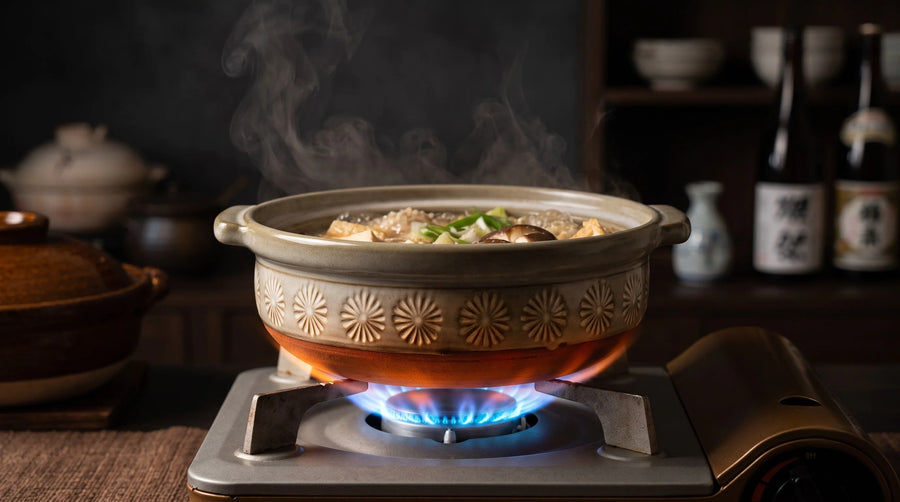
Banko ware from Mie: the history of donabe cooking pots and shidei teapots, heat-resistant bodies, and choosing a pot by capacity and hob compatibility.