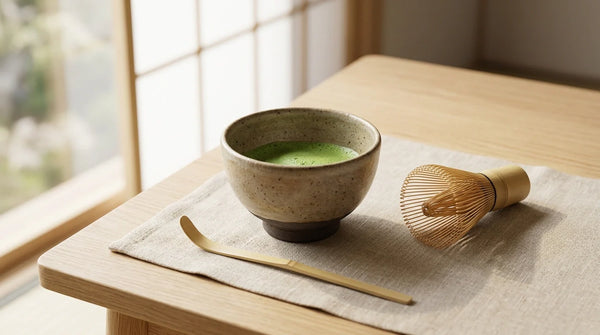
Matcha is finely ground tea whisked into water, so you drink the leaf itself rather than an infusion strained from it. It contains caffeine, L-theanine and tea polyphenols, but their presence alone does not tell us what benefits to expect from matcha.
Research offers some clues about alertness and attention. Here is what the studies show, alongside practical considerations for making matcha part of your day.
Caffeine can increase alertness
Matcha contains caffeine, which can help you feel more alert. The amount in a bowl varies with the tea and how much powder you use. In one 2024 clinical trial, the researchers measured 66.2 milligrams of caffeine in the 2-gram daily matcha portion used in their study. That figure describes that particular tea and serving; it is not a standard amount for every bowl.

Matcha also contains L-theanine, an amino acid found in tea. Its presence does not guarantee a "calm" or jitter-free lift. Too much caffeine can cause anxiety, palpitations or disrupted sleep. The FDA's caffeine guidance cites 400 milligrams a day as an amount not generally associated with negative effects for healthy adults. Sensitivity varies from person to person and can be affected by health conditions and medicines.
Attention research is promising but limited
A small 2017 study tested 4 grams of matcha as both a drink and a snack bar in 23 healthy adults. Compared with placebo versions, the matcha products improved some measures of basic attention and response speed. The effects on other cognitive tasks, such as working memory, were minimal, and the study found no significant change in mood.
That supports a cautious statement: matcha may affect some aspects of attention in the short term. It does not establish broad benefits for memory or long-term brain health.

A separate 12-month randomised controlled trial studied 99 older adults with subjective cognitive decline or mild cognitive impairment. Participants took 2 grams of matcha powder a day in capsule form, or a placebo. The study found no significant improvement in its primary measures of cognition and daily functioning. A secondary measure of facial emotion recognition improved, but that finding does not establish a broad cognitive benefit or show that matcha prevents dementia.
Matcha contains tea polyphenols
Matcha contains catechins, a group of tea polyphenols studied for their chemical and biological properties. The amounts found in tea vary by product. In a 2023 laboratory comparison of 15 commercially available green teas, the bagged and gunpowder tea samples had higher total phenolic content and antioxidant capacity than the matcha samples, while differences in EGCG, one of the catechins in tea, were not statistically significant between tea types. The researchers analysed laboratory extracts, so the results do not directly compare what you consume in a prepared cup. They also do not establish a health benefit in people. The National Center for Complementary and Integrative Health explains why antioxidant claims should be interpreted with care.

An unsweetened bowl is a simple everyday choice
Matcha whisked with water has no added sugar. Choosing plain matcha instead of a sweetened drink avoids the added sugar in that serving. A latte can also be part of your day, but sweetened powders, syrups and toppings change what is in the cup. Check the ingredients rather than assuming that all matcha drinks have the same nutritional profile.

Matcha is not a dependable weight-loss treatment. The NCCIH overview of green tea says that definite conclusions cannot yet be reached for most of the purposes green tea is used for, and describes any effect on body weight as modest at best. This does not establish that a daily bowl of matcha will lead to meaningful weight loss.
Make a bowl you enjoy
As a starting point, Ippodo's basic usucha recipe uses 2 grams of sifted matcha, 60 millilitres of water at 80°C and about 15 seconds of brisk whisking. This is a preparation method, not a therapeutic dose.

A chawan gives the whisk room to move. Our guide to choosing a matcha bowl explains what to look for, with examples from our matcha bowls and tools collection.
For cleaning and storage, see our matcha set care guide.
Keep your overall caffeine intake in mind, including coffee and other drinks. If you are pregnant, trying to become pregnant, breastfeeding, or concerned about a medicine or health condition, ask a healthcare professional about caffeine intake. Green tea extracts in tablets or capsules are different from tea prepared as a beverage; NCCIH notes that liver injury has been reported with some green tea products, primarily extracts.
There is no need to make each bowl stronger in pursuit of a greater benefit. Start with a preparation you like, adjust it to taste, and choose a time of day when the caffeine will not disturb your sleep.
FAQ
How much caffeine is in a bowl of matcha?
It depends on the tea and the amount of powder. One 2024 trial measured 66.2 milligrams in a 2-gram serving of the matcha it used; a different matcha may contain more or less.
Does matcha improve focus?
A small 2017 study found short-term improvements in some measures of basic attention and response speed, with no significant change in mood. It does not show a lasting benefit for memory or brain health.
Does matcha have more antioxidants than other green tea?
Not always. In a 2023 laboratory comparison, bagged and gunpowder tea samples had higher total phenolic content and antioxidant capacity than the matcha samples, while EGCG levels did not differ significantly between tea types. The figures came from laboratory extracts, not a prepared cup.
Is matcha good for weight loss?
There is no dependable evidence that a daily bowl of matcha produces meaningful weight loss. The US National Center for Complementary and Integrative Health describes any effect of green tea on body weight as modest at best.
Editor's note: ZenKiln sells tea bowls and bamboo whisks, but does not sell matcha powder.