Gin-tsugi: Repairing Japanese Ceramics with Silver
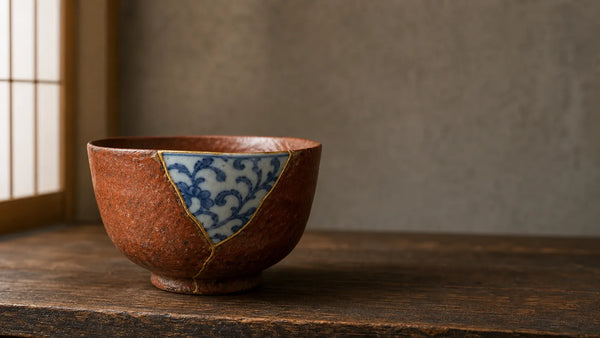
7 min readGin-tsugi (銀継ぎ, "silver joinery") is the quieter sibling of kintsugi — the Japanese craft of mending broken pottery with urushi lacquer and finishing the seam in powdered precious metal. Where kintsugi draws each crack in gold, gin-tsugi, sometimes called silver kintsugi, draws it in silver: cooler in tone, gentler against the glaze, and — because silver tarnishes — a repair that keeps changing color for the rest of the object's life. For some pieces that slow darkening is not a flaw but the whole point.
This guide covers silver-finished lacquer repair, the choice of metal and the care questions to ask before a repaired piece returns to use. For gold repair, see our companion guide to kintsugi, the art of gold-repaired pottery.
One craft, two metals: where gin-tsugi fits
Kintsugi is the umbrella craft: broken ceramic is rejoined and its losses filled with urushi lacquer, then dusted or mixed with powdered gold, silver, or platinum. The choice of metal changes the name — kin (金) is gold, gin (銀) is silver — but not the philosophy. In both, the repair is treated as part of the history of the object rather than something to disguise: the seam is illuminated, not hidden. It is the same instinct that runs through wabi-sabi, the Japanese acceptance of imperfection and impermanence.
Bakōhan is a famous staple-repaired Chinese tea bowl associated with Ashikaga Yoshimasa. Tokyo National Museum’s account says it was sent to China in search of a replacement and returned with staples when none could be found. This is a recorded tradition about the bowl, not proof of when gold or silver lacquer repair began.
In a traditional repair, lacquer-based adhesive and fills join the fragments and rebuild losses. Mugi urushi is a wheat-flour and lacquer adhesive; filling mixtures differ with the work. The silver is a surface finish applied to a still-tacky lacquer line, not a soldered joint.
How a silver repair is actually made
Repairers fit and join the fragments, cure the adhesive under suitable conditions, fill losses and refine the seam before applying finishing layers. Temperature, humidity, layer thickness and materials affect the schedule; a fixed 90% humidity or two-week stage is not a universal recipe.

The finish is where silver asserts its own rules. Practitioners typically lay the final line for silver over a black urushi undercoat — silver reads cleanest and brightest against black — where gold is more often laid over iron-red bengara urushi. While that last line is still tacky, finely powdered silver is dusted on, left to bond as the lacquer cures, then gently burnished. Start to finish, a careful repair takes weeks to months.

Raw urushi can cause contact dermatitis, and broken ceramic edges are sharp. This description is not a home repair procedure. Gen Saratani’s repair page shows a practitioner’s work; it does not establish heat, solvent or food-contact compatibility for your piece. Ask the repairer to confirm all materials and intended uses.
Silver can tarnish through exposure to sulfur compounds, changing from bright metal to darker tones. Gold is less prone to tarnishing, but the lacquer, wear and environment still affect a finished seam. No repair is guaranteed to look unchanged for decades.

Silver or gold? Matching the metal to the piece
The choice is aesthetic first. Gold is warm, festive, and visually dominant — it announces the repair. Silver is cooler and more recessive; it can read as moonlight where gold reads as sun. As a rule of thumb, silver flatters cool and quiet surfaces: dark iron glazes like the tenmoku family (see our study of kuro-yū, the black glazes of Japanese ceramics), blue-and-white sometsuke porcelain, grey and white wabi-sabi stoneware, and misty kohiki-style slips. Gold tends to suit warm amber and persimmon glazes, aka-e red enamels, and pieces that already carry gilded decoration, where a gold seam simply continues the object's own language.

Metal choice affects appearance and material cost, while the labour and extent of damage also shape the quote. The adhesive, preparation and construction matter more to strength than whether the surface is silver or gold.
The wider repair family: joined fragments and staples
Yobitsugi (呼継ぎ) incorporates a fragment from another vessel into a repair. Other repairs reunite original fragments or use appropriately matched replacements. Staple repairs mechanically bridge a break; they are a different construction from lacquer-and-metal finishing.

The Freer Gallery’s 2008–09 exhibition “Golden Seams” examined repaired ceramics. In Tokyo, the Ebara Hatakeyama Museum holds Seppō, a seventeenth-century red Raku tea bowl by Hon’ami Kōetsu, with gold-powder lacquer repairs across firing cracks. Repair can become part of a work’s interpretation. In another use of lacquer and metal, Wajima’s chinkin sunken-gold carving decorates a surface rather than joining fragments.
Caring for a silver-repaired piece
First establish whether the repair is approved for food or liquid use. If it is, follow the repairer’s washing and temperature instructions; gentle hand-washing is commonly required. Avoid dishwashers, cooking heat and microwaves for metal-finished lacquer repairs. Our microwave and dishwasher guide explains why a whole object’s construction matters.

Do not use silver dips or abrasives on a repaired seam. Ask the repairer before polishing tarnish or removing stubborn stains; the cha-shibu tea-stain guide does not override repair-specific care. For storage, protect the piece from pressure and impacts as described in our long-term storage guide.
Repair-worthy pieces in the ZenKiln catalogue
The following pieces illustrate different palettes that an owner might consider when discussing a future repair. Appearance is not a promise that a particular break can be repaired for use.
- Kutani Matcha Chawan — Iroe Yū "Hidamari" Cats — a hand-painted stoneware chawan that already lives in a paulownia kiri-bako, the traditional home of a bowl treasured enough to repair.
- Kutani Yoshidaya Yunomi — Mountain Sakura & Bird — the kind of daily tea cup whose first chip should mean a mend, not the bin.
- Shigaraki "Zansetsu" Lingering-Snow Ikebana Vase — white glaze drifting over an iron-dark body; the exact cool, quiet palette a silver seam was born for.
- Kutani Honkin Hanazume Cup & Saucer — decorated in real gold millefleur; if it ever cracked, a gold repair would simply continue the conversation.
For related objects, browse our Gifts for Tea Lovers collection and use the individual listing for current specifications and availability.
FAQ
Is gin-tsugi as strong as kintsugi?
The surface metal is not the principal structural adhesive. Strength depends on the damage, materials, joint preparation and execution; silver or gold alone does not determine it.
Will the silver seam tarnish?
Silver can darken through tarnishing, and some owners welcome the change. Follow the repairer’s care instructions; avoid metal-polish dips and abrasive rubbing on the seam.
Is a silver-repaired piece food-safe?
Ask the repairer to confirm every adhesive, filler, pigment and finish for the intended food, temperature and contact conditions. Natural urushi and silver do not automatically certify a whole repair. If the method is unknown, keep the piece for display until assessed.
Can I microwave or dishwash a repaired piece?
Avoid both for metal-finished lacquer repairs. Follow the repairer’s approved hand-care routine, and heat food in a separate suitable vessel.
Should I choose silver or gold for my piece?
Choose the appearance you prefer: silver can be quiet against cool glazes, while gold stands out against warm colours. Discuss tarnishing, care and the full quote with the repairer. Metal choice alone does not guarantee strength.
My piece is missing fragments entirely. Can it still be repaired?
Sometimes. The repairer may rebuild losses with suitable fills or fit replacement fragments, including contrasting ones in yobitsugi. The size and location of a loss affect feasibility and safe future use.

Editor’s note: This is an introduction to the craft. Museum records support the historical examples; no general article can certify a particular repaired vessel for food contact.