Raku Ware: The Hand-Molded Tea Bowl of the Japanese Tea Ceremony
3 min readA hand-shaped rim, pared foot and an expanse of red or black glaze give a Raku tea bowl much to look at close up. The tradition developed alongside chanoyu in sixteenth-century Kyoto. Its making includes distinct approaches to black and red ware.
What Makes Raku Ware Different
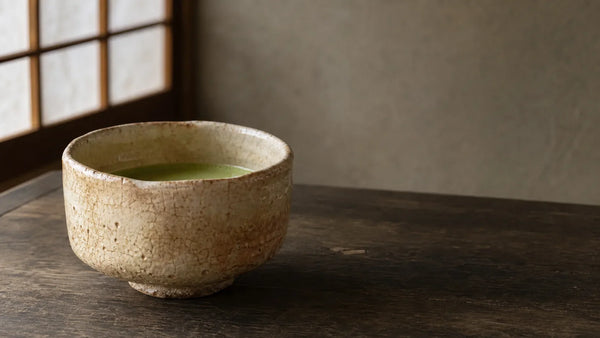
The maker shapes and pares the bowl by hand, working on its curve, wall thickness, rim and foot with fingers and tools. The finished form may be restrained or uneven; hand-shaping does not require an exaggeratedly irregular outline.
Traditional Japanese Raku making includes removing pieces from the kiln while hot. Firing and cooling methods differ. Raku studio Waraku describes temperatures of around 1,200°C for black Raku and 800°C for red, with further variation between kiln settings.
The Origins: Chōjirō, Sen no Rikyū, and Wabi Tea
Raku’s early bowls are associated with Chōjirō and the tea master Sen no Rikyū in the Momoyama period. Their restrained forms suited wabi-cha, the tea practice associated with Rikyū. The museum’s historical account places these bowls within that relationship.
The Raku Museum’s history discusses names including ima-yaki, “contemporary ware”, and the later Raku family name. Tradition associates the name with a seal bearing the character 楽, said to have been granted by Toyotomi Hideyoshi. The family’s records provide the lineage and individual makers’ histories.
Kuro-Raku and Aka-Raku: Black and Red
Kuro-raku is black Raku; aka-raku is red. Their glazes and firing processes differ, with black generally fired hotter. Rapid cooling does not necessarily mean immersion in water. For tea practice, follow the host’s or school’s conventions rather than assigning black exclusively to thick tea and red to thin tea.
On a bowl with little painted decoration, notice the outline of the rim, variations in the glaze and the relationship between the foot and body. These details become clearer when the piece is viewed from several angles.
Handling and using a Raku bowl
Use a bowl made and sold for drinking tea, and check its condition and care instructions. A porous ceramic body can affect heat transfer, but any bowl holding hot liquid can become too hot to hold comfortably. Handle it cautiously.
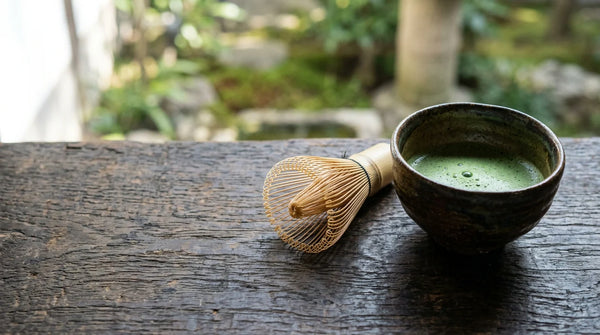
Age, glaze and any repairs matter to suitability for use. Decorative studio-raku work may not be intended for drinking. Wash as directed and dry fully; our matcha bowl and whisk care guide offers general guidance.
Comparing other matcha bowls
The following Kutani bowls belong to a different tradition. Compare their decorated surfaces and forms with the Raku approach described above:
Kōzan Kiln Hane-Usagi rabbit and moon bowl; Iroe Yū Hidamari rabbit bowl; Iroe Yū Hana floral bowl; and Iroe Yū Hidamari cats bowl. Use their product descriptions for materials and care. A grey colour name such as nezumi-iro does not establish an ash-glaze recipe.
These examples are in the Matcha Bowls collection. For a Raku purchase, look for an explicit maker and tradition in the product description.
For related reading, explore Five Tea-Bowl Traditions in Japanese Tea Culture, How to Hold a Chawan, and Reading a Chawan's Foot Ring.
Sources: the Raku Museum’s history and Waraku’s making and care information linked above.