Washi at the Tea Table: Where Paper Meets Ceramic
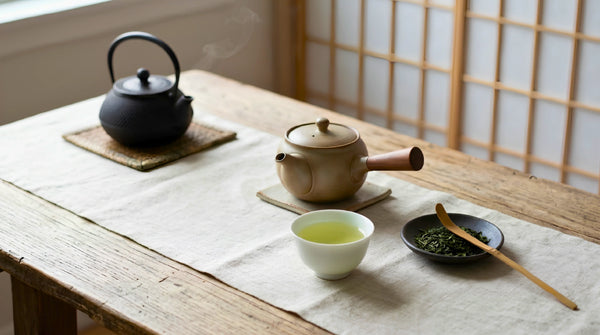
When we talk about the Japanese tea table, we talk about the pot, the cups, the leaf. Paper rarely gets a mention — and yet handmade washi has always been quietly present at the table, holding a sweet, softening a surface, wrapping a gift, carrying a note. This is a short tour of where paper meets ceramic, and how to bring a little of that pairing to your own table. If you're new to the material itself, our explainer on what washi is is a good place to start — it's a UNESCO-recognized craft.
Kaishi: the paper at the heart of tea
Kaishi (懐紙) are small, folded sheets of washi traditionally carried in the fold of a kimono and used at the tea table. In the tea ceremony they serve as a little plate for a dry sweet, as a surface to rest or present something, and to wipe the rim of a bowl after drinking. They are the clearest example of paper as a working part of the Japanese table — not decoration, but a tool.
You don't need a formal tea practice to appreciate the idea. A folded sheet of good washi under a piece of wagashi turns a plain saucer into something considered; it catches crumbs, and it's simply beautiful next to a glazed cup. Kaishi are usually plain and undyed, sometimes with a seasonal motif in the corner, and they're meant to be used and replaced — an everyday intimacy with a centuries-old material.

Coasters, mats, and the surface under the pot
Beyond kaishi, paper earns its place on the table as a protective, seasonal layer. A washi coaster or a paper mat under a teapot does the same job as any coaster — but it also brings the texture and warmth of handmade paper into the setting, and it's easy to change with the season or the mood. Because washi is strong for its weight and takes color and texture beautifully, a single sheet can shift the feeling of a table more than its size suggests.

The logic here rhymes with the way ceramics work on the table. Just as the vessel and the setting shape how a cup of tea feels, the paper layer is part of the same quiet composition — a neutral ground that lets the pot and cups speak.
Wrapping: paper as the first thing you touch
Washi may be at its most persuasive as wrapping. In Japan, how a thing is wrapped is part of the gift, and paper is central to that idea. A teacup or a small kyusu wrapped in a sheet of washi — folded, not taped into a hard package — arrives softer and more personal than any printed box. The paper's slight translucency and its fiber texture read immediately as handmade, before the object is even revealed.

At the most formal end of this tradition sits the wooden box. A prized tea bowl is often kept in a kiri-bako, a paulownia-wood box, frequently with the piece cushioned in soft paper inside. Everyday gifts live at the other end — a single sheet of washi and a paper cord — but the instinct is the same: the wrapping honors the object.
A note that lasts
The same quality that makes washi a conservator's material — long fibers, a stable, near-neutral sheet that resists yellowing — makes it lovely to write on and to keep. A short note on a washi card tucked beside a gift will outlast the tea it accompanies. It's a small, human touch that fits the way ZenKiln thinks about objects: made to be used, and made to last.

Bringing paper to your own table
You don't need a ceremony or a special occasion. A few easy ways to let washi and ceramics share a table:
- Keep a small stack of plain kaishi near your cups, and slip one under a sweet or a piece of fruit when you serve tea.
- Use a washi coaster or mat under a warm pot to protect a wooden surface and add a little texture and seasonal color.
- Wrap a teaware gift in a single sheet of washi and a paper cord instead of a box — folded, soft, personal.
- Write the note on washi. A card or a slip of good paper turns a gift into a keepsake.
One practical reminder: washi is paper. It handles a dry sweet, a cool cup, and everyday use gracefully, but it isn't meant for soaking or for wet food — keep it dry and it will reward you. Treat it the way you'd treat a good tea set: simple care, everyday use, quiet pleasure.
FAQ
What is kaishi paper?
Kaishi are small folded sheets of washi traditionally carried in the kimono and used at the Japanese tea table. They act as a little plate for a dry sweet, a surface to present something, and a way to wipe the rim of a tea bowl. They're usually plain, meant to be used and replaced, and are one of the oldest everyday uses of handmade paper.
Can you use washi as a coaster or table mat?
Yes. Washi works well as a coaster or mat because it is strong for its weight and brings handmade texture to a setting. It's best kept for dry or cool use rather than under anything wet or hot enough to leave moisture, since washi is paper — but as a protective, seasonal layer under cups and pots it's both practical and beautiful.
How do you wrap a gift in washi?
Fold a single sheet of washi around the object rather than taping it into a hard package, and finish with a paper or fabric cord. The soft fold and the paper's fiber texture read as handmade and personal. For fragile items like a teacup, cushion the piece first; the wrapping is meant to honor the object, not just cover it.
Is washi part of the tea ceremony?
Yes. Kaishi — folded washi sheets — are a standard part of the tea ceremony, used to hold sweets and to wipe a bowl's rim. Paper also appears in the wrapping and storage of tea utensils, such as the soft paper inside a paulownia box. Paper and ceramics have long shared the Japanese tea table.
What kind of washi is best for the table?
Plain, undyed kozo washi is the most versatile for kaishi, coasters, and wrapping, because it's neutral, strong, and pairs with any glaze or color. Sheets with a small seasonal motif are nice for serving. The main thing is to choose handmade paper for its texture and to keep it for dry, everyday use.
Editor's note: ZenKiln writes about Japanese craft from the source and ships from Tokyo. We treat paper and ceramics as members of the same table — everyday materials meant to be used, and to last.