5 Thoughtful Japanese Ceramics for a Housewarming Gift
3 min readChoose a housewarming gift for something the recipient already enjoys: cooking a shared meal, making morning coffee, arranging flowers or serving sake. A ceramic figure can suit a shelf or entrance without adding another kitchen task. These five ideas offer different ways into the new home.
Start with the household
Think about the available space and the care the recipient is comfortable with. Before ordering, check dimensions and what packaging is included; a presentation box can be useful for a gift, but is not supplied with every piece.
1. For the home cook: a donabe
A donabe brings rice, soup or hot pot to a shared table. Check the capacity against the household’s meals, confirm it works on their stove and allow for storage space. The decorated pot below is one example.
2. For morning coffee or tea: a pair of mugs
Mugs are an easy choice when you know the recipient’s usual drink. Look for the capacity they prefer and a handle with comfortable room for their fingers. Check the washing instructions, particularly for painted or gilded decoration.
3. For the new living room: a vase
For someone who keeps flowers or branches at home, choose a vase for the place it will stand. Check the footprint, neck opening and instructions for holding water. The Shigaraki example below adds a textured stoneware surface.
4. To toast the move: a sake set
Sake cups suit someone who already enjoys sharing sake. Check how many cups are included and whether the recipient would use a pair or a larger set.
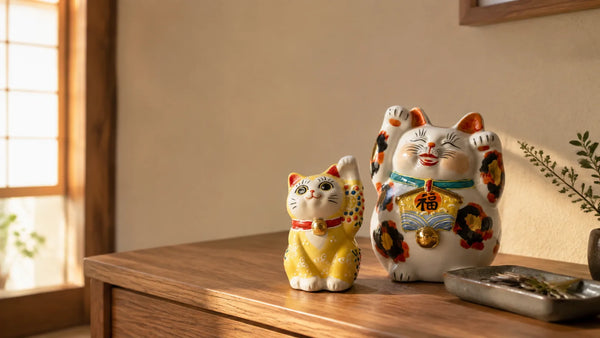
5. For luck at the door: a maneki-neko
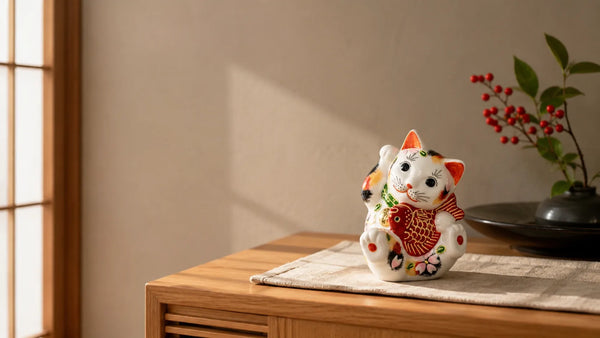
A maneki neko expresses welcome and a wish for good fortune. This Kutani cat holds a red tai sea bream, a celebratory motif. Read Maneki Neko meaning and origins for the stories behind the raised paw.
When you are unsure of their taste
Start with a form you have seen the recipient use. Let their space and habits narrow the choice before deciding on colour or pattern. Our Japanese stoneware vs porcelain guide explains material differences if you are comparing similar pieces.
FAQ
How much should I spend on a housewarming gift?
Choose an amount that suits your relationship and budget. A single well-chosen cup can be more welcome than a larger set the household has no room for.
Are these gifts ready to give?
Packaging varies. Look for a box description on the product page and contact ZenKiln before ordering if a particular presentation is important.
Further reading: Tokoname Tourism on beckoning cats and Japan’s agriculture ministry on sea bream and celebrations.