First-Use Guide: What to Do When New Japanese Tableware Arrives
11 min readBefore using a new Japanese piece, unpack it carefully, check its condition and read its product instructions. A glazed plate may need only a gentle wash; a donabe may require seasoning, cooling and thorough drying. Plan around the actual process rather than a fixed first-use time.
Use this guide to find the right care routine after unboxing. It separates tableware, cooking pots, kettles, tea tools and decorative objects, with links to their dedicated guides.
Identify the piece from its documentation
Start with the product label, maker’s instructions and your order details. Appearance offers clues, but it cannot establish a material, origin or heat rating on its own:
- Porcelain plate, bowl or cup: check the body, decoration and permitted appliances on the product record.
- Cast iron: distinguish a water-boiling tetsubin from a tea-brewing pot, cookware or decorative wind chime. A black iron surface does not establish Nambu origin.
- Lacquerware: confirm the coating and substrate from the product information. Do not scratch it with a fingernail to identify it.
- Clay vessel: a kyusu, chawan and donabe have different uses. A matte or porous surface does not mean a vessel can go on a stove.
- Cut glass: confirm the maker and glass type. Facets alone do not establish Edo Kiriko origin or heat resistance.
- Cup or bowl shape with a bamboo whisk and small bamboo scoop in the box — a matcha set with chawan, chasen, and chashaku.
- Bell shape with a tanzaku paper strip hanging below — a furin wind chime.
If the material or intended use is unclear, contact the seller before washing, soaking or heating the piece.
The first-use chart at a glance
| What you have | First action | What to allow for |
|---|---|---|
| Porcelain plate, bowl, cup | Rinse warm water; wash mild soap; dry | A gentle wash and drying |
| Cast iron tetsubin | Follow the kettle maker’s first-use method | Boiling cycles and cooling vary by maker |
| Urushi lacquerware | Follow the finish-specific washing directions | Gentle cleaning and drying |
| Donabe clay pot | Season only as directed for this model | Allow for cooling and complete drying |
| Edo Kiriko cut glass | Gentle wash with mild detergent as permitted | Avoid sudden temperature changes |
| Clay kyusu (Tokoname/Banko) | Rinse as directed; seasoning is not universal | Allow to dry with lid separate |
| Matcha chasen (bamboo whisk) | Dip the tips in water in a bowl; do not force them apart | About 1–2 minutes for pre-wetting |
| Furin (any material) | Check cords, paper strip and hanging point | Inspect before hanging |
Porcelain
New porcelain generally needs washing rather than rice-water seasoning. The body and decoration still determine its cleaning and appliance instructions.
First wash:
- Rinse with warm water on both sides.
- Wash gently with a soft sponge and a small amount of mild dish soap.
- Rinse and dry with a soft cloth.
After rinsing, check the product’s directions before using a microwave or dishwasher. Decoration is relevant, but its name alone does not establish compatibility; see the Japanese porcelain care guide.
Cast iron tetsubin
For a tetsubin confirmed suitable for boiling water, use the maker’s first-use instructions. OIGEN’s kettle guidance, for example, describes a mineral-deposit preparation method; other makers may specify a different routine.

- Rinse the inside gently as directed. Do not scour the interior coating.
- Use the specified water quantity, water type and heat source; do not exceed the permitted fill level.
- Follow the manufacturer’s boiling and discard sequence. Keep clear of steam and hot water.
- Never let the kettle boil dry.
- Empty as directed and allow it to dry using its retained warmth. Do not place an empty kettle on a lit burner as a general drying method.
For daily use and further care, see the cast iron tetsubin care guide and the instructions for your model.
An enamel-lined cast-iron teapot is usually intended for brewing tea, not boiling water. Follow its washing instructions and do not place it on a burner unless the manufacturer explicitly permits that model to be heated.
Urushi lacquerware
A new lacquer bowl, tray or tea container needs care suited to its finish and construction:
- If it has arrived very cold or warm, allow it to approach room temperature before cleaning.
- Wash only if permitted for that object; some tea containers and decorated pieces are routinely dry-wiped.
- For washable lacquerware, clean gently and dry with a soft cloth as directed.
If an odour is strong or persistent, ask the maker or seller for guidance rather than treating every smell as harmless or promising it will fade in a few days. See the urushi lacquerware care guide.
Donabe clay pot
Some donabe need rice-porridge seasoning, called medome (目止め); others have different first-use instructions. Use the method specified for your model. The following sequence describes the main stages, including the drying that cannot be omitted:

- Wash as directed, then dry the pot thoroughly, especially its exterior base, before applying heat.
- If rice-porridge seasoning is specified, use the maker’s water and rice quantities. Do not substitute a generic recipe for the model’s instructions.
- Heat gently on a compatible stove, with the pot’s exterior dry.
- Attend the pot throughout cooking. Avoid boil-over, scorching and boiling dry; use the stated cooking time.
- Turn off the heat and let the pot cool sufficiently before handling or washing. Do not cool a hot pot with cold water.
- Discard the porridge once safe to handle, rinse as directed and dry thoroughly before storage or further heating.
Marumitsu’s instructions for its applicable heat-resistant pots require drying before heating and sufficient cooling afterward. This is a product-specific example, not a rule assigning one number of seasoning cycles to every Iga or Banko pot.
Seasoning does not make a pot crack-proof or grant stove compatibility. Total preparation includes cooling and drying and may extend beyond the cooking session. See the donabe care guide for daily-use precautions.
Edo Kiriko cut glass
For a new cut-glass drinking vessel, check the maker’s washing instructions:
- Let a very cold or warm glass approach room temperature before washing.
- Use water at a gentle temperature appropriate to the glass; avoid abrupt changes.
- Wash gently with a soft cloth or sponge and a small amount of mild dish soap.
- Rinse thoroughly with warm water.
- Dry immediately with a soft cotton or linen cloth. Avoid paper towels — paper lint clings to cut facets.
Ordinary cut glass is not automatically heat-resistant. Pre-warming does not grant permission for boiling water or hot drinks. Dishwasher suitability also depends on the specific product; see the Edo Kiriko care guide.
Kyusu teapot
A kyusu’s first use depends on its clay, glaze, strainer and maker. There is no universal 30-minute break-in.

Before brewing:
- Rinse as the maker directs, including the strainer. Do not scour or force the filter.
- Check that the lid fits and the strainer is unobstructed.
- Use a water temperature suitable for both the tea and the pot. Unglazed clay does not by itself mean boiling water is prohibited.
- Brew according to the tea supplier’s recipe.
- After brewing, empty the leaves promptly.
- Rinse and dry fully with the lid separate.
A special seasoning brew is needed only if the maker recommends one.
Dedicating a pot to one tea can be a preference, but it is not a universal first-use requirement. Cleanliness and complete drying remain important.
For cleaning methods and strainer care, see the kyusu care guide. Use the pot maker’s directions rather than a blanket “no soap, ever” rule.
Matcha chasen and chawan
A new matcha set has multiple pieces; the most fragile is the chasen bamboo whisk.

Chasen first use:
- Put clean water in a stable bowl. Hold the chasen by its handle and dip the tips for about 1–2 minutes before use, following Ippodo’s chasen guidance. Never pour hot water over a whisk resting in your hand.
- Do not force the tips apart with your fingers.
- Lift it by the handle and check for broken tips.
After whisking, rinse promptly without detergent and let it dry in the open air.
Chawan first use:
- Clean the bowl according to its maker’s instructions; a regional name alone is not a washing specification.
- Pre-wet only as directed for that bowl. Water does not permanently seal glaze crackle.
- Dry the bowl thoroughly before storage.
A traditional bamboo chashaku is normally dry-wiped. Clean a natsume according to its material and finish; do not apply the scoop’s routine to every tea tool.
Replace a chasen according to wear or damage, rather than a fixed three- to six-month calendar. See the matcha set care guide.
Furin wind chime
Before hanging a new fūrin:
- Check the suspension string. If it shows any fraying, replace before hanging.
- Keep an intact original paper strip. Replace it if damaged, using the maker’s replacement or matching the original size and weight.
- Find a sheltered hanging location — eave, balcony, or under a roof overhang. Semi-shade is ideal for glass and ceramic furin; cast iron tolerates more sun but should not be in driving rain.
- Hang where the furin cannot swing against a wall, post, or another furin.
For storage, clean according to the bell’s finish, dry completely and wrap it. Do not automatically oil or heat an iron bell; see the furin care guide.
Two checks before first use
Before choosing a cleaning or heating method:
1. Confirm what the object is intended to do. A decorative piece is not automatically tableware; a teapot is not automatically a kettle; a bowl is not automatically a cooking pot.
2. Read the product-specific care directions. Neither warm water nor soaking is appropriate for every material and finish. Avoid sudden temperature changes and do not heat an item without explicit permission for that use.
When something feels off on first use
A new smell, surface deposit or mark can have several causes. Check the maker’s description and contact the seller if it is unexplained:
- Metallic taste or coloured water from a kettle: follow the maker’s first-use guidance; persistent changes need advice rather than a blanket harmlessness claim.
- A persistent smell from a clay teapot: ask for the maker’s cleaning method before trying repeated seasoning brews.
- A strong or persistent lacquer smell: consult the maker or seller about readiness for use.
- Mineral deposits can develop in a used tetsubin. Follow the maker’s instructions rather than scraping the interior.
- Loose residue or flaking on iron: do not assume its composition from colour alone.
- Specks, cracks or unexpected marks on a donabe: compare with the product documentation and ask the seller when uncertain.
Do not use food, heat or chemical treatments to diagnose an unexplained defect.
Older or heirloom pieces
For older or heirloom pieces, establish condition and intended use before applying a new-product routine:
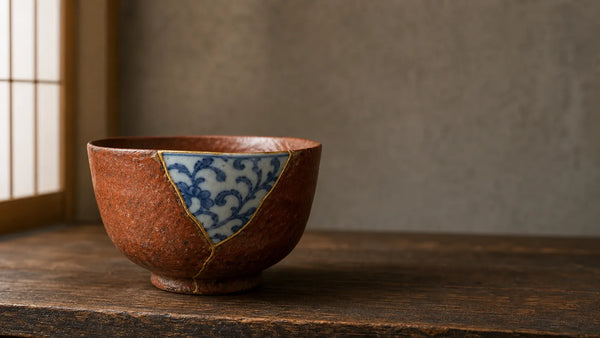
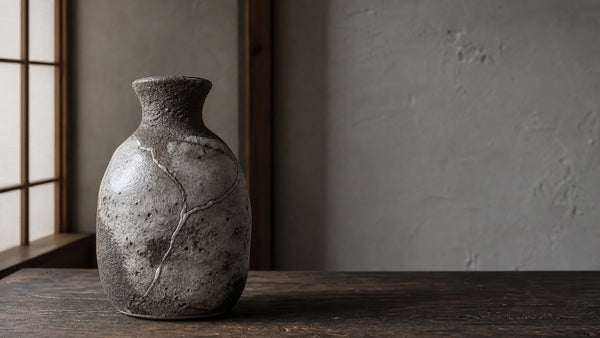
- Inspect carefully under good light. Look for hairline cracks, chips, glaze flaking, or worn lacquer. Document any condition issues for your records.
- Check for old repairs and identify their materials where possible.
- Do not assume that a second seasoning cycle restores an old pot’s safety. Leaks, structural cracks, unstable finishes or unknown repairs need assessment.
Food contact and heat compatibility cannot be established from age, appearance or a successful rinse. Keep an uncertain piece for display until it has been assessed.
FAQ
What do I do first when a new Japanese piece arrives?
Unpack it, inspect for damage and read the product instructions. Confirm its material and intended use before washing or heating it. If it arrived very cold or warm, avoid an abrupt temperature change during cleaning.
How long does first-use seasoning take?
There is no single time for every material. A plate may need only washing and drying; a donabe may need seasoning followed by cooling and thorough drying. Follow the model’s complete process rather than a 90-minute promise.
Can I skip the seasoning step for a donabe?
Follow the instructions for that model. Some donabe require medome before cooking, while others specify different preparation. Seasoning is not a guarantee against cracks and does not replace compatible heat, a dry exterior and gradual temperature changes.
What if my piece arrives with a smell?
An odour cannot be diagnosed as harmless from a general guide. Check the maker’s instructions; if it is strong, persistent or unexpected, contact the seller before continued food use.
Does every new piece need water for first use?
No. A traditional bamboo scoop is normally dry-wiped, while a bamboo whisk is rinsed. Tea containers and decorated pieces vary. Confirm the specific object’s routine rather than applying one rule to all bamboo, lacquer or ceramic items.
Should I use an older or heirloom piece differently than a new one?
Yes. Check condition, previous repairs and intended use first. Do not assume that seasoning or rinsing makes an older pot, repaired bowl or unknown finish suitable for food or heat.
Editor’s note: This guide is an entry point to the material-specific care articles. The documentation supplied for the particular product takes precedence.