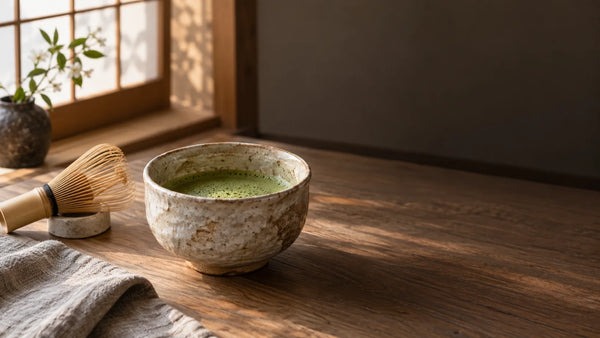
A cup’s interior forms the background to your tea. Changing that background can make the same infusion look different. The pairings here are ZenKiln’s visual suggestions for everyday use; try them with the cups and teas you already enjoy.
Compare the interior first
Pour the same tea into two cups and look at them under the same light. A dark interior can make bright matcha stand out; a pale green cup brings its own tint to an infusion. White offers a more neutral background. Use these differences to choose an effect you enjoy.
Dark glazes — tenmoku and iron blacks for matcha
Bright matcha stands out against tenmoku and iron-black glaze. The contrast is a reason to try a dark bowl, though tenmoku’s place in tea history also involves imported objects, collecting and formal practice.
Tenmoku is a Japanese name associated with tea bowls, especially dark-glazed examples from China and their Japanese counterparts. The Kyoto National Museum explains the name through Japanese monks’ encounters with bowls at Mount Tianmu, while also describing its changing scope. Jian ware from Fujian is an important part of this history, including hare’s-fur bowls such as the example at The Metropolitan Museum of Art; tenmoku does not mean only Jian ware.
Try a dark bowl with matcha for contrast. Roasted teas are another option if you enjoy the dark surface, though their liquor will be less easy to inspect than against white.
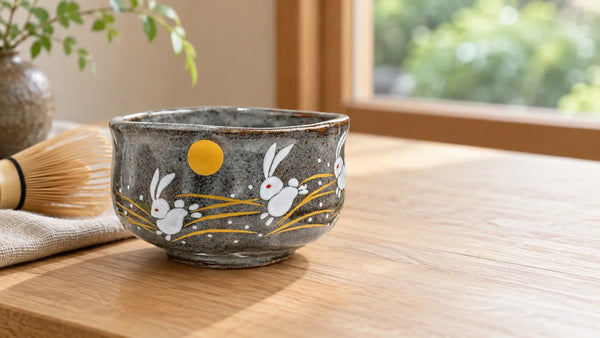
For a different dark or muted surface, compare our Matcha Bowls, including this speckled grey Kutani chawan. Its colour alone does not identify an ash glaze. The Teabowl Studies series explores the traditions behind different forms.
Celadon — green seiji for sencha and gyokuro
Pale seiji celadon gives green tea a tonal background. Sencha and gyokuro can range from yellow-green to deeper or cloudier green, depending on the leaf and preparation.
Celadon includes green and blue-green iron-bearing glazes, commonly fired in a reducing atmosphere. Chinese, Korean, and Japanese traditions are represented in the Met's collection. A pale green interior can make a pleasing tonal pairing with green tea, though it also lends its own colour to what you see; plain white is a more neutral background.
Try celadon with sencha, gyokuro, light oolong or white tea. Compare the infusion in white porcelain if you want to separate its colour from the glaze’s tint.
Our Color of Utsuwa series looks more closely at how glaze color shapes the character of a vessel.
White interiors for comparing brews
A plain white porcelain interior provides a relatively neutral background for inspecting an infusion. Hakuji is white porcelain; sometsuke is blue-and-white decoration. If you want to compare liquor colour between brews, choose a white interior without painting where the tea is viewed, and keep the cup and lighting the same.

A cup can have a decorated exterior and a plain white interior. Alongside the colour, check that the rim, weight and capacity suit the way you drink.
Examples include the cups in this Arita–Hasami tea set and this porcelain yunomi.
Amber glaze and pale slip decoration for roasted teas
Amber and earthy surfaces can echo the colour of hojicha, black tea and roasted oolong. White porcelain is equally useful when you want to see their amber and reddish tones clearly.
Ame is an amber glaze. Kohiki, hakeme, and mishima refer to approaches involving slip decoration rather than a single family of glaze recipes: coating, brush application, and inlay respectively. Their pale or textured surfaces offer different backgrounds for a roasted tea.
Try these surfaces with hojicha, genmaicha, bancha, black tea or roasted oolong. For a separately decorated surface, compare this Kutani yunomi; its product description identifies the finish.

Unglazed surfaces and Oribe green for everyday tea
Bizen and Tokoname include unglazed wares; Tokoname is also known for red-clay kyusu. Oribe’s familiar copper-green surfaces are glazed. These give you different textures and colours to compare, provided the individual vessel is intended for the tea you will serve.
For everyday leaf tea, compare capacity, straining and grip as well as the surface. Browse our Teapots & Tea Sets.
Season and bowl shape
Shallow, open hira-chawan are associated with summer; deeper cylindrical tsutsu-chawan with colder weather. Colour offers a more personal choice here. You may enjoy pale green in summer or dark brown in winter without following a calendar for every cup.
For help choosing the size and shape of a bowl for matcha, see our guide to choosing a matcha bowl.
Try the pairings with cups you already have. Keep the cup you find comfortable and enjoy looking at; there is no need to replace it to match a tea.
FAQ
Does glaze color actually change how tea tastes?
Colour changes the visual background. Rim shape, heat retention, material and surface condition also affect drinking, but glaze colour alone does not establish a chemical or flavour effect. Use a food-safe vessel and compare your own experience.
Historical sources: the Kyoto National Museum and Met records linked above. The pairings are ZenKiln’s visual suggestions for everyday tea.