How to Appreciate Tea Aroma: Channels, Cold Fragrance, and Listening
Most people taste tea with their tongue and stop there. The deeper pleasure — the one that separates a casual drinker from a connoisseur — happens in the nose. Tea aroma appreciation is the practice of reading a tea through its fragrance: not as a single smell, but as a sequence of scents that unfold across the leaf, the steam, the liquor, and the empty cup. Aroma is the most fleeting part of any tea, and precisely because it cannot be held, learning to catch it is one of the most rewarding skills in the whole tea world. This guide walks through how aroma reveals itself, why temperature changes everything, and what the Japanese art of incense can teach us about paying attention.
Aroma arrives in channels, not all at once
The first thing to understand is that a tea does not give you its fragrance in one breath. It offers a series of distinct openings — call them channels — and a careful drinker visits each one in turn.

There is the dry-leaf aroma (the scent of the leaf before water), the warmed-leaf aroma (after you rinse or warm the leaf and its oils wake up), the lid or steam aroma (what rises off a warmed lid or the surface of the pot), the liquor-surface aroma (the fragrance lifting off the brewed tea in the cup), the empty-cup aroma (what lingers in a cup after the tea is gone), and the returning aroma (the scent that rises back through the throat and nose after you swallow, what tea people call the finish or, in Chinese tradition, hui xiang).
A tea is not one smell but a sequence. The connoisseur does not sniff once — they follow the fragrance from the dry leaf, through the steam, into the liquor, and on into the empty cup.
Atomic fact — tea aroma is read in stages. Skilled tasters evaluate a tea's fragrance across several distinct moments: the dry leaf, the warmed leaf, the rising steam, the brewed liquor, the empty cup, and the aroma that returns through the breath after swallowing. Each stage reveals different volatile compounds, which is why a single sniff of the cup gives only a fraction of the picture.
Hot aroma and cold aroma: temperature is a magnifying glass
The single most useful idea in tea aroma appreciation is that temperature unlocks different layers. Volatile, high-toned scents — fresh florals, green and grassy notes — lift off while the tea is hot and vanish quickly. Heavier base notes — honey, roast, wood, the deep sweetness of an aged tea — hold on as the liquor cools and become clearest when it is nearly cold.
This is why experienced drinkers deliberately smell a tea three times: hot (the top notes, the first impression), warm (the heart of the fragrance, where most of the character lives), and cold (the base, and the truest test). The cold-cup aroma — what remains in an emptied cup once it has cooled — is treasured because cheap or poorly made tea tends to smell flat or sour when cold, while a fine tea stays sweet, clean, and complex. When everyone's cup smells good hot, the cold cup is where the real quality shows.
Atomic fact — cold-cup aroma tests quality. As a cup cools, light top notes fade and heavier base notes dominate. A well-made tea retains a clean, sweet fragrance in the cold empty cup, while a lower-grade or mishandled tea often turns flat or sour. Tasters therefore use the cold-cup aroma as a reliable check on a tea's underlying quality.
Building an aroma vocabulary
To appreciate fragrance you need words for it, and tea tradition has a rich palette. Most tea aromas fall into recognizable families: floral (orchid, osmanthus, lilac), fruity (stone fruit, citrus, ripe apple), honey and sweet (nectar, caramel, malt), green and vegetal (fresh grass, seaweed, steamed greens), roasted (toasted rice, chestnut, baked bread — the signature of fire), and woody, earthy, and aged (cedar, camphor, autumn leaves, the mellow depth of aged tea).
Cutting across these families is a second axis worth training: whether an aroma is high and lifting (volatile, bright, the scent that jumps out immediately) or low and settled (deep, lingering, the fragrance that stays). The best teas tend to have both — an immediate brightness and a long, grounding base — and naming which is which sharpens your palate faster than almost anything else.
Aroma is the record of how a tea was made
Fragrance is not only pleasure; it is evidence. A tea's aroma is a faithful record of its processing, and once you can read it you can almost reverse-engineer the tea's life. The toasty fragrance of hojicha or a roasted oolong tells you the roast level — the fire work the maker applied. A sharp, grassy, raw smell suggests under-processing or hurried firing. A musty or sour note can betray poor storage or moisture damage. The sweet, mellow, woody depth of an aged tea reflects years of careful keeping.
This is the same logic that runs through the rest of ceramics and tea appreciation: you read the finished object to understand the craft behind it. Just as the foot ring of a bowl or the pooling of a glaze reveals the potter's hand, a tea's aroma reveals the hand of the person who grew, withered, fired, and stored it.
How vessels and method shape the fragrance
Aroma is fragile, and the vessel you use either protects it or scatters it. A few practical points carry most of the benefit.
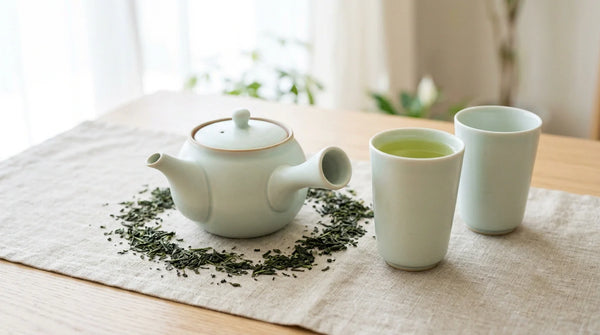
Warming the pot and cup before brewing helps the leaf release its oils and lifts the first aroma. A well-made teapot concentrates and directs the steam — a porcelain kyusu with a fine spout keeps the fragrance from dissipating, and the warmed lid of a pot or gaiwan is itself one of the best places to catch the lid aroma. For the cup, thin-walled white porcelain is ideal: it adds no smell of its own and keeps the liquor's scent clean, which is why a simple white porcelain yunomi or a set of white porcelain sencha cups is a serious taster's default. In the gongfu tradition, a tall, narrow aroma cup (wenxiang bei) exists for exactly this purpose: you pour the tea in, tip it into the drinking cup, and smell the warm, empty aroma cup to read the fragrance at its most concentrated.

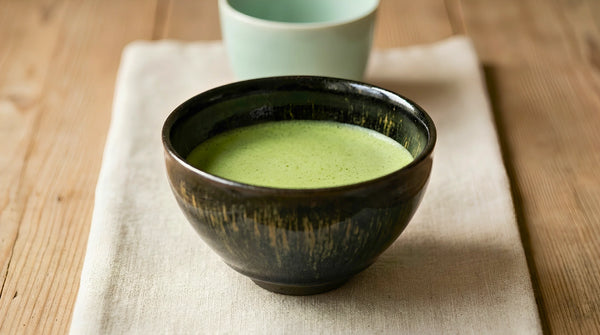
Japanese teas reward this attention in their own way. Sencha and gyokuro give a fresh, sweet, marine-vegetal aroma tied to their umami, best appreciated from white porcelain that shows both color and scent. Hojicha offers a warm, roasted fragrance closer to toasted grain. And whisked matcha, served in a dark matcha bowl, releases a fresh green aroma as the froth rises — a fragrance that has been part of the tea room since the age of the tenmoku bowls of the Song dynasty. If you want to start from the brewing side, our guide to building a beginner's sencha tea set covers the vessels in detail, and our guide to pairing tea with glaze color explains how the cup's surface shapes what you see and smell.
"Listening" to fragrance: what kōdō teaches tea
The deepest lesson in aroma appreciation comes not from tea but from its sister art: kōdō (香道), the Japanese way of incense. In kōdō, practitioners do not say they smell incense. They say they listen to it — monkō, "listening to fragrance." The phrase is not a quirk of translation but a philosophy: fragrance is treated as something subtle enough that it must be received with the full, quiet attention you would give to a faint sound, not grabbed at with the nose.

Kōdō and tea grew up together. According to The Metropolitan Museum of Art, the etiquette of "the way of incense" developed during the Muromachi period (1392–1573) in tandem with the tea ceremony, sharing its rooms, its utensils, and its spirit. In a classic incense gathering, a small heater warms a chip of fragrant wood — never burning it — and guests pass it to "listen," each receiving the same scent differently. The most famous form, the ten-round incense game, turned this listening into a refined art of memory and discernment. The same quiet attention lives on in our Incense & Kōdō pieces.
Bring that posture to a cup of tea and everything changes. To "listen" to a tea's aroma is to slow down, empty the mind of expectation, and let the fragrance come to you across its channels and temperatures. It folds naturally into ichi-go ichi-e (一期一会, "one time, one meeting") — the idea that this exact cup, at this exact warmth, will never recur. Aroma, the most transient thing in the cup, becomes a teacher of presence. You are not cataloguing a smell; you are paying complete attention to something that is already disappearing.
That is the real content of tea aroma appreciation. The channels and the vocabulary are a method, the cold-cup test is a tool, and the craft-reading is a kind of forensics — but underneath all of it is a practice of attention. Learning to read fragrance trains you to be fully present for something fleeting, which is, in the end, what both tea and incense have always been quietly teaching.
A simple way to practice
You do not need rare tea to begin. Brew any tea you like, and instead of drinking straight away, move through the stages: smell the dry leaf, smell the warmed leaf, catch the steam off the lid, smell the liquor in the cup, take a sip and notice the aroma returning through your breath, then set the cup down and come back to it once it is cold. Name what you find each time — floral, roasted, sweet, woody — and notice how the fragrance shifts from hot to cold. Within a few sessions you will be reading teas you thought you already knew.
FAQ
What is tea aroma appreciation?
Tea aroma appreciation is the practice of evaluating a tea through its fragrance rather than taste alone. It involves smelling the tea across several stages — dry leaf, warmed leaf, rising steam, brewed liquor, empty cup, and the aroma that returns after swallowing — to read its quality, character, and how it was made.
What is cold-cup aroma and why does it matter?
Cold-cup aroma is the fragrance left in an emptied cup after it cools. It matters because cooling fades light top notes and reveals heavier base notes. A well-made tea stays sweet and clean when cold, while a low-grade or mishandled tea turns flat or sour, making the cold cup a reliable test of underlying quality.
Why do kōdō practitioners say they "listen" to incense?
In kōdō, the Japanese way of incense, the practice is called monkō, "listening to fragrance." The phrasing reflects a philosophy that scent is subtle and must be received with quiet, full attention, like a faint sound, rather than actively sniffed. The same attentive posture deepens how one appreciates tea aroma.
What kind of cup is best for smelling tea?
Thin-walled white porcelain is best, because it adds no scent of its own and keeps the tea's fragrance clean. In the gongfu tradition a tall, narrow aroma cup (wenxiang bei) is used specifically to concentrate fragrance: tea is poured in, tipped into a drinking cup, and the warm empty cup is smelled.
How does aroma reveal how a tea was made?
A tea's aroma records its processing. A toasty fragrance indicates roasting or fire level; a sharp grassy smell suggests under-processing; musty or sour notes point to poor storage; and mellow, woody sweetness reflects careful aging. Reading these scents lets a taster infer much of a tea's production and handling.
Do different Japanese teas have different aromas?
Yes. Sencha and gyokuro give a fresh, sweet, marine-vegetal aroma tied to their umami; hojicha offers a warm, roasted fragrance like toasted grain; and whisked matcha releases a fresh green aroma as its froth rises. Each is best appreciated in a vessel suited to its character.
A note from the studio: ZenKiln works directly with kilns across Japan and ships from Tokyo. Aroma is personal — these are tools for paying closer attention, not rules. Brew slowly, smell often, and let the cold cup have the last word.