

Craft & Kilns
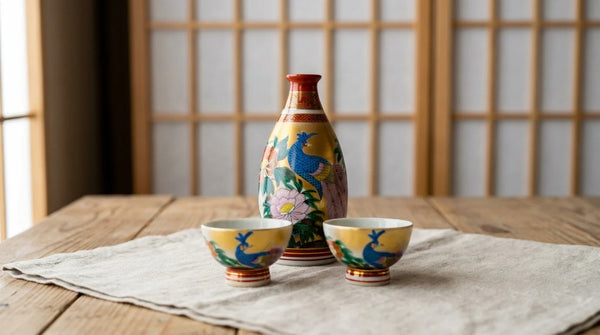
The Story of Kutani Ware
Early Kutani, Yoshidaya and export porcelain: the history behind the styles.

The Journal
器の色
How Japanese ceramics found their palette — cobalt, enamel, and the chemistry of glaze.
 Hai-yū: Natural and Applied Ash Glazes in Japanese Ceramics
Explore natural and applied ash glazes, early Sue and Sanage wares, varied glaze colours, and the limits of identifying a...
Hai-yū: Natural and Applied Ash Glazes in Japanese Ceramics
Explore natural and applied ash glazes, early Sue and Sanage wares, varied glaze colours, and the limits of identifying a...
 Kuro-yū: The Black Glazes of Japanese Ceramics
Explore Japanese black glazes, tenmoku history and the differences between dark ceramic surfaces. Colour alone cannot identify a glaze recipe...
Kuro-yū: The Black Glazes of Japanese Ceramics
Explore Japanese black glazes, tenmoku history and the differences between dark ceramic surfaces. Colour alone cannot identify a glaze recipe...
 Seiji: The Jade-Green World of Japanese Celadon
Explore seiji, Japanese celadon: iron-bearing green glazes, Hizen and Nabeshima history, and how to distinguish glaze crackle from damage.
Seiji: The Jade-Green World of Japanese Celadon
Explore seiji, Japanese celadon: iron-bearing green glazes, Hizen and Nabeshima history, and how to distinguish glaze crackle from damage.
 Hakuji: Form and Surface in Japanese White Porcelain
Hakuji, Japanese white porcelain: its plain surfaces, Arita and Hizen history, nigoshide, and the distinction between undecorated and painted white...
Hakuji: Form and Surface in Japanese White Porcelain
Hakuji, Japanese white porcelain: its plain surfaces, Arita and Hizen history, nigoshide, and the distinction between undecorated and painted white...
 Kinrande: How Gold Brocade Came to Japanese Porcelain
Kinrande gold-brocade porcelain: its Chinese and Japanese history, gold-leaf and liquid-gold terminology, and practical care for gilded surfaces.
Kinrande: How Gold Brocade Came to Japanese Porcelain
Kinrande gold-brocade porcelain: its Chinese and Japanese history, gold-leaf and liquid-gold terminology, and practical care for gilded surfaces.
 Aka-e: Red Enamel in Japanese Porcelain
Aka-e and Japanese red enamel: how overglaze decoration differs from sometsuke, its place in Arita history, and how to assess...
Aka-e: Red Enamel in Japanese Porcelain
Aka-e and Japanese red enamel: how overglaze decoration differs from sometsuke, its place in Arita history, and how to assess...
 Sometsuke: Japanese Blue-and-White Porcelain
Sometsuke is Japan’s underglaze-blue decoration. Follow its Arita and Hizen history, familiar motifs, cobalt colour and brushwork across old and...
Sometsuke: Japanese Blue-and-White Porcelain
Sometsuke is Japan’s underglaze-blue decoration. Follow its Arita and Hizen history, familiar motifs, cobalt colour and brushwork across old and...
ゼンキルン 誌
Japanese craft, everyday use and care
The places, materials and people behind Japanese craft.
Early Kutani, Yoshidaya and export porcelain: the history behind the styles.


Practical reading for the pieces you use every day.
Stories on tea bowls, Japanese lacquer and ceramic color.
The latest stories, with more to explore by topic.


